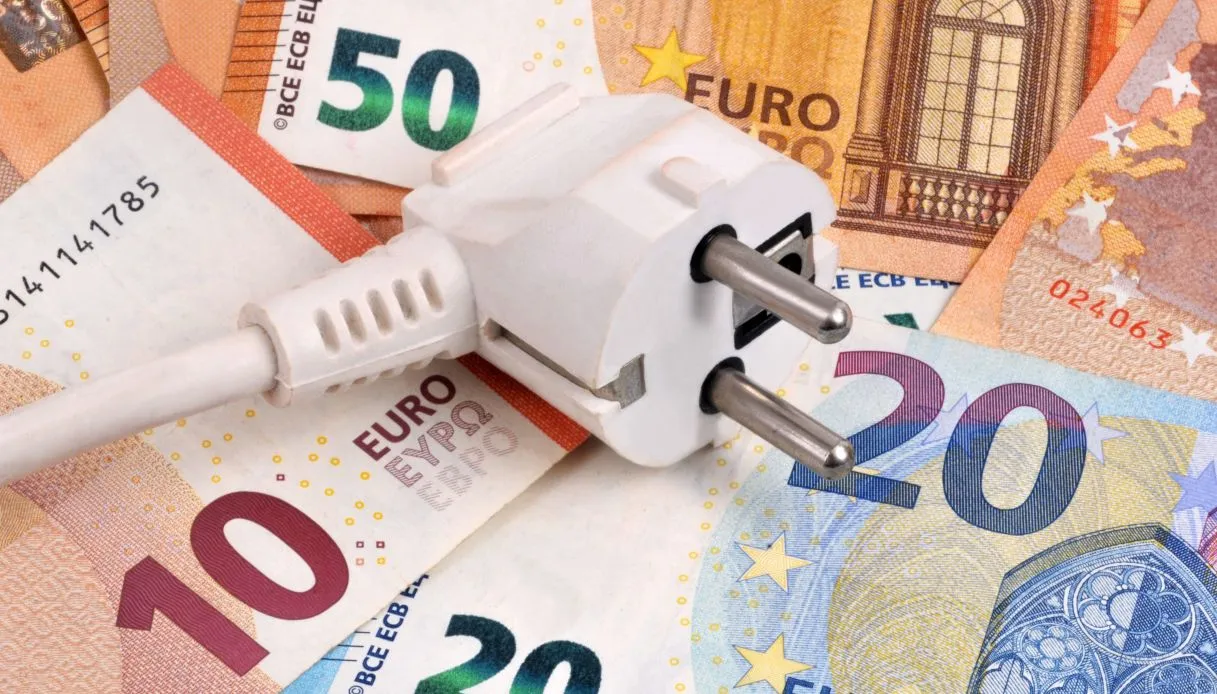
The European Union is developing a strategy to reduce the cost of electricity across the continent, particularly helping countries where the price is particularly high, such as Italy. The plan is to reduce taxes and system charges on electricity, to favor it compared to gas.
At the same time, the EU wants our country to invest in electrification and renewable sources in the coming years, an area in which it has lagged behind other member states such as Spain. For this reason it will grant a flexibility clause to the treaties equal to 0.6% of GDP and additional funds so that the State can invest in solar, wind, hydroelectric and batteries.
The EU plan to lower the price of bills, in short
The EU’s idea to lower the price of electricity is developed in 4 points:
- allow governments to set rates on gas and electricity, so that the latter is always less expensive than the former;
- encourage consumption during the hours when energy costs least;
- reduce system burdens;
- support the production of energy from renewable sources.
The entire plan is based on one fact: electricity produced from renewable sources costs less than that produced with gas. The European system, however, requires paying for electricity, even that produced from renewable sources, at the price of the most expensive source used, namely gas.
This benefits companies that produce energy with renewables (because they spend very little and earn a lot), but it harms consumers. For this reason, renewables are at the center of this plan. If we could eliminate gas consumption to produce electricity as much as possible, bills would fall, as happened in Spain.
Smart contracts and system charges
The so-called smart contracts also go in this direction. With the development of photovoltaics, the price of electricity during a day changes significantly. For example, in Spain, where solar is highly developed, according to Elex data the price of electricity is:
- of almost 90 euros per megawatt hour at midnight;
- of 1.60 euros per megawatt hour at midday.
By encouraging contracts that follow these variations, pushing families to consume at midday instead of in the evening, costs would fall. By 2033, the EU wants 65% of contracts to include this type of discount.
This should also help reduce system charges, the fixed costs that account for a quarter of electricity bills. In fact, many of these costs derive from the management of the network and peak demand. By better distributing demand with economic incentives, management costs should also fall.
The development of renewables in Italy
This plan, however, is based on the idea that a large part of the energy is produced from sources other than gas. A situation that is reality in Spain, thanks to renewables, and in France, thanks to nuclear power, but not in Italy. For this reason, the EU will make 23 billion euros available to support the production of energy from renewable sources in our country. This money can be used to incentivize:
- onshore wind farms, therefore not at sea;
- solar systems;
- hydroelectric power plants;
- biogas plants.
The goal is to increase energy production from renewable sources in Italy by 37.15 gigawatts, 48% of the current renewable capacity installed in Italy. However, this is not a direct bonus (public money spent to install solar panels, for example), but two-way contracts for difference.
The State, thanks to these funds, will set a price for the renewable energy produced by these new plants, guaranteeing those who build them that, whatever the market price of energy, their return will always be minimal. On the other hand, the producer undertakes, if the market price is much higher, to repay the difference between the guaranteed price and the price at which he sold the electricity to the State.
This mechanism provides stability for renewable energy companies, which often have the problem of a very unpredictable flow of money. At the same time it assures the State that there will be no extra profits if the price of energy rises.