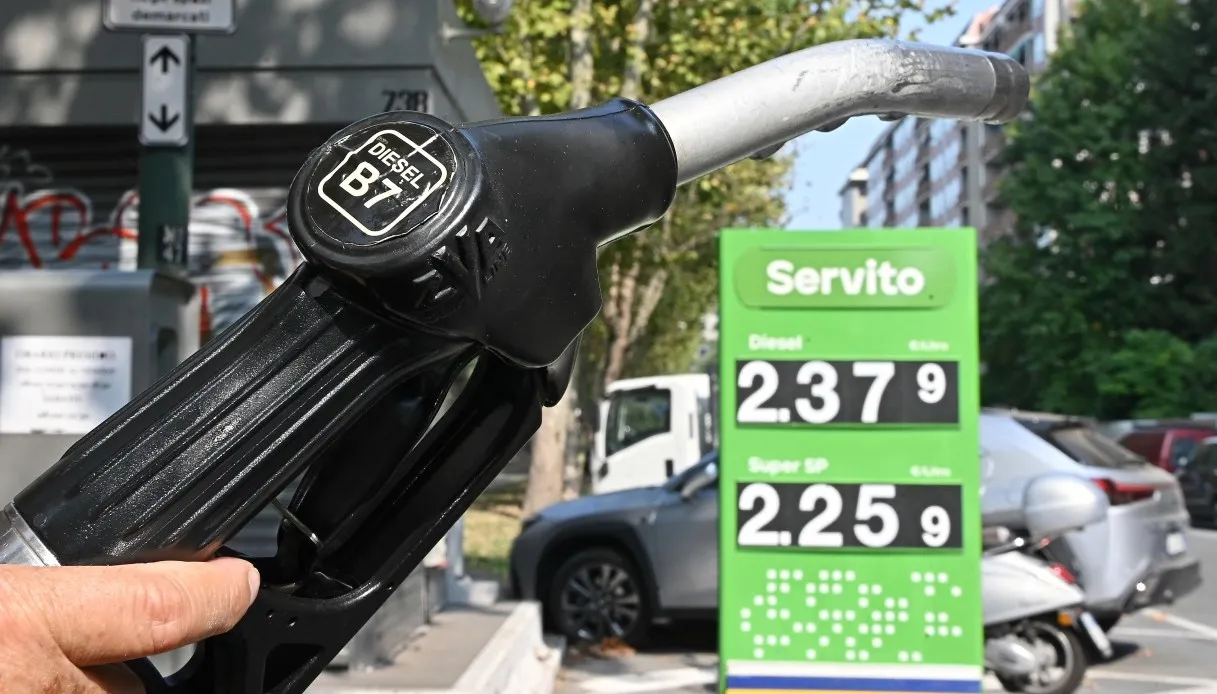
As reported by the news agency Handle the Government has apparently decided to postpone the activation of mobile excise duties on fuel, after the oil companies decided, on Friday 9 October, to reintroduce the price cap at 2.19 euros per liter for diesel.
A choice that allows the executive to accumulate even more extra revenue from VAT which is applied as a percentage of the very high cost of fuel. In this way, the Government should have around 170 million euros to use for extraordinary interventions after 31 October, when the price cap should end.
No mobile excise duties, for now
The Government had considered activating the so-called mobile excise duties after all fuel taxes came back into force on 5 October. Mobile excise duties are a discount system based on a fuel taxation mechanism:
- excise duties are fixed, calculated at a certain number of euros per litre;
- VAT, the other tax on fuel, is a percentage, therefore it increases as the price increases.
This means that, when fuel prices increase, the tax revenue paid to the state by distributors also increases. Rolling excise taxes are the idea of using this excess revenue to lower excise taxes.
Because the price cap had increased
In recent days, the oil companies that had joined the price cap initiative, limiting the maximum prices of diesel to 2.19 euros per liter and petrol to 1.99 euros per litre, had increased prices by around 7 cents.
This happened because on October 5th the last discount on excise duties foreseen in recent months to combat the increase in diesel prices also expired. The companies in the sector, given the increase in taxes, had passed this extra cost on to customers. On October 9, however, it was announced that the price cap prices will return to their previous ones.
The choice not to activate mobile excise duties has two consequences:
- fuel prices will remain high, for the time being;
- the State will be able to set aside the extra VAT revenue on fuel.
This could allow the Government to intervene more decisively on excise duties in the future, in particular starting from 31 October, the date on which the price cap initiative should expire. At that point the state should have accumulated between 160 and 170 million euros, which it could use if prices are still too high.
How much fuel costs in Italy
The price of fuel in Italy has been falling in recent days. The current average cost is:
- 2.038 euros per liter for petrol;
- 2,260 euros per liter for diesel;
- 0.790 euros per liter for LPG;
- 1.926 euros per liter for methane.
The decline is mainly due to the fact that traffic in the Strait of Hormuz is returning to pre-war levels. However, both the announcement of the release of the strategic reserves of the G7 countries and the agreement between Trump and Putin on Russian exports had little effect. The latter is particularly insignificant, given that Russia will be allowed to export in total over the next 4 months an amount of diesel that the world consumes in less than 12 hours.