The renovation works at Buckingham Palace in London are bringing to light not only architectural elements, but also small objects that tell the story of daily life inside the British royal residence. The works, which have been underway since 2017 and are due to be completed next spring, were intended to restore the internal systems of the residence. During the interventions, numerous finds were recovered, some of which date back to the second half of the nineteenth century. These are objects that were forgotten, lost, or ended up who knows where during the various renovation works that the historic residence has faced over the centuries.
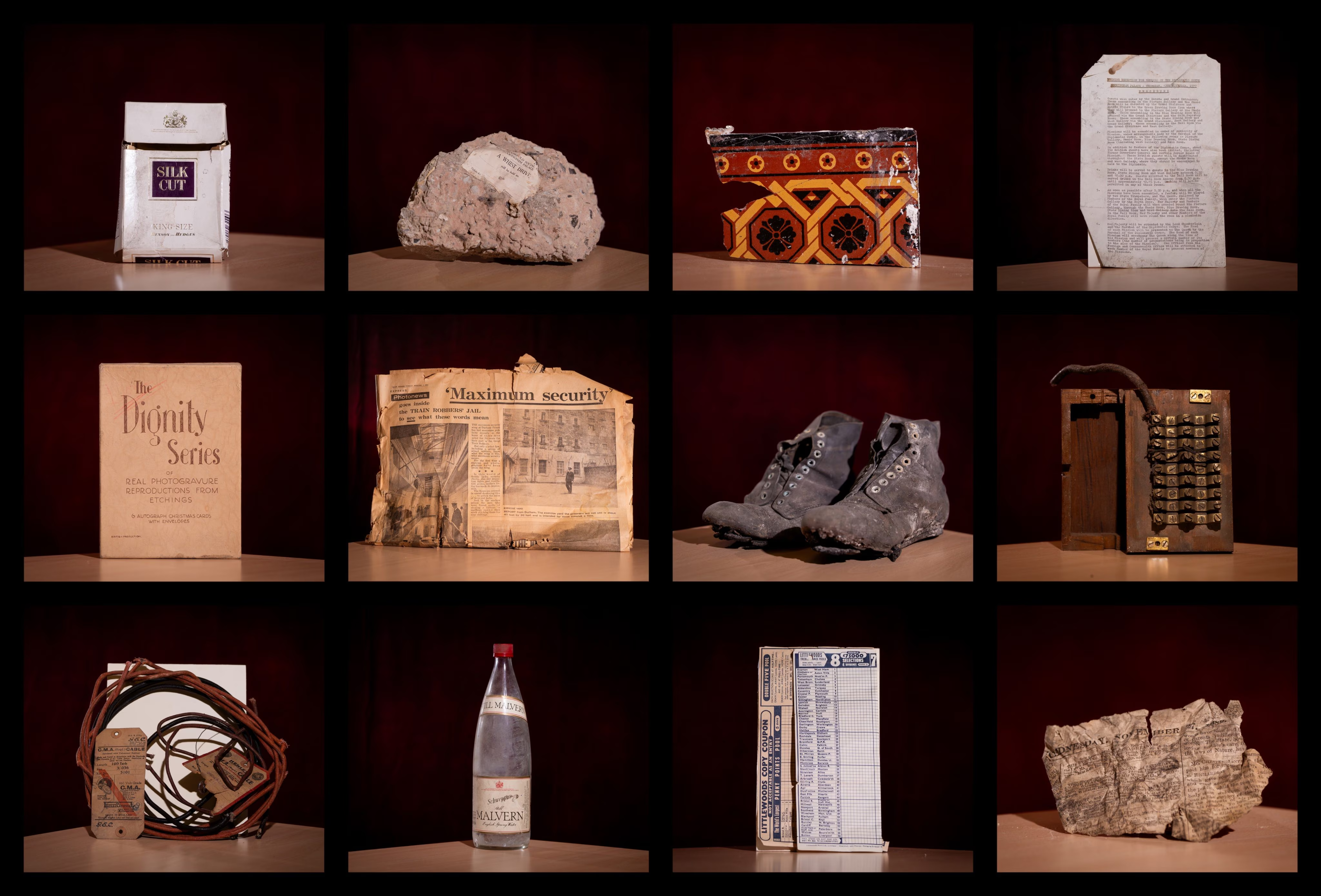
Among the oldest finds is a fragment of the newspaper’s theater advertisements TheStandarddating back to 1889. Fragments of decorative tiles from the Minton factory, used in the palace starting from the nineteenth century, also emerged. However, many of the objects belong to the 20th century and give a decidedly less formal image of life in the palace. These include work boots, betting slips, a bottle of Schweppes, a pewter tankard and a pack of Silk Cut cigarettes.
Particularly curious is a ticket for a whist drive, an evening dedicated to a card game, the whist precisely, organized by the Royal Household Social Club on 14 April 1949. The ticket had remained embedded in a block of building material. A typewritten program relating to the diplomatic reception organized by Elizabeth II in 1977, during the celebrations for her Silver Jubilee, was also recovered.
The objects emerged during the extensive program of work currently underway at Buckingham Palace. Their importance does not lie so much in the value of individual artefacts, but in their ability to document ordinary aspects of the life of those who worked and lived in the royal residence. Alongside the large official rooms and objects linked to the monarchy, these small finds thus show another dimension of the history of Buckingham Palace: that of daily work, free time and consumption, which was accidentally preserved in the structures of the building, in the cavities of a wall, or under some flooring.