Oil starts to run again as the Gulf crisis changes nature. Brent reached around 108 dollars a barrel, with an increase of more than 3%, while the US WTI exceeded 103 dollars. It is not just the fear that less crude oil will be extracted that is pushing prices: the problem is being able to transport it to international markets.
The attacks against the Saudi East-West oil pipeline, the reduced traffic in the Strait of Hormuz and the Houthi advance in the Bab el-Mandeb area are, in fact, putting pressure on the main exit routes for energy from the Middle East.
For Italy the risk is not limited to a new increase in petrol and diesel. Oil stably above 100 dollars can fuel inflation, compress company margins and make it more difficult for interest rates to fall.
Because oil rose to 108 dollars
The new acceleration came after the temporary closure of Saudi Arabia’s East-West oil pipeline, which was hit by drone attacks. The infrastructure crosses the country from east to west and allows the transfer of crude oil from the fields overlooking the Persian Gulf to the port of Yanbu, on the Red Sea.
This is not just any pipeline. Its strategic function is to allow Saudi Arabia to bypass the Strait of Hormuz, the most delicate passage in the entire world oil market. About 4 million barrels per day can be transported through the pipeline, an amount close to 4% of global demand.
The stocks already present in Yanbu could support exports for about five to seven days. If the pipeline does not return to operation quickly, however, the availability of Saudi crude oil on international markets could reduce.
The three routes on which the price of energy depends
The crisis involves three strategic points simultaneously:
| Critical point | Why it matters | Risk for the market |
|---|---|---|
| Strait of Hormuz | Approximately 20% of the world’s oil and over a fifth of LNG passes through it | Fewer ships, delays and increased insurance premiums |
| East-West pipeline | Bring Saudi crude to Yanbu, avoiding Hormuz | The closure reduces the main alternative route |
| Bab el-Mandeb | Connects the Red Sea, Suez Canal and Indian Ocean | Ships may be forced to circumnavigate Africa |
The Strait of Hormuz remains the main hub. According to data from the US Energy Information Administration on the world’s most important oil passage, in 2024 approximately 20 million barrels per day passed through it, equivalent to a fifth of global consumption of petroleum products.
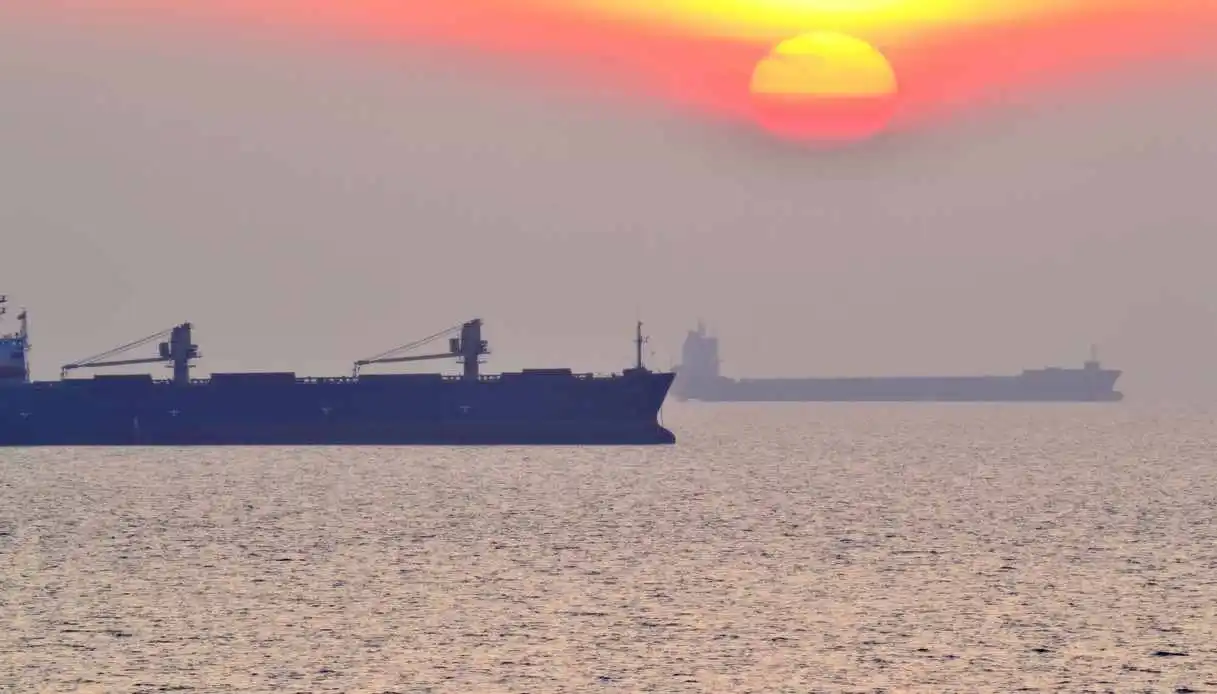
Ship passages remained well below pre-war levels over the weekend. A further ship was hit in the area and the crew was evacuated, fueling shipping companies’ fears.
In the west, meanwhile, the control of the island of Perim by the Houthis increases the risk in the Strait of Bab el-Mandeb. Avoiding it often means detouring around the Cape of Good Hope, adding sailing days, fuel and costs.
The hidden price: freight and insurance
The less obvious point is that two barrels of the same quality can have very different prices depending on where they are located.
Oil available outside the most dangerous areas is paid more because it can reach refineries more easily. Crude oil stuck in the Gulf can, however, be sold at steep discounts, despite the rise in Brent.
It is the “geographical prize” of the crisis. Oil tanker costs have reached record levels on some routes, while insuring a ship crossing a conflict area has become more expensive. These expenses enter the final price of energy even if world production does not decrease to the same extent.
This is why Brent at $108 tells only part of the story: refiners and importers can incur even greater actual costs to receive the product in the port and in the required time.
What Italian families and businesses risk
Italy imports a large part of the energy raw materials it consumes. A prolonged increase in oil prices therefore produces a chain of consequences:
| Critical point | Why it matters | Risk for Italy |
|---|---|---|
| Fuels | The increase in crude oil prices can be passed on to petrol and especially diesel prices | Higher spending for families, motorists and road transport |
| Transport and logistics | Ships and heavy vehicles incur higher costs for fuel, freight and insurance | Increased costs to distribute goods, raw materials and products |
| Inflation | Energy enters directly or indirectly into the price of numerous goods and services | Possible price increases for consumers and businesses |
| Interest rates | New inflationary pressure may make the ECB and Fed more cautious | Mortgages and business financing could remain more expensive for longer |
| Public accounts | The Government could intervene with measures on excise duties or support for the most exposed categories | Lower income or higher spending to protect families and businesses |
To find out the impact already visible on distributors, you can consult the average prices of petrol and diesel updated by QuiFinanza.
Why oil can slow down rate cuts
An energy shock does not necessarily produce permanent inflation. However, if it lasts long enough, it can feed into production costs and final prices, forcing central banks to be more cautious.
In its September economic projections, the European Central Bank also analyzed scenarios characterized by energy and financial tensions. In the most severe scenario, the shock could add almost 2.7 points to global inflation in 2027 and subtract about one point from global growth.
For families and businesses it means that oil can also indirectly affect mortgages and loans. If inflation remains high, the ECB and Federal Reserve have less room to reduce the interest rate.
The three scenarios for the next few weeks
If the Saudi oil pipeline restarts within a few days and maritime traffic improves, part of the geopolitical prize could quickly recoup. Oil, however, is unlikely to immediately return to pre-crisis levels.
With slow repairs and still limited naval passages, Brent could remain above 100 dollars, progressively transferring pressure to fuel, transport and inflation.
The most dangerous scenario would be a further escalation capable of simultaneously hitting Hormuz, Bab el-Mandeb and alternative infrastructure.
There are therefore four signals to follow: the reopening of the East-West oil pipeline, the number of ships crossing Hormuz, the trend in freight rates and the reaction of the central banks. These elements, more than political declarations, will determine whether the 108 dollars represent a temporary peak or the beginning of a new phase of the energy emergency.