Arera is moving towards abandoning the PUN, the Single National Price. It indicated this in the Annual Report, proposing the diversification of the value of energy on a territorial basis as an alternative. Several Southern Regions protested against the postponement of the introduction of zonal prices. This is because, as the president of Calabria Roberto Occhiuto in particular criticized, the southern territories host many green energy production plants and the division of prices into zones would allow them to obtain lighter bills.
On paper, the abolition of the Single National Price seems to reduce costs in areas with more green plants. The reality of the numbers could be different: from January to June 2026, the 7 “zones” expressed the same price in 71% of cases.
The abolition of the PUN
Before understanding what the real effects of the abolition of the PUN would be, let’s take a step back to understand what we are talking about. The proposal mainly affects the Southern Regions.
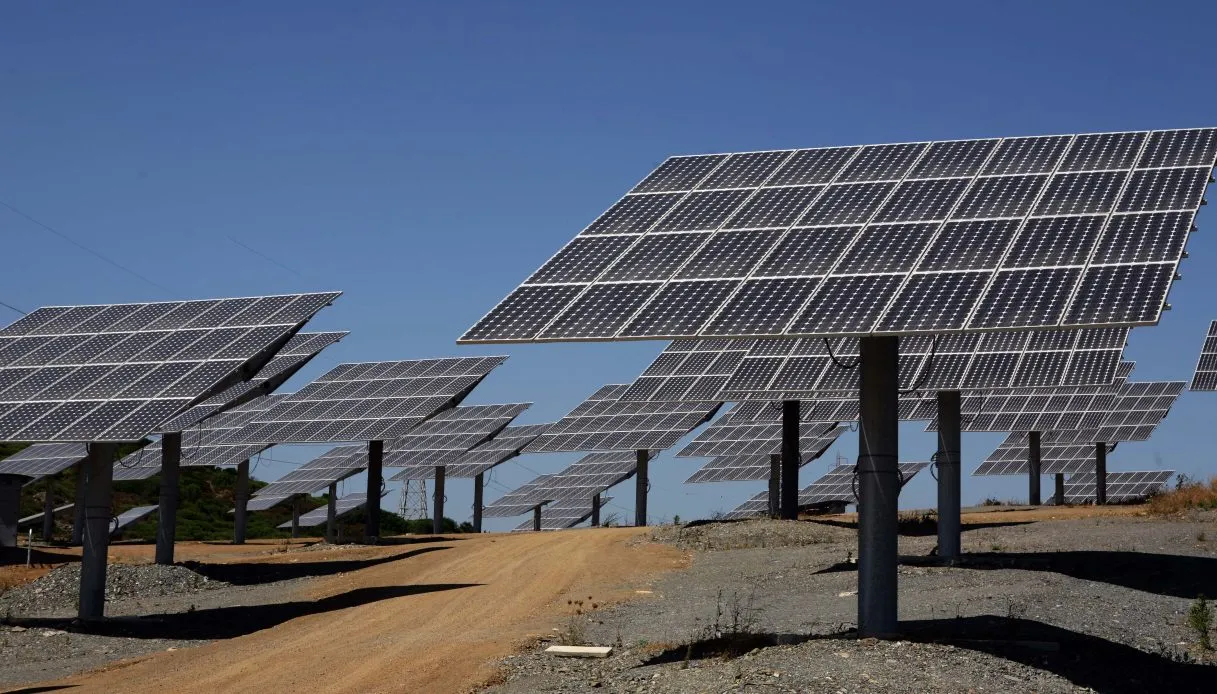
In fact, it is in the southern regions that much has been invested in renewable energy plants.
The abolition of the PUN therefore found several supporters, including the president of the Calabria Region Roberto Occhiuto and the national president of Legambiente Stefano Ciafani. Their point of view is clear: territory is consumed for photovoltaic systems and green jobs are generated, but the territories must also be repaid in some other way, for example with a lower electricity price.
The difference lies precisely in the price, because as of March 26th, as mentioned Lavoce.infosome areas such as Sicily, Sardinia and Southern Calabria saw energy traded at values close to or equal to zero, while in other areas it reached 150-160 euros per megawatt hour. The price difference is due to production from renewables, which is concentrated in the southern areas and can therefore entirely satisfy its internal demand.
Yet the bills did not show this difference, precisely because, regardless of where one lives, Italian consumers pay a single price equal to the average of the zonal prices, therefore 120-100 euros per MWh on that day.
Although, when the sun goes down, prices increase more than elsewhere, as happened on July 8th around 11pm, when in Sicily they paid 240 euros per megawatt hour and 164 euros in the rest of Italy.
Zonal prices: Italy divided into 7 zones
The change would be above all practical, with electricity prices no longer the same throughout the territory, but divided into seven zones:
- North;
- Central-North;
- Central-South;
- South;
- Calabria;
- Sicily;
- Sardinia.
Each of the zones could express its own price. The point is that there are limitations in transporting this low-cost energy to the rest of the country.
There are projects for this purpose, such as the Tyrrhenian Link (on which we have done an in-depth analysis) which connects Sardinia, Sicily and Campania. These are underwater electrical connections that carry the current generated by Sardinia’s photovoltaic systems to the peninsula, from where the energy is then distributed.
Energy prices in Italy
Carlo Stagnaro on Lavoce.info analyzed the data from GME, the Energy Markets Manager, and discovered how, despite what one might think, the differences between the areas are less large.
From 1 July 2025 to 30 June 2026 the annual average of electricity prices was between a minimum of 115 euros per megawatt hour in Sardinia and a maximum of 121 euros per megawatt hour in the Centre-North.
So over 12 months the price range between zones is less than 5% of the average for about half the time, and over 74 days the difference was less than 1%.
The South-North divide
There is another issue, namely that of incentives. For the first time we can talk about a South-North divide and not vice versa. In fact, in the North we would end up paying more and doing it twice: for energy, which is more expensive, and for incentives.
Incentives for renewable sources work with a mechanism called “Contract for Difference”. A reference price (Strike Price) is established:
- if the market price rises above that ceiling the producer returns the excess;
- if the price falls below the threshold the producer receives a difference or a supplement to reach the same threshold price.
Here the paradox arises:
the more the price of energy on the market falls, the more the public incentive to be paid to producers rises.
In the South there is a high concentration of renewable plants which often pushes the local energy price down. If you decide to push towards the full application of zonal prices, thus making energy pay less where it is produced more and more where it is scarce like in the North, a problem will arise: consumers in the North would pay more expensive energy due to zonal prices and at the same time in their bills they would also pay for the incentives for the overproduction of renewable energy produced in the South.
Is division into zones really worth it?
This is the criticism put forward by the councilor for local authorities of the Lombardy Region, Massimo Sertori, responding to the president of Calabria who proposes to overcome the Single National Price. He writes in a letter published by Corriere della Sera:
Photovoltaic systems have benefited from huge incentives amounting to around 170 billion euros financed through the bills of all Italians in the ASOS item. All citizens contribute to the investments in the grid made by Terna, which are essential for the transport of electricity and for the maintenance and rebalancing of the system. Furthermore, renewable sources produce energy only in the presence of sun and wind, therefore production does not always coincide with the moments of consumption.
For this reason, Sertori points out that if the zonal price is to be applied, then the ASOS component should also be calculated on a zonal basis, and this would probably lead to bills in the South on the one hand saving at times of maximum productivity of the plants, but on the other hand paying the incentive for the same plants in their territory in a fixed manner.
Without further calculations in hand, but only by considering the range of price fluctuations between the areas which is often less than 5%, one can imagine bills without real savings guaranteed by the abolition of the Single National Price.