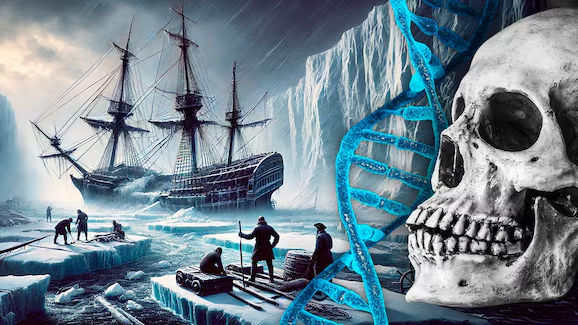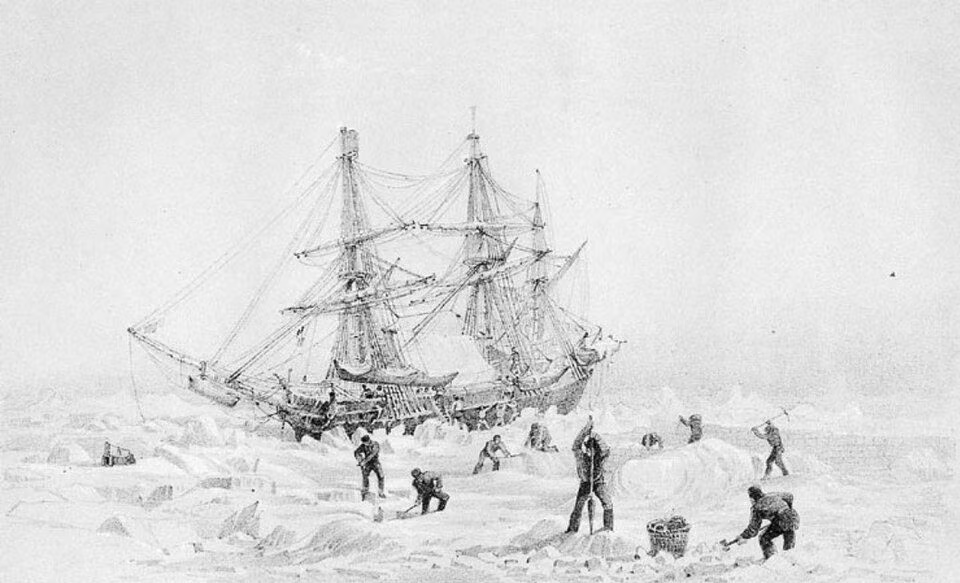
On May 19, 1845, HMS Erebus and HMS Terror left England with 129 men under Sir John Franklin, with the goal of finding the Northwest Passage through the Canadian Arctic. Nobody returned. Franklin died in June 1847. In April 1848, the 105 survivors abandoned their ice-bound ships and attempted to reach land on foot by dragging boats on sleds across King William Island, Nunavut, Canada. They all died. For nearly 180 years, almost none of them had a name associated with the remains. Their story was told in the novel and in the well-known TV series The Terror.
A study published in Journal of Archaeological Science: Reports by Douglas R. Stenton of the University of Waterloo (Canada) and colleagues now identifies three sailors from HMS Erebus through DNA analysis: Seaman William Orren (41 years old), First Class David Young (19 years old), and Petty Officer John Bridgens (29 years old). Their remains were found in three archaeological sites on the southwestern coast of King William Island, in the Erebus Bay area of Canada. With these three identifications, the total number of sailors positively identified via DNA rises to five, all belonging to the Erebus and all dying in Erebus Bay. In fact, the identification of Captain James Fitzjames dates back to a few months ago.
The analysis program was started in 2013. The method of identifying human remains is very simple, and consists of extracting DNA from dental and bone samples recovered during excavations to compare them with the genetic profiles provided by living descendants. For two of the three sailors, the comparison concerned mitochondrial DNA, transmitted maternally: in both cases the genetic distance between the sample and the descendant was zero. For the third, the comparison involved Y-chromosome DNA, with the same result.
William Orren had joined the navy in 1821, at age 15, and sailed on several ships over the next few decades. John Bridgens was a ship’s steward, in service since 1841, while David Young was a very young cabin boy: his forensic facial reconstruction, created from the skull by the investigative artist Diana Trepkov, was published together with the study.
At the same time, another publication on Polar Record identifies a fourth sailor: Harry Peglar, captain of the forecrown on HMS Terror, the second ship of the expedition. His remains were found about 130 kilometers south of Erebus Bay. He is the first and only member of Terror positively identified through DNA. His identification ends a 166-year controversy: in 1859 a body was found with Peglar’s personal documents, but wearing clothes that did not correspond to his rank, fueling decades of debate about the man’s true identity.
The researchers point out that the identifications provide living descendants with previously unknown details about the circumstances of their ancestors’ deaths. The analysis program continues: other remains may still be identified.