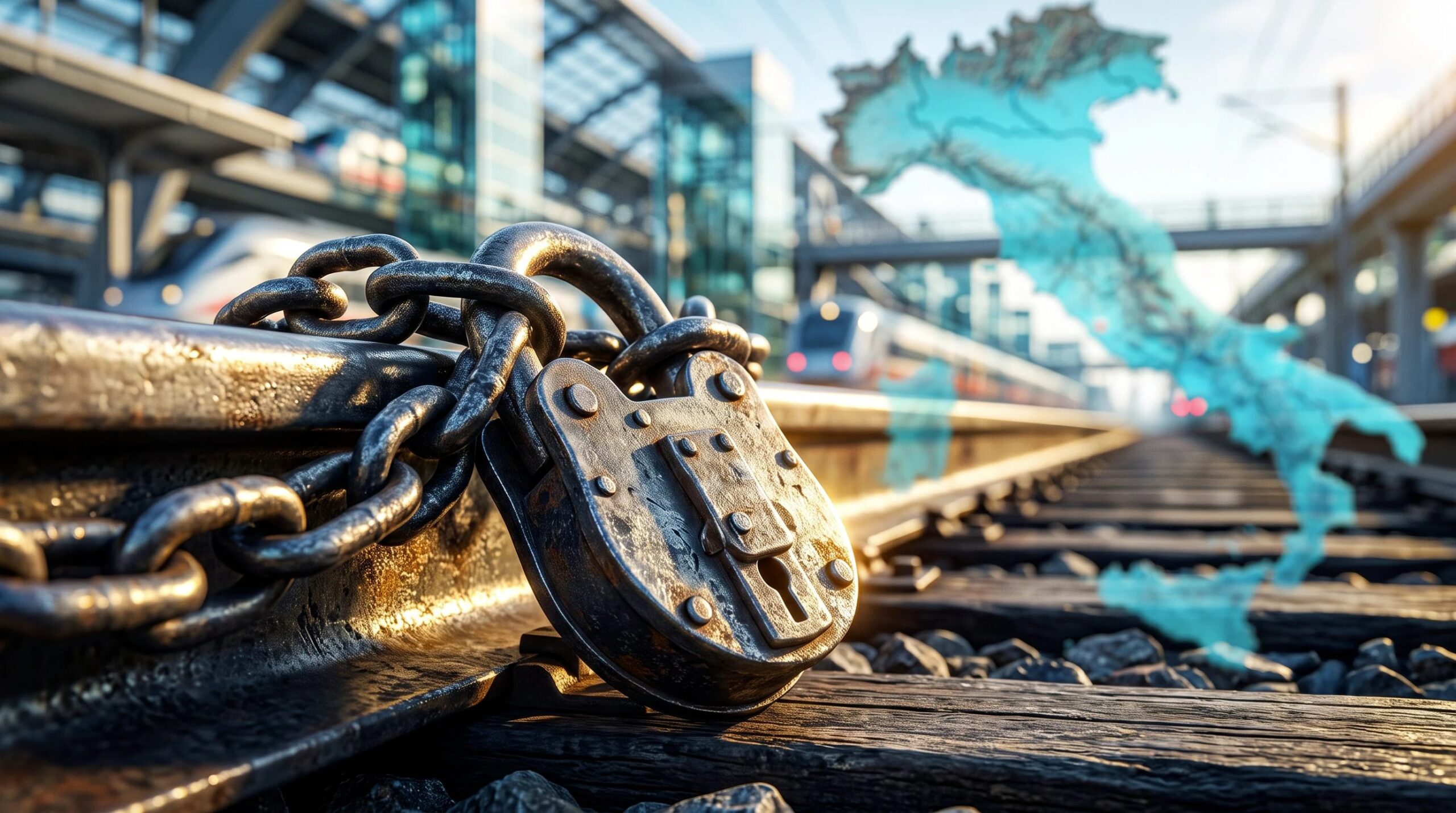
July 2026 will be a hot month not only for temperatures, but also for travel (and not only). For this month, 72 strikes have already been called, spread over almost all working days and concentrated above all in the transport sector, including trains and planes. The day to be circled in red is July 15th, the day with the most proclamations ever (11) between criminal lawyers and railway tenders.
The calendar is the one published by the Ministry of Infrastructure and Transport and fed by data from the Guarantee Commission for the implementation of the strike law, the authority that supervises the right to strike in essential public services.
We extracted and cleaned the entire register of strikes called from 1 January to 30 July 2026 – 651 after removing duplicates – to place the month in its context: July is not an anomaly, but the tail end of a first half-year in which conflict grew month after month until last month’s peak.
What happens today and tomorrow: freight trains and vehicles in Catania
July 6 is the second busiest day, with seven disturbances. The most significant in terms of scope is the 24-hour national strike of the staff of Mercitalia Shunting & Terminal, the railway logistics company, proclaimed by Usb Lavoro Privato from 9pm on 6th to 9pm on 7th July with the exclusion of Sicily.
On the local public transport front, the Catania Amts staff will stop for the whole day – with three separate proclamations (Cub Trasporti, Orsa and the confederal Filt-Fit-Uil with Faisa Cisal) – while in Prato an evening stop will be scheduled by Autolinee Toscane.
Tomorrow 7 July the center of gravity shifts to iron and the public sector: an 8-hour regional strike by RFI staff in Sicily (from 9am to 5pm) and, the day before still underway, the abstention of healthcare staff from the GST cooperative in Taranto.
The other dates to note: from 9 to 25 July
The conflict does not end in the first week. On 9 and 10 July the Italo Ntv crews stop (national strike from 3am on the 9th to 2am on the 10th, proclaimed by Uiltrasporti) and a regional general strike by Usb is called in Puglia. On July 10th it will also be the turn of rail freight transport with Captrain Italia and various local public transport areas (Bari, Vicenza).
July 15th is, numbers in hand, the most agitated day of the month: eleven. Above all, the abstentions of the criminal chambers – Rome, Frosinone, Tivoli, Viterbo, Rieti, Civitavecchia, Cassino – which suspend hearings and judicial activity in the criminal sector, and the strike of the Elior staff in charge of catering and logistics services on board Trenitalia trains, with three different acronyms, weigh heavily. The month ends with the Grandi Navi Veloci maritime strike (22-23 July), the multi-sector transport strike on 23-24 and the national fire brigade strike on 25 July.
How hot is 2026: comparison with the first six months of the year
To understand if July is truly exceptional, we lined up the data for the entire year. The number of strikes called grew almost continuously: 96 in January, 97 in February, 94 in March, a decline to 75 in April, then a rise to 104 in May and the peak of 113 in June.
The 72 in July confirm that summer remains a period of high tension, with the difference that summer unrest weighs more because it strikes at the moment of maximum transport demand.
The overview by sector explains why it is above all those who move who pay the price. In the first half of the year, local public transport leads with 116 strikes and air transport follows with 78: together they are worth over a third of the total. In July the hierarchy reverses, with air travel (15) in front of the local public (14), a direct effect of the flurry of airport proclamations on the 5th of the month. On the trade union front, the most active acronyms in the proclamation remain Uiltrasporti, Filt Cgil and Usb Lavoro Privato. Overall, of the 651 strikes in the period, 115 were of national significance and 79 extended over more than a day.
How to move on strike days
In air and rail transport there are guarantee time slots in which minimum services remain ensured, but this does not eliminate the risk of delays or changes.
There remains only one practical rule: on the days indicated, it is best to check the website or app of the airline, railway carrier or local transport company before travelling, because that is where guaranteed flights and timetable changes are published.
NOTE ON DATA: The numbers in this article are derived from a direct extraction of the Guarantee Commission register, cleaned before analysis. We removed the exact duplications (46 in total over the period), standardized the union acronyms by separating the proclaiming subjects from the adhering ones, and classified the geographical area where the field was not filled in by the source. In a limited number of cases – especially strikes of national importance in which the territory was not specified – the attribution is an editorial estimate, reported as such. Furthermore, the register is a photograph updated to a certain date and is constantly modified: proclamations can be revoked or added in the following days.