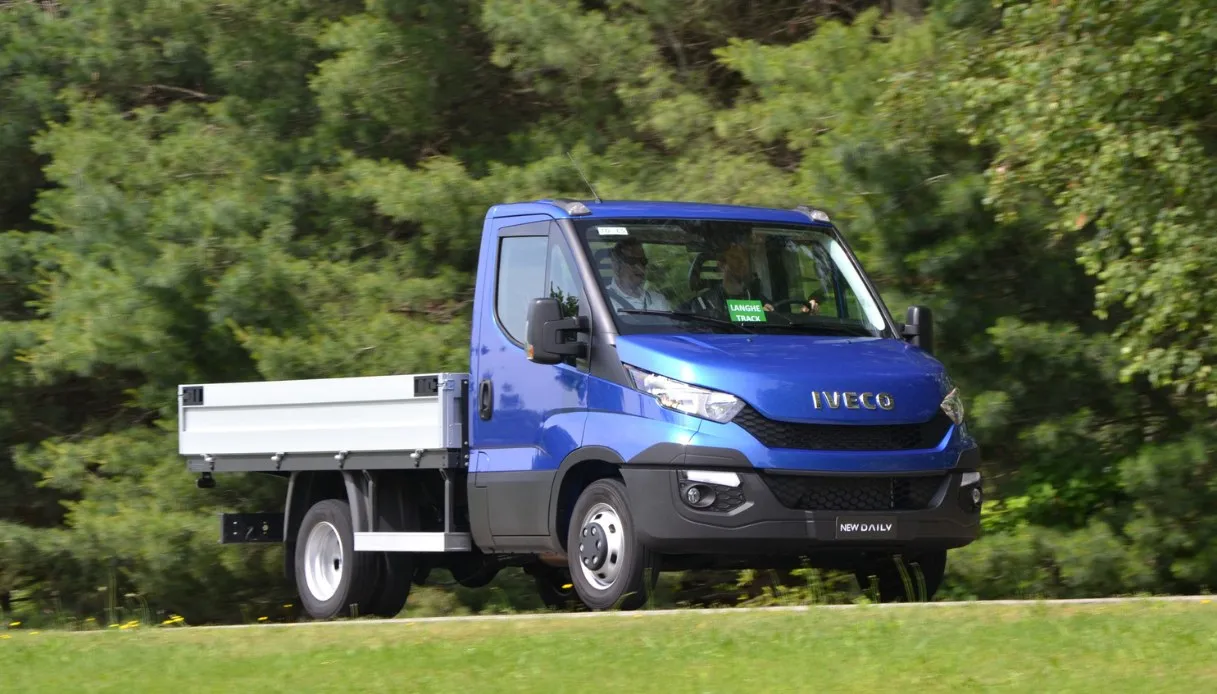
The operation has been in the air for months, but the structure for the handover is on the table: the civil branch of Iveco is preparing to change owners to end up under the banner of the Indian giant Tata Motors. A maxi-corporate reorganization that divides the historic Italian company in two. The segment that deals with the design and production of military vehicles remains armored at home, while civil logistics trucks, buses and vans head to Mumbai.
However, a big question mark remains. Just as the industrial agreement reaches the finish line, at the top of the Indian group there are tensions between family ownership and management which risk influencing the timing and future strategies of integration.
Who is Tata and where is she in her story?
To understand the scope of the deal, you must first understand who the buyer is. Tata is not just a simple car manufacturer but India’s largest industrial empire, with a total value exceeding 280 billion dollars. It ranges from steel to IT, passing through tea and airlines.
Today its automotive division finds itself at a real strategic crossroads:
- it needs to continue to stay outside Asian borders to become a global giant in light and heavy commercial vehicles
- must accelerate the transition to electric and hydrogen, integrating Iveco’s European technologies and platforms
Then there is the internal front, dotted with clashes between managers who would like to accelerate towards industrial and financial expansion and the more conservative attitude of the owning family, worried about the effects of indebtedness.
How much is Iveco worth, who is selling it and the figures for the operation
Until now, control of Iveco has remained firmly in the galaxy of the Agnelli-Elkann family through the Exor holding company, owner of 27% of the shares and over 43% of the voting rights. Determined to exit the heavy vehicle sector, the holding company structured the operation through three very specific financial steps:
- the sale of the division that produces military vehicles (Astra and IDV) will not go to Tata but to the very Italian Leonardo for 1.7 billion euros, thus creating a national land defense hub;
- the civil logistics segment, consisting of the production of Iveco Bus vans, trucks and buses, is taken over by Tata Motors in a 3.8 billion euro operation, equal to 14.10 euros per share offered in cash;
- the overall financial component for shareholders, which provides for a final collection of approximately 20.10 euros per share between the liquidity of the offer and the extraordinary maxi-dividend before the company leaves the stock exchange.
What are the real effects on Italy
Those who look closely at the industrial and employment fabric of our country wonder what will really change for workers and local production. The operation will bring with it very specific consequences:
- Tata has pledged to keep its headquarters in Turin and not to cut staff or close plants, where around 14,000 people work
- the spin-off of military vehicles in favor of Leonardo prevents strategic technologies from ending up under the control of a group outside the European Community
- with Iveco’s accounts weighed down by restructuring costs and the slowdown of the European market, the ability to invest in Italian plants will depend on the autonomy that Indian owners will grant to their managers
The financial details and the connection with the chaos in Mumbai
Apparently the operation would seem like a classic change of ownership at an industrial level, but behind the scenes there is a much more complex economic implication. To take over Iveco and support the group’s ecological transition, Tata’s management had to resort to significant bridge loans and evaluate a historic step: the listing of the central holding Tata Sons on the stock exchange.
The Indian Reserve Bank has in fact urged large holding companies to list on the official markets to guarantee financial transparency. This perspective, supported by the operational management, was instead forcefully rejected by the owner family, fearful of losing historical control of the empire and of having to give up the traditional ethical and philanthropic management of the assets.
The family war that weighs on the future of the empire
What makes everything more uncertain is the crisis at the top of the Indian group. The death of patriarch Ratan Tata has reopened the clash for the throne between two opposing visions.
Managers are pushing for large foreign debt acquisitions, such as Iveco itself, and for the listing of the family safe on the stock exchange, while Noel Tata and the family foundations seem increasingly determined to block the landing on the financial markets, reduce debts and bring the family dynasty back to operational command.
The recent resignation of operational president Chandrasekaran testifies to an irreparable rift. A move that forces the market to ask itself whether the new family-led course will confirm Tata’s multinational direction or whether it will mean a definitive retrofront on the national horizon.