The great wave of drought in Europe has caused a general lowering of the level of many rivers and lakes on the continent, including the Danube, one of the longest and most important in terms of water flow. This has brought to the surface an enormous amount of historical and archaeological remains, including the Constantine Bridge from 328 AD and around twenty Nazi ships from Hitler’s fleet, which testify to the centrality of this river in European history.
Some of these wrecks, depending on the water flow, re-emerge cyclically, but this year the lowering of the waters has reached record levels, putting the navigability of this important river artery at risk. In this article we will take stock of the situation, to understand what the lowering of the Danube has brought back in recent weeks.
Hitler’s Nazi fleet in Servia
In Prahovo, Serbia, in the stretch of river that serves as the border with Romania, the shoal brought to the surface a flotilla of around twenty German river warships from the Second World War. By 1944 the area had become a battlefield between Nazi Germany and the Soviet Union. The Germans, retreating, had to sink or abandon their boats. The Serbian government is doing everything possible to secure the wrecks, which may still contain unexploded war material.
The Constantine Bridge and the remains of a mammoth in Bulgaria
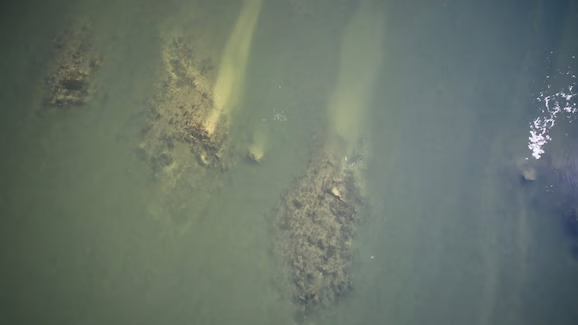
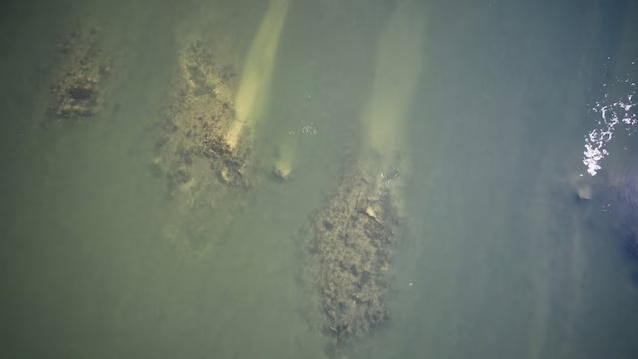
In the lower course of the Danube, which marks the border between Bulgaria and Romania, several interesting archaeological remains have emerged. Near Gigen, structures belonging to the ancient Roman bridge of Constantine, built in the 4th century, have become visible again. d. C. This structure was more than two km long, and allowed the two banks of the river to be connected. In Ryahovo, however, fossil remains were recovered, probably belonging to a mammoth.
The wreck of an Austrian barge in Croatia
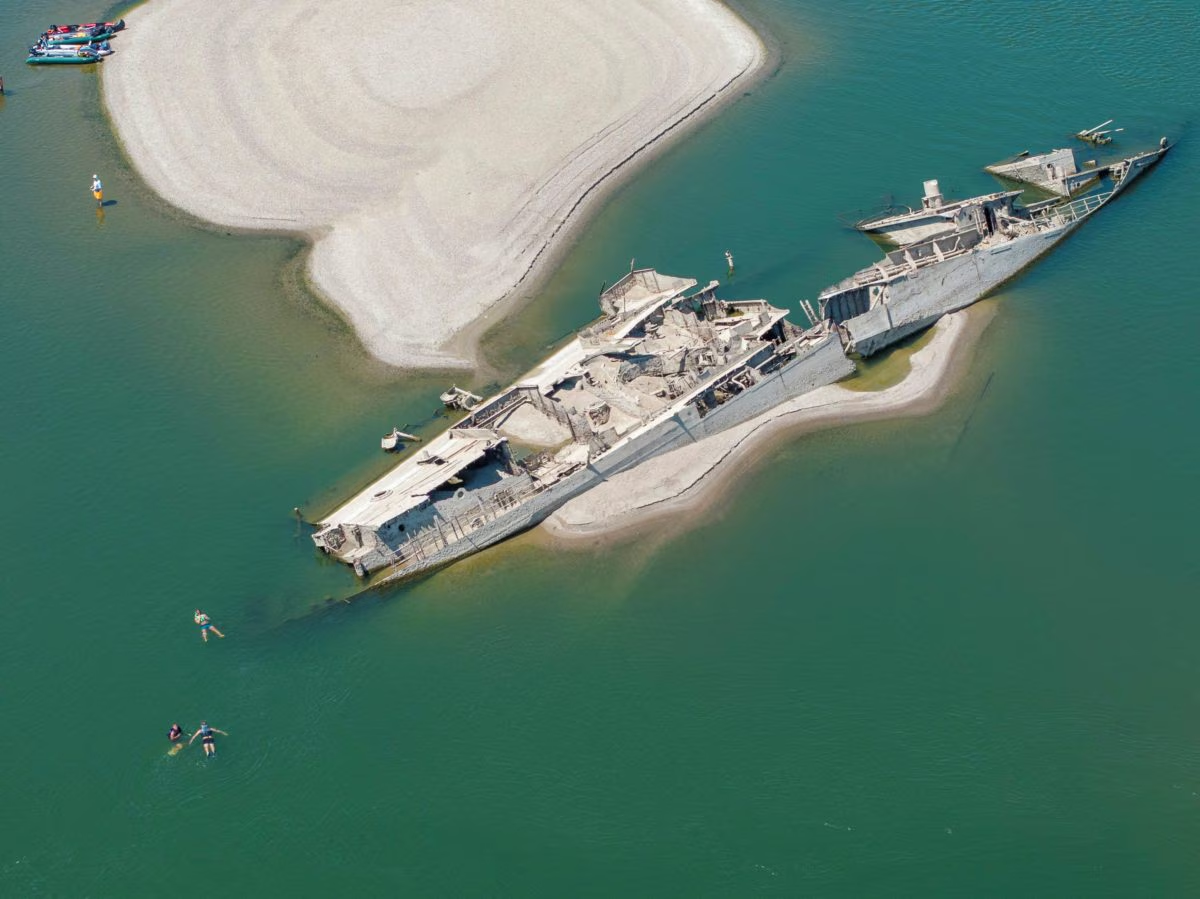
Near Lovas, the drought has brought to light the remains of the wreck of a ship, presumably a coal transport barge of the Austrian shipping company DDSG, wrecked in 1937. In this area, during the Second World War, in 1944, a major battle was fought between the German army and the Yugoslav partisans, consequently a lot of war material abandoned by the Germans in the river is re-emerging.
The British naval mine in Slovakia
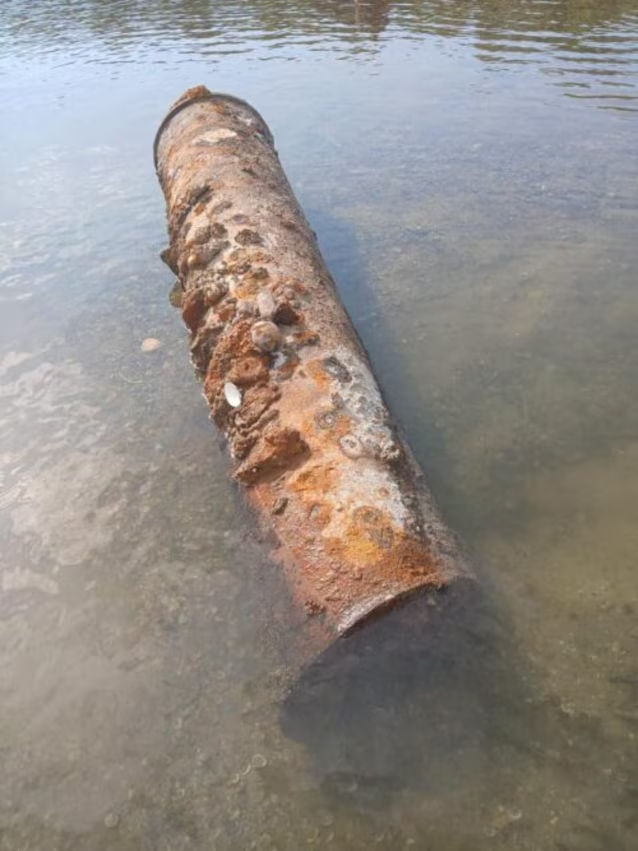
In the stretch of the river near Komorn, Slovakia, drought has exposed a World War II-era British naval mine. It is a 700 kg bomb, dropped by the RAF, the British Air Force, to undermine the river and prevent the Germans from using it as a communication route. The mine, still dangerous, was detonated safely.
The motorcycle, the soldiers and the mysterious stone sphere in Hungary
Numerous vestiges of the Second World War have also emerged in Hungary. In Budapest, not far from parliament, what was probably a “dump” of war material was found during the battle of Budapest, one of the largest and most violent clashes of the conflict, fought in January 1945 between the German army and the Red Army. The most exceptional find is certainly a motorcycle in perfect condition, model DKW 350-1, supplied to the Wehrmacht, the German army. The remains of two soldiers were found near the motorcycle, which will be identified thanks to the presence of dog tags, perfectly preserved, ammunition, anti-tank mines and a petrol can. The excavations and identification of the two fallen were carried out by the Volksbund, a German organization that deals with the recovery and commemoration of the fallen of the world wars.
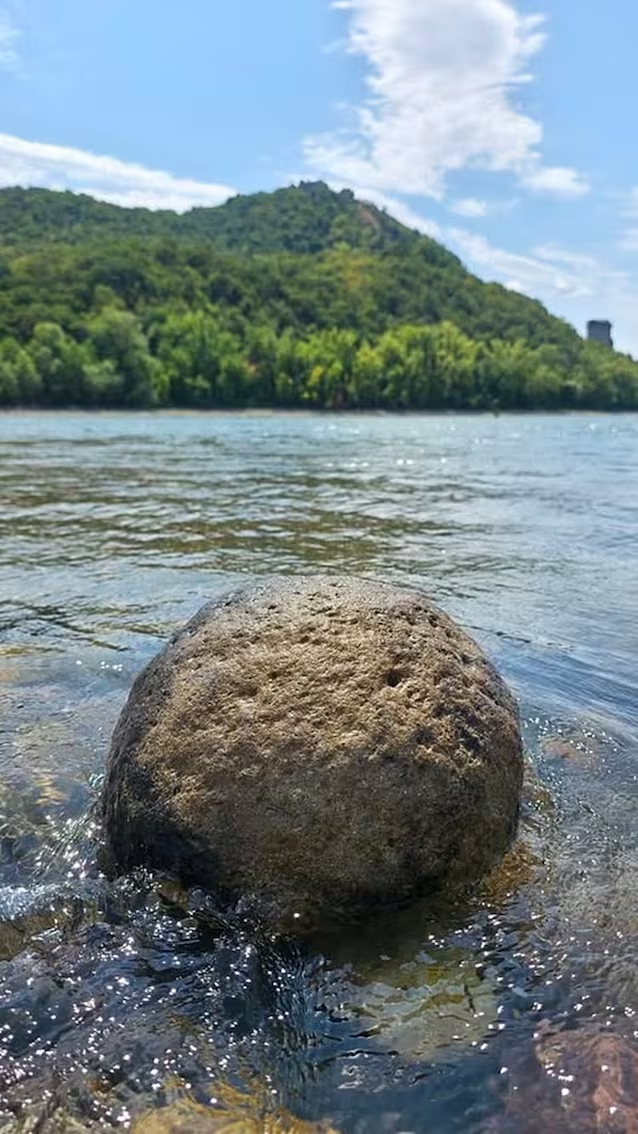
Near Mohács another World War II vessel emerged, while in Visegrád the mud yielded a mysterious stone sphere. Archaeologists are analyzing it to date it and understand whether it is a catapult projectile, a cannon projectile, or something else. The find could therefore belong to a very wide temporal range, which goes from the Roman age to the 17th century.