The 2027 Budget could contain a building amnesty. The Government is pushing again on the hypothesis with amendments on the initiative of FdI, with the support of FI.
In the new Budget Law, a series of amendments on the reopening of the building amnesty would thus end on the model of those discarded by the past Maneuver and subsequently also discarded by the Milleproroghe decree.
Maneuver, building amnesty hypothesis
The hypothesis emerged during an evening meeting on the Maneuver. The news was anticipated by The Republic and confirmed by the agency La Presse who probed sources in via della Scrofa. One of the hypotheses is that the Government aims to follow the terms of the 2003 amnesty, in addition to an amnesty of appurtenant and ancillary works and renovations carried out in the absence or in conflict with the building permit.
So, all things considered, the hypothesis on the Government’s table concerns building abuses prior to 2003. Subsequent abuses would not fall within the provision. The measure, it should be noted, was designed specifically for Campania, which at the time did not adhere to the building amnesty.
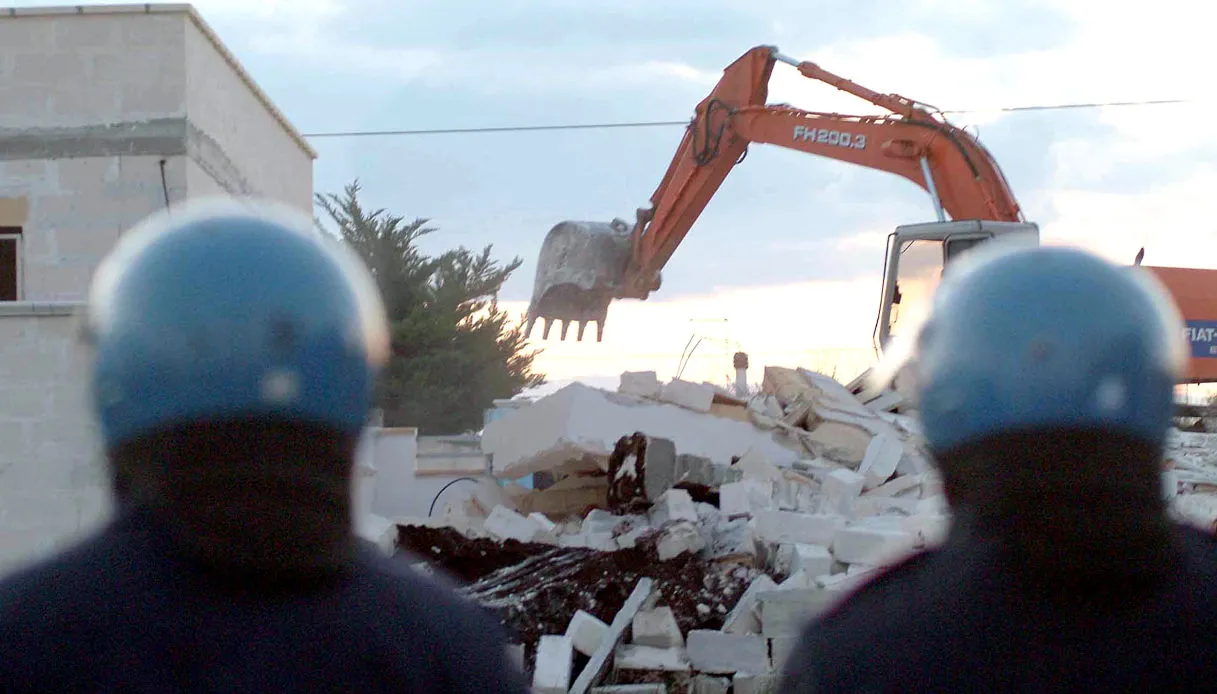
“Since, it is explained, there are 50 thousand abatement orders, the need coming from the territory is to reopen the terms,” he writes La Presse reporting palace rumors. If the new building amnesty is approved, then the final responsibility will pass to the Campania Region, where the council led by Roberto Fico will have 60 days to agree or not. The political responsibility, therefore, would be bipartisan: the input of the new building amnesty would come from the national centre-right, while the practical approval would be from the local centre-left.
What could be fixed
The 2003 amnesty, revisited and re-proposed in 2025, envisaged remedying:
- works carried out in total absence of permission;
- those only partially different from the authorization obtained;
- extraordinary maintenance interventions and restorations carried out outside the law.
Excluding other abuses from the amnesty, such as:
- illegal properties owned by individuals convicted of crimes related to those same abuses;
- interventions on which anti-seismic adaptation works are not technically feasible;
- abuses carried out in areas restricted for the protection of the territory such as hydrogeological risk areas;
- abuses involving particularly valuable assets such as national monuments.
Oppositions against the amnesty hypothesis
Angelo Bonelli, co-spokesperson for the Green and Left Alliance, rises up:
Giorgia Meloni is afraid of losing the elections and for this reason she winks at illegality. Indeed, he wants to institutionalize it. Brothers of Italy wants to reopen the Berlusconi amnesty of 2003. It is a slap in the face to honest Italians, to those who respected the laws and paid for technicians, charges and permits. And it is honest Italians who pay the bill. With their taxes they will have to pay for roads, sewers, lighting and services, i.e. urbanization works, for those who have built illegally, even in restricted areas. Whoever violated the law gets amnesty, and whoever respected it pays the costs. Proposing a new amnesty means encouraging new illegal construction. The message is very clear: build outside the rules, sooner or later the State will forgive you.
This is what Marco Sarracino, head of Southern Territorial Cohesion and internal areas in the national secretariat of the Democratic Party, writes in a note:
The right is trying again: according to what Repubblica writes, Fratelli d’Italia would be ready to present an amendment to the budget law to open the terms of the building amnesty in Campania. A proposal already announced by candidate Cirielli in the last electoral campaign and resoundingly rejected by the citizens of Campania. The government must not try to push back through the window what democracy let out through the door. Instead, deal with the real problems of the Campania region, starting with the serious emergency in the Flegrei camps.
M5S MP Agostino Santillo, vice-president of the Environment Commission, adds to the dissent:
It’s business as usual, there’s no limit to the worst. In fact, the shameful hypothesis of an FdI amendment to reopen the building amnesty for Campania arises. Giorgia Meloni’s genius is to resurrect the worst act of urban deregulation in our history. While the territory landslides and the hydrogeological instability presents a very high bill, Meloni, Salvini and Tajani respond with amnesties and shortcuts, rather than with investments and structural solutions. The acronyms change, but now the times in which the parties of the current majority have tried to insert this shame into national norms can no longer be counted. They will go down in history as the government of amnesties, not only in construction, but also in gambling or tax matters. They are the actors in illegal films and continually disrespect those who have always respected the rules. The right to housing cannot become an alibi to reward illegal construction and insult honest citizens. We will not give in and this time too they will have to back down.