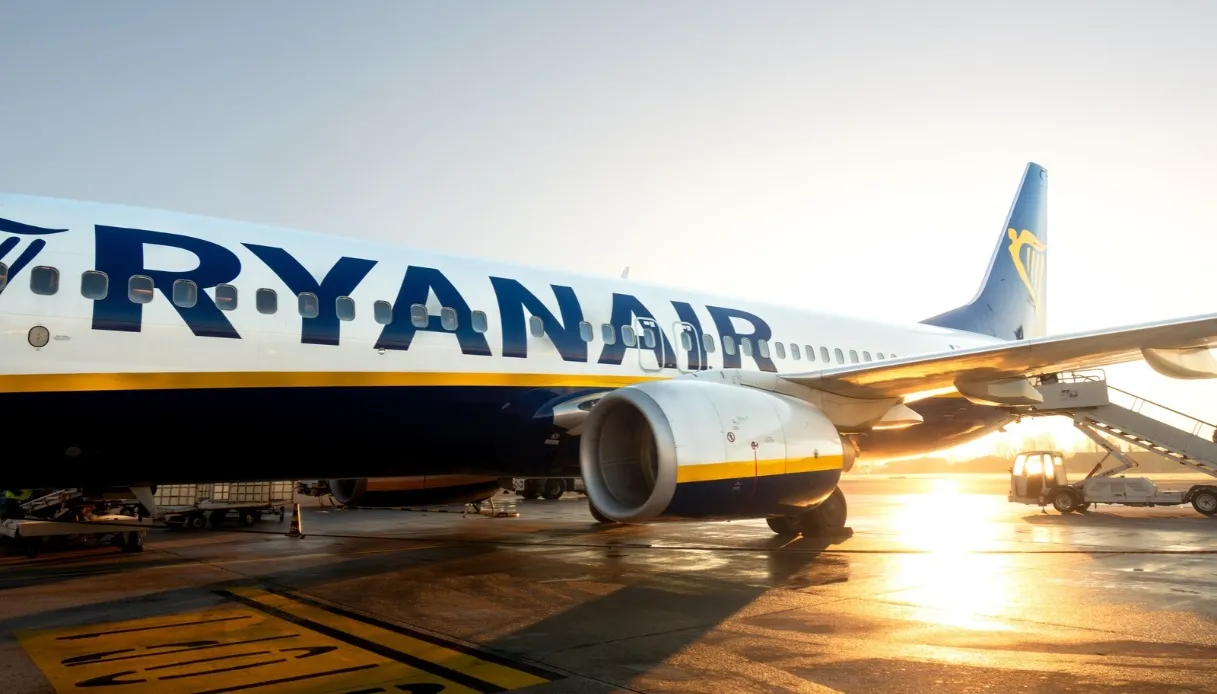
The maintenance of air links between the Sardinia region and the rest of Italy risks being undermined. It all depends on how the tug of war between Ryanair and Sardinia is resolved.
The low-cost airline has announced that it is considering canceling all flights to and from Alghero and Olbia in February and March next year. Furthermore, it seems that a reduction in frequencies is also planned at the Cagliari airport.
The Christmas holidays are safe, but the conflict remains open and revolves around a precise item on the cost of tickets.
Because Ryanair wants to cut flights to and from Sardinia
The plan put on the table by Jason McGuinness, Ryanair’s commercial director, provides for an immediate tightening during the low season and a conditional on a 400 million dollar investment package, put on standby if the Region does not cover the costs of the municipal surtax.
Here are the changes to the Irish company’s transport offer:
- cancel all connections to and from the airports of Alghero and Olbia in the months of February and March 2027;
- also cut frequencies on various routes departing and arriving at Cagliari airport;
- make any new development on the island subject to the complete abolition of the municipal surcharge for all twelve months of the year.
How the tax that Ryanair doesn’t want to pay works
At the center of the dispute is a tax that directly affects the final price of every airline ticket sold in Italy. The municipal surcharge on passenger boarding fees was introduced by the Finance Law for 2004 (law 350/2003) to finance security and fire-fighting services in airports and compensate the Municipalities that host an airport.
Born with a symbolic amount of 1 euro per passenger, the tax was increased several times over the following two decades, above all to fuel the Solidarity Fund for the air transport sector, intended for social safety nets for workers in the sector. Today it costs 6.50 euros for each passenger departing from Italian airports, which rises to 7.50 euros in the Roman airports of Fiumicino and Ciampino.
Who pays the surcharge and why Ita Airways has different constraints
The tax applies to every single traveler departing from Italy, regardless of the duration of the journey. The airlines collect it in the ticket price to transfer it to the airport managers, who then pass it on to the State and INPS. In practice the amount is charged in full to the passenger. On the lowest low cost fares it sometimes reaches even more than 20% of the total.
Ita Airways is also formally subject to the application of the municipal surcharge on boarding fees like any other company operating in Italy, but unlike Ryanair it operates on the main national routes within a regime supported by public compensation, without being able to unilaterally cut flights for commercial reasons.
The statements of President Todde and Councilor Manca
From the Sardinian council comes a firm line against what is defined as real commercial blackmail. The President of the Region Alessandra Todde clarified that Sardinia does not intend to be pressured on transport policy choices, recalling that the administration is working to guarantee both territorial continuity for residents and structural planning of connections.
On the same wavelength is the regional transport councilor Barbara Manca, who rejected the sender’s accusations of delays or administrative failures. The councilor specified that the regional funds to cover the 6.50 euros per passenger in the winter months have already been allocated by the Council, explaining that the operational entry into force of the measure depends exclusively on the authorization of the Ministry of Economy.
Territorial continuity
Any step backwards by Ryanair between February and March would risk leaving the range of national and European connections operated on the free market uncovered. In the winter months, in fact, the reduction in low-cost flights would restrict the alternatives for those traveling for work, study or tourism outside of the expensive routes.
On the other hand, connections guaranteed by territorial continuity are moving on the other hand, entrusted through regional tenders to carriers such as Ita Airways, Aeroitalia and Volotea on the routes from Cagliari, Alghero and Olbia to Rome Fiumicino and Milan Linate, which ensure minimum frequencies and capped maximum fares for residents.