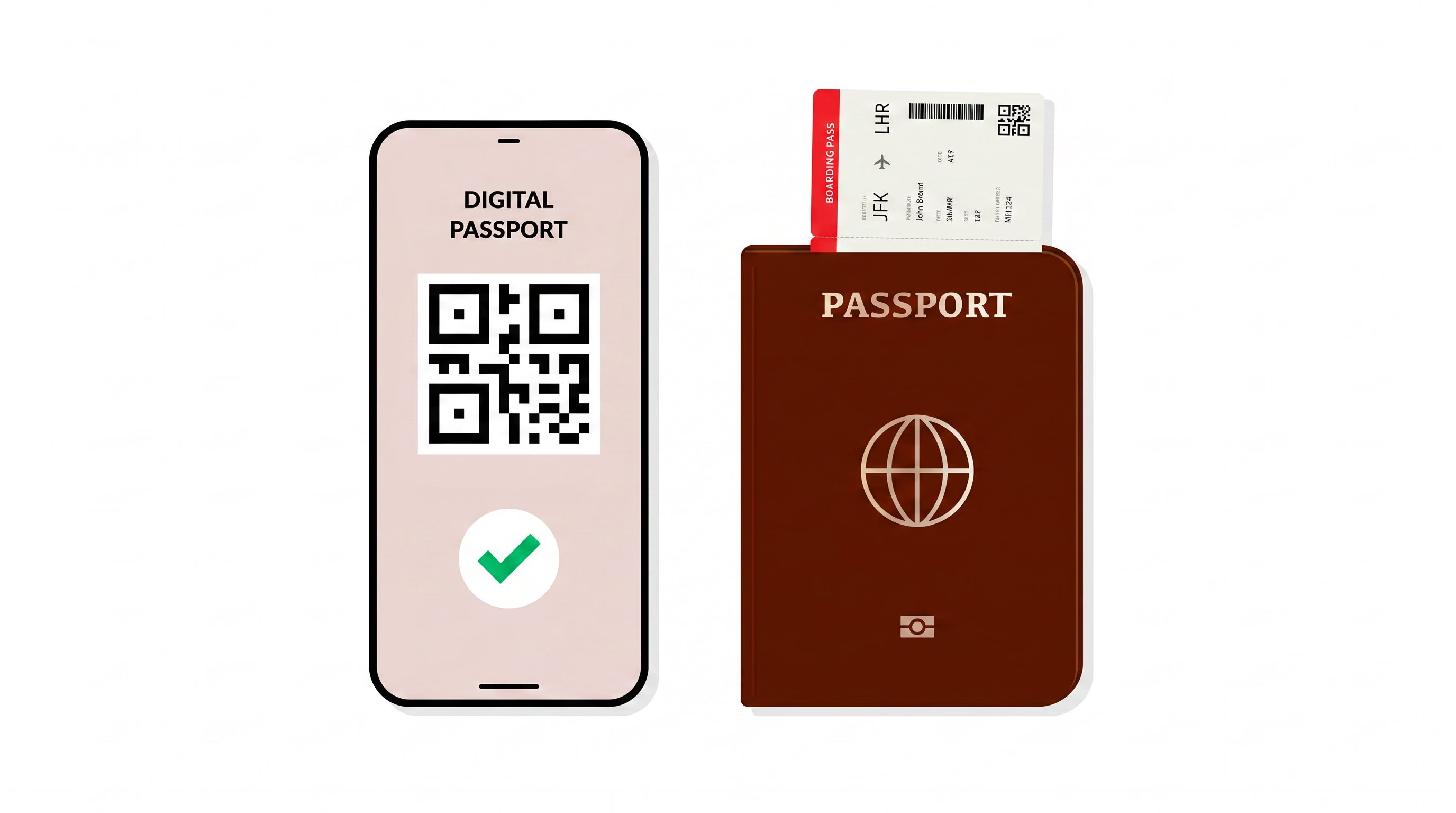
By the end of this summer, the European digital ecosystem will welcome an important innovation: the debut of the ID Pass on Google Wallet, also in Italy. This is a function designed to securely integrate the passport into Android devices, officially presented during the summit Money 20/20 Europe. The objective of this initiative is not to replace the paper document, which remains mandatory by law in physical checks, but to introduce a tool dedicated to simpler online identity management.
The heart of the system is the concept of selective credentials: a method that allows you to demonstrate a specific requirement, such as age, without having to reveal other sensitive data, including full date of birth, full name, residential address, etc. The activation process promises to be quick and attentive to privacy: data processing and storage take place locally on the smartphone via encryption, excluding any saving on Mountain View’s cloud servers. The initiative arrives at a historical moment in which Italy already shows a good familiarity with digital tools such as the IT-Wallet of the IO app, but where limitations still persist in the use of public documents for purely online interactions.
The news announced by Google in Italy by the summer
Looking at our daily lives, it is easy to see how smartphones have progressively absorbed a good portion of paper documents which, until a few years ago, were available exclusively in paper format. After the spread in past years of tickets and various tickets in the digital wallets of our phones, in Italy we have more recently welcomed driving licenses and health cards in electronic formats, thanks to the IO app. Google Wallet’s ID Pass adds a further step to this document digitization process and, according to what Google declared during Money 20/20 Europe, the main fintech event in the world, this innovation will debut in Europe by the end of the summer, including our country in the group of nations of the first release tranche.
The operation of the service is simple and immediate. To set it up, simply take a photo of the main page of your physical passport, have your phone scan the NFC chip embedded in the document, and complete a security check with a short video selfie. Once recognised, the passport is encrypted and stored exclusively in the phone’s local memory: no personal data passes through or is saved on Mountain View’s remote servers, guaranteeing full control to the user.
The real innovation lies in selective credentials, i.e. the possibility of confirming a single attribute of one’s identity without exposing the entire document. If a web platform required age verification, we could demonstrate the requirement without divulging unnecessary details. The validity of this model is confirmed by the collaboration with the German bank Sparkasse Bank, the first European institution to implement encrypted credentials of this type to allow secure checks with retailers without sharing personal information.
The paper passport will not be retired
It should be noted, however, that this instrument does not replace the paper passport, which remains irreplaceable wherever the law requires its physical presentation. The ID Pass was created to operate online and is built into the passport. Access to the function will therefore depend on the actual possession of the physical document, which is by no means destined to be retired.









