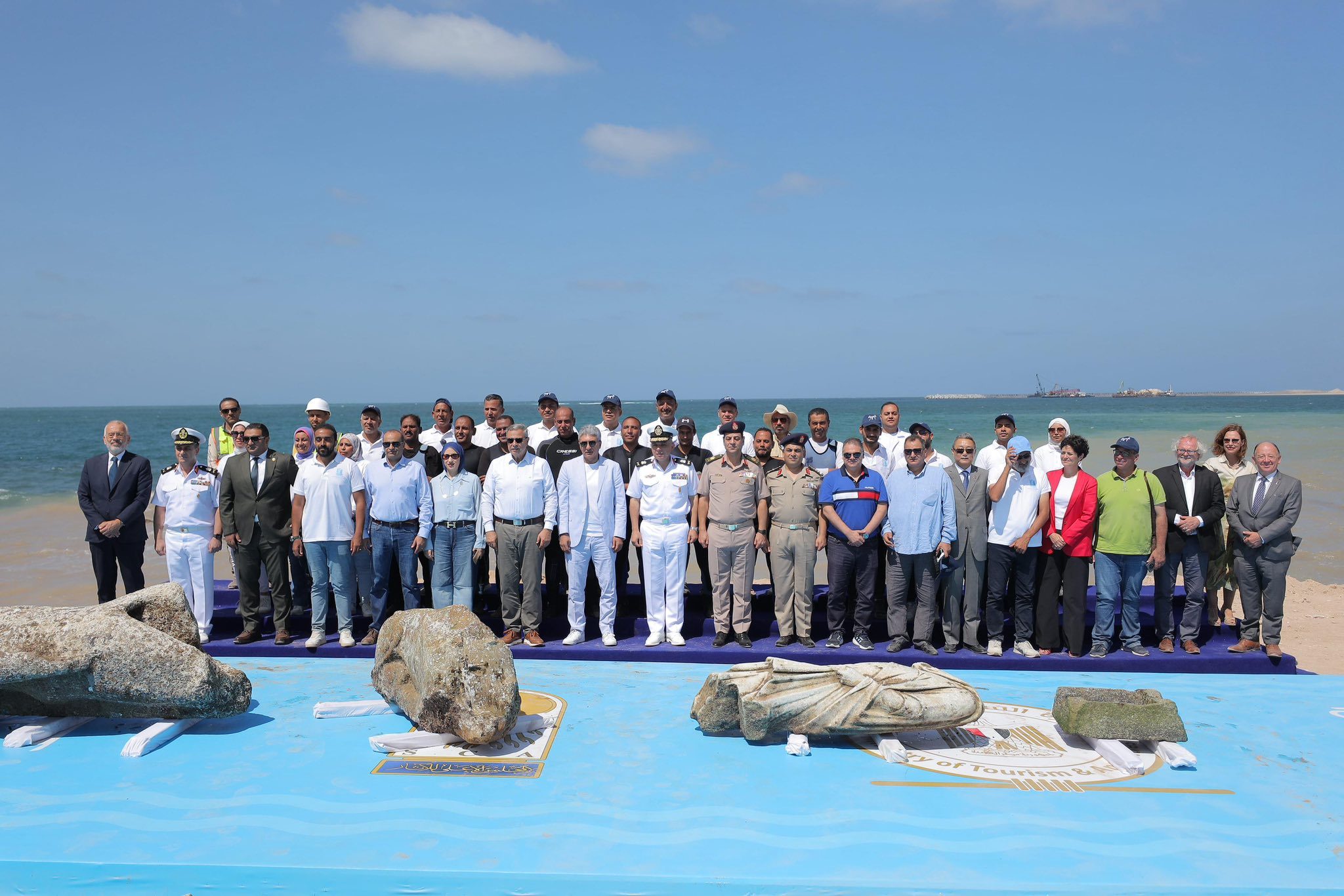
On the occasion of an event dedicated to the archaeological heritage submerged in Egypt, on August 21, the authorities of the country carried out the recovery of three large statues submerged in the waters of the Bay of Abukir, near Alexandria, which date back to two millennia ago, when the area had not yet been covered by the sea. The work saw the involvement of the staff of the Army and the Egyptian Marina, as the Minister of Tourism and Antiquity announced in a press release, Sharif Fathi. The three statues, mutile (as often happens to ancient sculptures, given that you leave like the head and the limbs are often very fragile), have been recovered by divers with the help of some cranes. It is a quartz sphinx, without the head, with the cartoon of the pharaoh Ramses II (1279 AC – 11213/1212 BC), of a granite man, without head and arts, and finally a statue of a man togate from the Roman era, in white marble, mutilated with arts and heads.
The materials recovered during the event come from a truly particular archaeological site, namely the ancient city of Canopo, in the ancient Delta del Nilo, now submerged largely in Abukir’s bay. It was a rather important city, both in Egyptian and Greek and Roman times. Much of its surface is now underwater due to the subsidiency, some earthquakes and floods that have succeeded over the centuries.
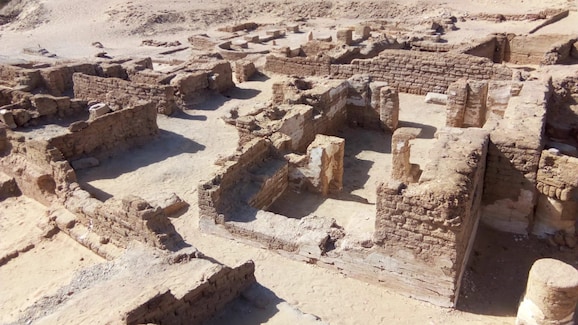
The research in the area of ancient canopo, at the same time as the discovery of the statues, have brought to light many submerged and material buildings of all kinds, which report a continuity of life that goes from Egyptian era to that of Islamic domination, passing through the Roman and Byzantine period. The recovered materials were few, with the aim of being exposed public: to safeguard the conservation of the submerged heritage of Canopo, it was in fact decided that the vast majority of the departments will remain on the spot.