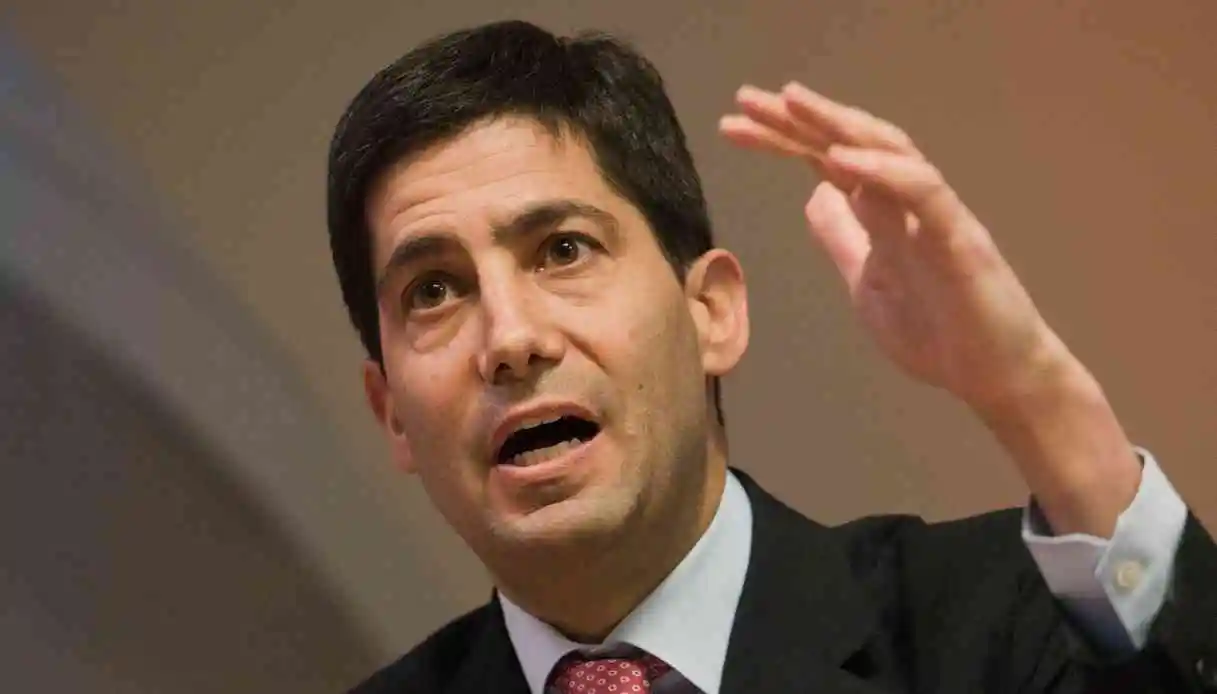
The United States Senate confirmed Kevin Warsh on the Board of Governors of the Federal Reserve, the first formal step in the process which, barring any surprises, will lead him to lead the American central bank in place of Jerome Powell. The upper house approved the nomination with 51 votes in favor and 45 against, on a substantially party basis, while the only Democrat John Fetterman, of Pennsylvania, voted with the Republicans. The vote for president is expected on Wednesday, two days before Powell’s term expires on May 15.
The transition takes place in a particularly delicate monetary policy context. The mandate of the governors lasts 14 years, while that of the chair is four. Warsh’s vote also ends the brief tenure of Stephen Miran, also appointed by Trump, who had taken over from Adriana Kugler after her resignation in August 2025. Powell chose to remain on the Board for an indefinite period, breaking with the practice that requires the outgoing chair to leave the institution.
Inflation complicates the picture
Data published yesterday by the Bureau of Labor Statistics showed a higher than expected acceleration in the cost of living. The consumer price index rose 0.6% monthly in April, bringing the year-on-year figure to 3.8%, the highest since May 2023. Core inflation, adjusted for food and energy, rose 0.4% monthly and 2.8% annually, well above the Federal Reserve’s 2% target. Energy costs recorded a leap of 17.9% per year, the largest increase since September 2022, driven by petrol (+28.4%) and heating oil (+54.3%), in a context marked by the oil shock triggered by the conflict with Iran.
Market reactions
The publication of the data penalized sentiment on risk assets. Stock markets veered into negative territory and Treasury yields rose as traders raised the odds of a Fed rate hike by the end of the year to around 30%, according to CME data. In Tuesday’s session, the Nasdaq 100 closed down 0.87%, while the Dow Jones Industrial Average recorded a marginal increase (+0.11%) and the S&P 500 lost 0.16%. On the currency market, the euro/dollar exchange rate is trading in the 1.1725 area, down 0.10% in the wake of the strengthening of the post-CPI dollar. Spot gold stable around $4,713 per ounce.
The analysts’ view
“Given that inflation is moving in the wrong direction and the labor market is holding up, it is very unlikely that the Fed will reduce rates in the short term,” observed Chris Zaccarelli, chief investment officer of Northlight Asset Management, who said an upward repricing of the cost of money by the end of the year is not ruled out. On the institutional side, Deutsche Bank’s chief economist for the United States, Matthew Luzzetti, underlined that Warsh was “highly critical” of the Fed’s communication, in particular the forward guidance.
The Warsh line
The future president arrives with a familiar posture. In numerous public interventions, Warsh has called for a “regime change” at the Fed and has argued that the reference rate could be lower; however, the markets expect the FOMC to keep rates stable, discounting the non-negligible probability of an increase. At the hearing, Warsh reiterated that he had not concluded “any agreement” with the president on rates and that he considered defending the independence of the central bank a priority. During his previous term as governor, between 2006 and 2011, he built a reputation as an anti-inflation hawk. The next operational appointment is the FOMC meeting on 16-17 June, the first test for the new leadership.