There is a paradox that describes the Italian manufacturing industry well: the marginality of a product is often generated downstream, when the piece receives its “skin” (colour, texture, resistance), rather than in the design phase. It is the surface finish that transforms a raw component into a product that communicates quality.
For this reason, it is worth reflecting on the fact that behind the most demanding automotive, luxury and design brands there are often specialized suppliers capable of making industrial painting a competitive asset: suppliers like Vermetal, a company from Castegnero, in the province of Vicenza, which has been operating in surface treatments and industrial painting for over 30 years.
A family story, started by two people
Vermetal was founded in 1991 on the initiative of Carlo Salvadori: upon his death in 1995, the company was taken over by his sons Marco and Mauro Salvadori, who are still at the helm of the company today. At the time there were two employees, today there are over 250 collaborators.
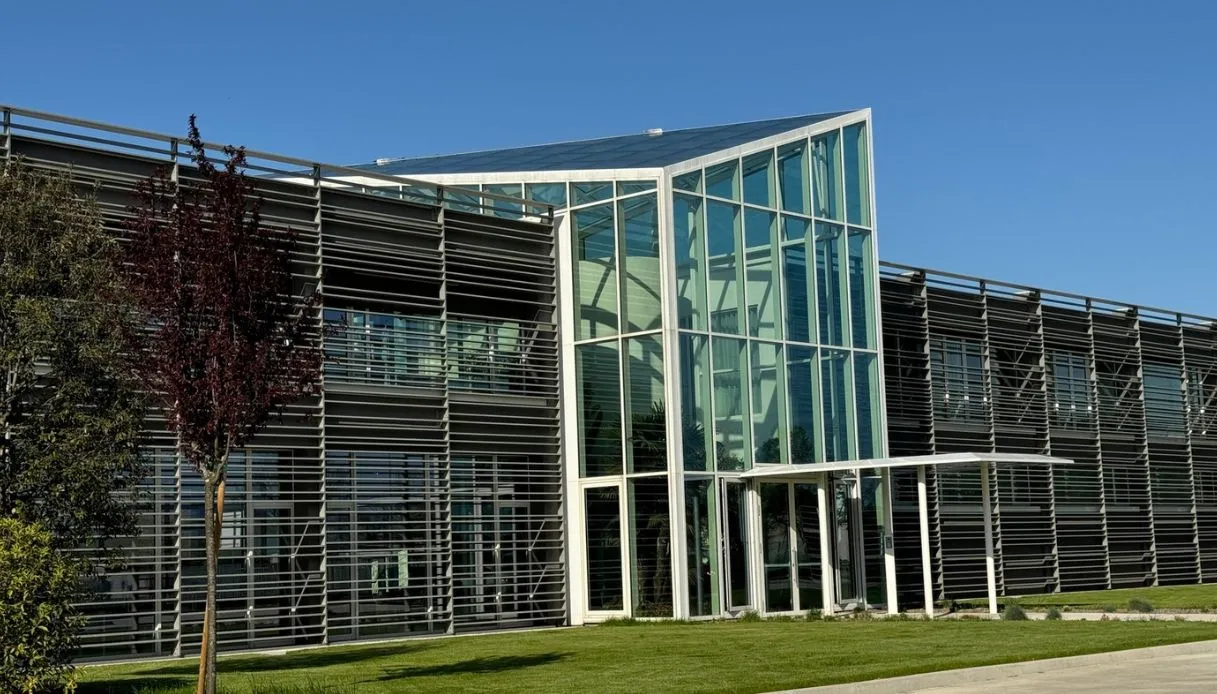
Over the years, the headquarters in Castegnero, which alone covers approximately 30,000 square metres, has been joined by a second production site in Romania, for a total production area which today reaches 34,000 square meters distributed across 7 production lines.
A growth that has also accelerated on an economic level in recent years: according to what was reported by the company, turnover has doubled in the last four years, reaching 25 million euros in 2023, with development margins which, again according to Vermetal, largely remain to be explored.
From painting supplier to solution provider for international brands
Starting as a company dedicated to simple painting, the company has progressively converted its know-how into a much broader service platform: powder and liquid painting, enamelling, anodic oxidation, sandblasting, cataphoresis painting, pad printing and screen printing, carbon molding and painting, 3D printing and prototyping, precision mechanical machining, as well as assembly, packaging and logistics services.
This ability to bring together different processes on equally different materials (metals, plastics, carbon fibres, composite materials) has allowed Vermetal to work alongside sectors with high quality barriers such as automotive, design, furniture, fashion, sports, agriculture, household appliances, infrastructure and medical.
The clients: from Apple to Ferrari
According to a previous company interview, the company’s clients include international brands of the caliber of Apple, Ferrari, Rolls-Royce, Lamborghini and the LVMH group (Louis Vuitton): names that reflect how strategic a supplier capable of guaranteeing qualitative continuity batch after batch can become for companies like these.
They are clients who share a characteristic: the finish of the component fully enters into the perception of the final product and, consequently, into its price positioning. A superficial defect on a body, on an interior detail or on a high-end accessory becomes an image problem even before a technical one, with reprocessing and replacement costs that fall on the entire supply chain.
For a supplier, working with these interlocutors therefore means aligning with stringent specifications and repeated checks, maintaining the same aesthetic and functional result on supplies that are repeated over time. It is the ground on which Vermetal has built its positioning, combining advanced technologies and the ability to adapt to complex processes in demanding markets such as automotive, furniture, medical, household appliances, mechanical industry, cycle-motorcycle and high-end design.
Large volumes and small series: the value of flexibility
On the finishing supplier market, positioning also depends on the scale of manageable orders. Vermetal claims to develop surface finishing solutions for the production of large batches, with a structure that at the same time allows the management of small quantities while maintaining the standards of the finished product unchanged.
Added to this is technical consultancy on the product and production process, the step that separates the manufacturing supplier from the process partner and which affects reprocessing costs and development times for a new component.
Quality and sustainability as growth levers
To support this expansion there is an ISO 9001:2015 certified quality control system, with aesthetic, physical and chemical checks on each production batch: surface defects and color in the standard light booth, thicknesses, gloss, dynamometric determinations and corrosion resistance tests, conducted on a representative sample then archived.
Parallel to the quality control runs a path of investment in sustainability, which includes pyrolysis plants for the reduction of emissions and the use of water-based paints with low environmental impact. The company also states that it is monitoring the acquisition of further certifications, including ISO 45001 on health and safety at work.
A growth, in short, which is measured in square meters and turnover and, above all, in the ability to remain a reliable interlocutor for those who, in the industry, have made surface quality a distinctive feature of their product.