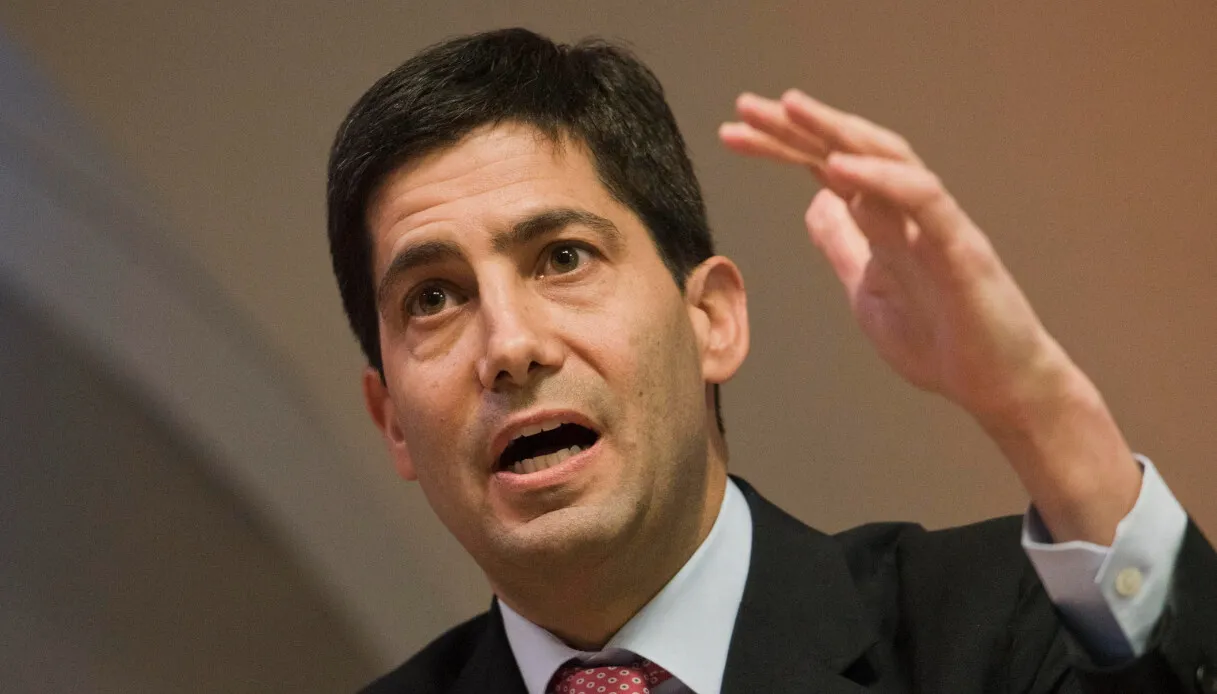
Future Fed Chairman Kevin Warsh hopes for a “healthy family fight” within the FOMC when he takes over the de facto leadership of the US central bank in May. This is what he writes Reutersindicating that every obstacle to his election has been removed, with the resolution of the criminal investigation into Powell unlocking the formalization of his nomination by Congress. The Senate Banking Committee is preparing today to approve Warsh’s nomination, which will then be submitted to the House for approval.
A “healthy family fight” between hawks and doves
And a “healthy family fight”, writes Reuters, is precisely what Warsh will face within the Monetary Policy Committee if he immediately tries to meet the expectations of President Trump (who chose him) and cut American interest rates.
In fact, of the 19 Fed officials who are part of the FOMC, half belong to the hawk family and therefore have a propensity for a restrictive monetary policy and appear reluctant to support rate cuts, especially in a situation of inflationary pressure. A third has a centrist formation, therefore leaning neither towards a restrictive nor an accommodating policy, and only three members can be counted among the doves, having expressed a reduction in rates in the short term. Among the latter is Fed governor Stephen Miran, who is preparing to resign to make room for Warsh.
What to expect for June
The test of the new Board led by Warsh will be the meeting on June 16-17, as there are no FOMC meetings scheduled for May. On that occasion, the new President, on his first formal outing, will find himself facing a rather thorny situation, with inflation once again under pressure, due to the surge in energy prices, and with a slowing labor market.
The lower employment growth, in reality, does not seem to worry Warsh much, who in this regard declared “if Americans who want a job can find it, according to the Fed’s parameters we are at full employment”. In fact, the lower job creation corresponds to a lower number of people looking for work, which keeps the unemployment rate low at 4.3%.
As for inflation, opinions will be more mixed. Warsh recently said that inflation “has improved slightly over the last year,” but the opinion contrasts with the judgment of many Fed members who say they are worried about the aftermath of the tariffs imposed last year and the effects of the war in Iran. Core inflation stood at 3% in February and economists estimate it rose to 3.2% in March. The PCE index most closely monitored by the Fed is estimated to have reached 3.5% in March against the 2% target. However, in some recent statements Warsh has hinted that he may review the Fed’s 2% inflation target, although this motion may not find many supporters.