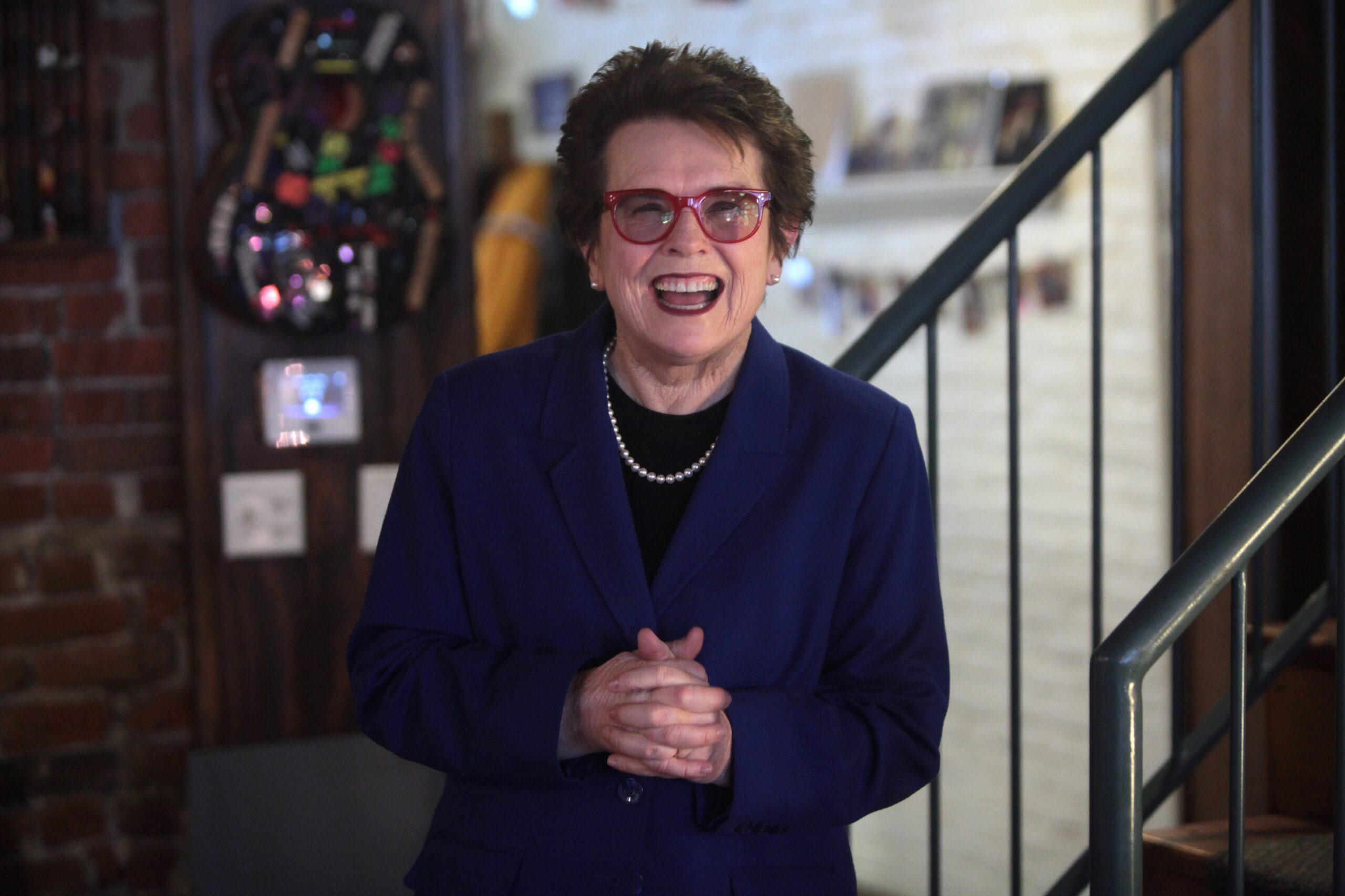
In these days in Shenzhen in China the Billie Jean King Cup is being held, the competition for women’s female national teams, in which Italy is reigning champion thanks to the title won in 2024 in Malaga. But who is Billie Jean King and why does the tournament take its name since 2020? The former American tennis player, today 81 years old, was an icon inside and off the pitch with his 78 titles (including 12 Slam) and with his countless battles for women’s rights that led her to be one of the founders of the WTA (the Women’s Tennis Association, the association that brings together professional tennis players all over the world). Let’s take a leap into the past and precisely in 1973, the year of Bjk’s “revolution”.
The tennis player who fought for the rights: the “battle of the sexes”
The dosage date is September 20, 1973: Billie Jean, then number 2 in the world, plays and wins against the former 55 -year -old champion, Bobby Riggs, who during a press conference had claimed that male tennis was higher than the female one and that despite the advanced age and the retreat could have beenat the best tennis players of the time. King is 29 years old, he has already won 1 Australian Open, 5 Wimbledon, 3 Roland Garros and 3 US Open. On the day of the event, over 30 thousand spectators gather at the Houston astrodome, Texas, despite the star prices of the tickets. The match, which will go down in history as a “battle of the sexes” is preceded by a pompous ceremony: the tennis player enters the field surrounded by pink feathers, transported on a golden litter by four boys with a naked chest and dressed as ancient slaves, the elderly challenging arrives on a chariot driven by models. King wins 6-4 / 6-3 / 6-3, without even giving a set.
The foundation of the WTA and the equality of prize pool between male and female
King’s victory has a huge impact on American society, in an era in which women are often relegated to crafts considered “female” (full -time workers earn on average just 56.6% of the male wage). In the same summer of the “Battle of the Sessions”, Billie Jean King contributes to the birth of the WTA of which the first president becomes. The American tennis player brings together over sixty colleagues who are preparing for Wimbledon in a room in the Gloucester Hotel, in the heart of London, to discuss his rights and strategies to be developed: the primary objective is to achieve the equality of the prize pool with the male circuit. King claims a meeting with the director of the US Open and shows surveys that highlight the growing interest of the public for women’s tennis. On 20 July 1973, the turning point: the American Federation announces that from the edition of that year it would have guaranteed identical prizes to the samples of the men’s and female scoreboard. John Newcombe and Margaret Court bring home $ 25,000 each. A revolution that later also embraced the other Slam: in 2001 the Australian Open also aligned, while 2007 had to be expected for Roland Garros and Wimbledon.
The battles for the LGBTQIA+ community and the awards from politics and tennis
Over time King has also become an icon of the LGBTQIA+community, after publicly announced his homosexuality: in 1981 he was the first to do it in tennis. The American is the spokesperson for associations, such as the Elton John Aids Foundation which promotes awareness on HIV and sexual education to the youngest. In 2009, President Barack Obama gave her the presidential freedom medal, the highest civil honor in the United States. In 2014 he founded Billie Jean King Leadership Initiative, a non -profit organization dedicated to promoting diversity and inclusion in the world of work. In 2020, female tennis celebrates one of its most influential representatives by titling the most important tournament for nationals: the Fed Cup (ex Federation Cup) becomes Billie Jean King Cup and does not pass edition in which the former American tennis player face godmother, supporting athletes from all over the world.