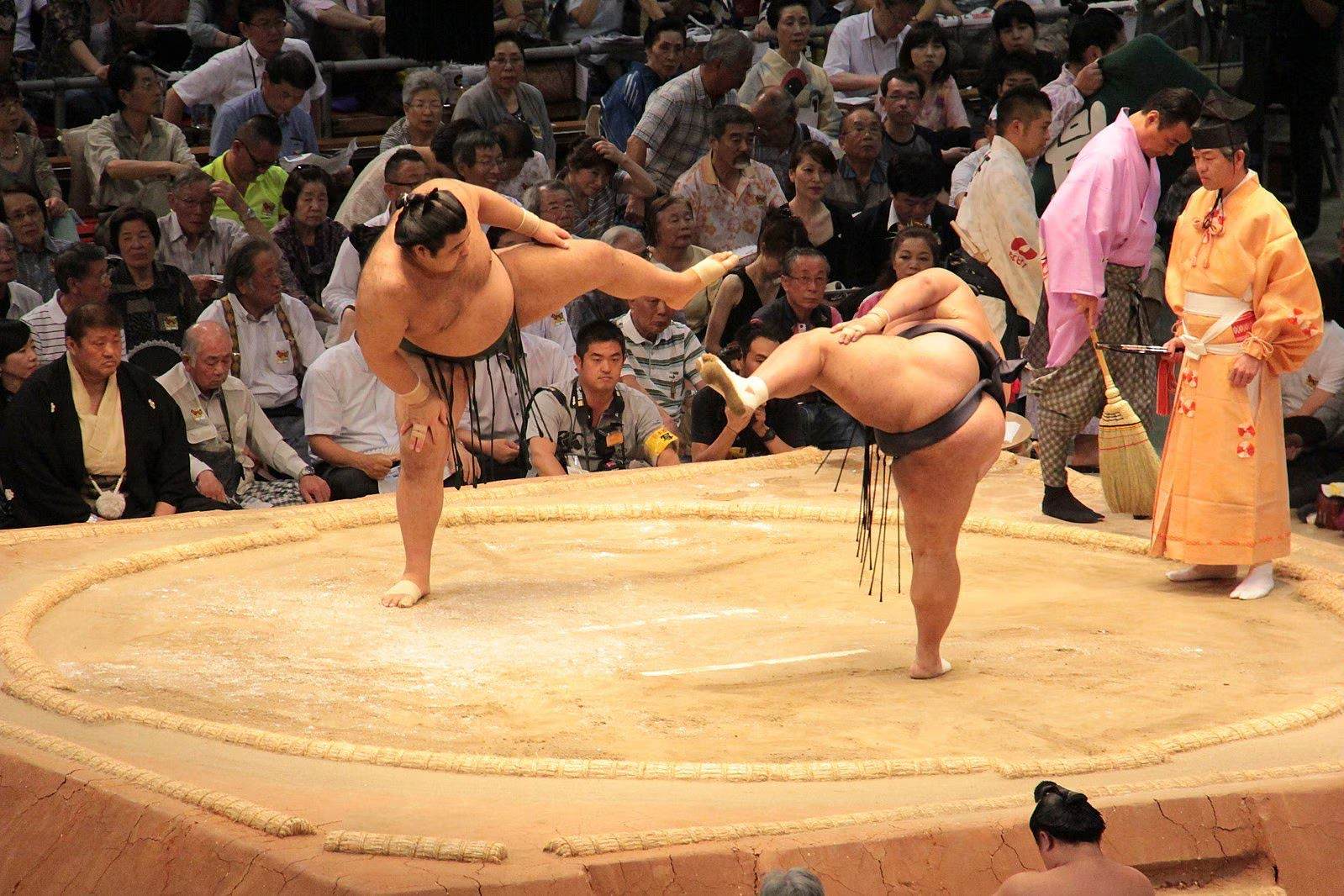
Sumo (相撲) – a Japanese term that literally means “pulling each other” – is a form of hand-to-hand combat: the purpose of rikishithe fighters, is to knock down the opponent or make him leave the combat zone, said dohyo.
Their high weight is obtained through subcutaneous fat and has a precise purpose: having a massive and well-balanced body means having a lower center of gravity, therefore being more stable and difficult to push out of the ring. At the same time, that bulk increases the impact force: each push becomes more powerful. Furthermore, the evenly distributed fat allows you to better cushion the blows during the clash. In order to weigh that much, players follow a very strict diet rich in proteins and are not free from health problems.
It is the national sport of Japan and, although there are no weight categories as happens in other disciplines, the weight of the wrestlers is very high, generally never under 90/100 kg: the heaviest rikishi in the world, Orora Satoshi, weighed 296 kg.
Between 90 and 150 kg: sumo weight rules
Although there is no concept of minimum or maximum weight for sumo wrestlers, since this sport does not have categories – as happens instead in disciplines such as martial arts, boxing or wrestling – the rules on which this type of fighting is based make it very important for athletes have a high and well distributed weight in the body.
The aim of sumo, in fact, is not to hit the opponent but make him lose his balance: the bigger and more massive he is, the more difficult it will be for him to be unbalanced. THE rikishi they face each other by forcefully hitting each other with their bare hands on various parts of the body. This is why for them fat is not just a question of weight: it acts as a real natural armor, distributing the impact of blows and protecting them from impacts during combat.
According to the rules, you win in two cases:
- if the opponent touch the outside of the dohyoor the area dedicated to combat
- if the opponent he loses his balance and hits the ground with any part of the body other than the soles of the feet.
It is forbidden to hit with your fists (you can only do this with an open hand), put your fingers in your eyes, pull your hair, hit your chest or stomach, and try to undress your opponent.
The meetings are short and, often, before starting there is a moment of tension and study which can be more or less long. In fact, when the first rikishi sprints, the other must support his weight by contrasting with his own body and it may happen that several seconds pass during which the fighters simply remain clinging to each other for upset the opponent’s balance.
How Sumo Wrestlers Build Weight: The Health Dangers
The weight of a sumo wrestler is not the result of an unregulated diet, but of a very strict diet which has as its objective the development of subcutaneous fat and not visceral, which is instead the one located between the organs and which leads to serious health problems. In addition to subcutaneous fat, it is also essential to work on the development of musculatureespecially necessary in the legs.
The rikishi must then hire approximately between 5,000 and 7,000 calories per day and they do it thanks to chanko nabe, a traditional Japanese dish that is the basis of their diet. It is a high-protein, low-fat meat or fish stew.
Ideally, if the athlete can eat properly and stay in the correct weight range for his or her highly athletic lifestyle, he or she could maintain fairly good health over time. But the reality is very different and fighters are often exposed to serious risks to their health.
In recent years, wrestlers suffer more and more pressure to weigh morethis leads their diet to be more irregular. Since sumo is a sport strongly linked to tradition, it is then difficult to accept the presence of medical specialists and nutritionists, with a consequent tendency towards neglect. As also highlighted by a study published in the Journal of the Endocrine Society, enormous body mass and high-calorie diets expose people to hypertension, type 2 diabetes, cardiovascular diseases and osteoarthritis.
The situation does not improve after the withdrawal. In fact, the reduction in physical activity and the difficulty in changing eating habits further increase the risk of metabolic syndrome and chronic diseases.
The life expectancy of a rikishi is around 60-65 years, about 15 years less than the Japanese average. In a study of 13 deceased wrestlers, 38% of the deaths were due to cardiac arrest and 15% due to cerebrovascular disease. Some emblematic cases illustrate the harshness of this discipline: Terunofuji fought against diabetes and serious knee problems; Shobushi died in 2020 at just 28 years old from COVID-19 complications aggravated by diabetes; Toyonoumi, weighing over 200 kg, passed away at the age of 56.