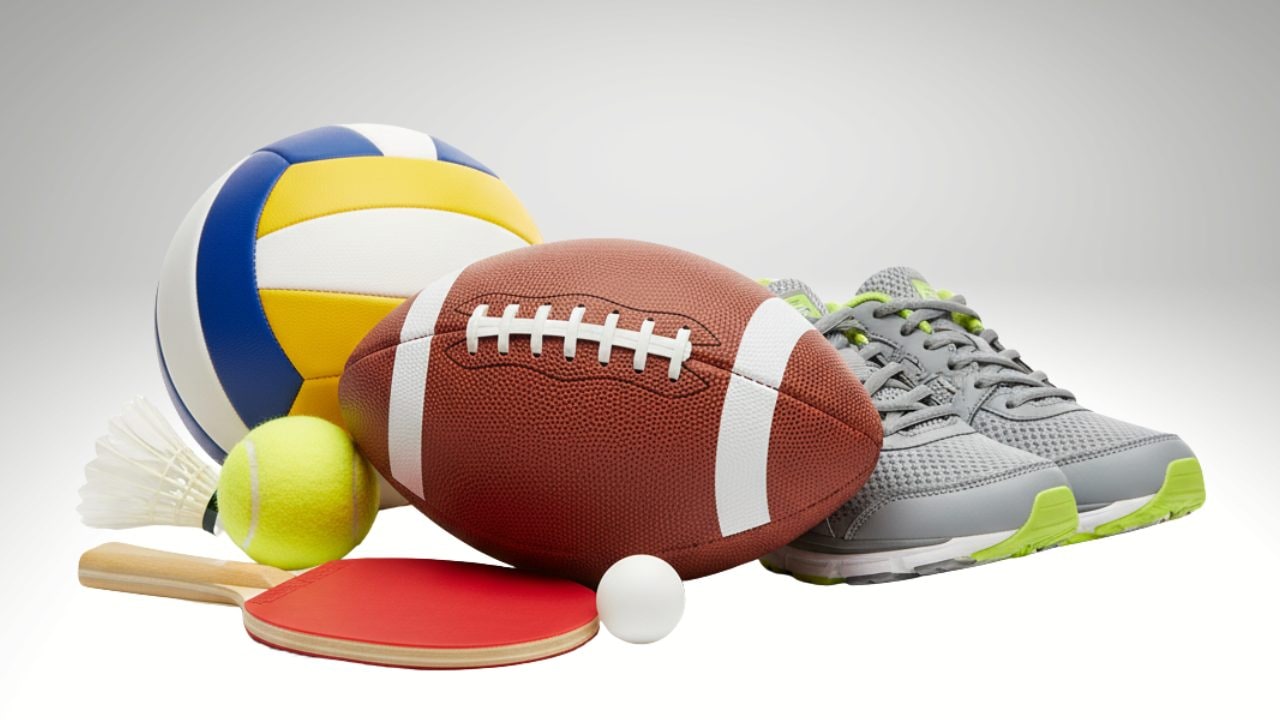
Many of the sports that we practice every day have names that seem simple, but which actually hide curious stories, historical origins and often forgotten anecdotes. Tennis, for example, takes its name from French exclamation “Tenz!”with whom the players warned the opponent that the ball was about to be hit. Ping-pong, on the other hand, owes its name to the sound of the ball that bounces on the table. Other sports recall places or people: Badminton takes its name from the English residence Badminton House, while volleyball was initially called “minonette”, to recall a similar sport practiced by the French nobility in the eighteenth century. And even the marathon brings with it a direct link with a precise historical episode linked to the Greek city of Marathon and recalls the race of Filippide, a messenger who traveled 42 kilometers to announce the victory against the Persians. Rugby, on the other hand, owes its name to the English city of Rugby.
- 1ping-pong
- 2badminton
- 3pallavolo
- 4rubgy
- 5tennis
- 6marathon
Ping-pong
The ping-pong name for table tennis derives from the onomatopoeic sound that the ball produces when it bounces on the table and on the racquet. Born in England towards the end of the nineteenth century, the game was initially conceived as an elegant pastime for the rainy days of the middle class Victorian club. It is argued that the first players used makeshift materials: a champagne caps such as ball, boxes of cigars such as clubs and books as a net. In the United States, the “Ping-Pong” brand was recorded by the company J. Jacques & Son in 1900, giving birth to the commercial term that we still all know today.
Badminton
Badminton, agility sport and lightning reflections, takes its name from the Badminton House, the sumptuous home of the Duke of Beaufort, in the Gloucestershire, England, where he was officially played for the first time in 1860. The Duke, during a trip to India, was fascinated by a local game called “Poon”, where the players hit a similar object. Back home, in 1873 he introduced the game to the English officers, who was then adapted with new rules and spread throughout Europe. At the beginning it was an elite sport, played in courtyards and private gardens, with wooden rackets and goose feathers for the flywheel.
Volleyball
Volleyball was born in 1895 thanks to William G. Morgan, physical education instructor at Holyoke YMCA, in Massachusetts (USA). Morgan wanted to create a physically less demanding game of basketball, invented a few years earlier by her colleague James Naismith. Minotone called him initially, inspired by both Badminton, because even there it was a question of passing an object on a network and tennis, as it recalled the service.
The name “MINONTETTE”, however, did not convince: during a demonstration of the game, an observer pointed out that the main objective was “Volleying the Ball”, that is “to” make the ball fly “. From there the term Volleyball was born, which in Italy would have been translated into “volleyball”.

Rubgy
The official date of birth of Rugby is 1823, when, according to tradition, the student William Webb Ellis at Rugby School, in the British town of Rugby (Warwickshire) took the ball during a football game and started running with it in hand. A gesture that would have changed the history of sport forever. In reality Ellis never claimed the invention of the game, and the origins still remain in part today.
What is certain is that in the mid -19th century, rugby spreads rapidly between English schools and universities. But a clear regulation was needed, because until then it was a variant of football, with different rules depending on the school. The breaking point was the possibility of running with the ball in hand and plating the opponent.
Among other things, the most important trophy of international rugby, the World Cup, bears the name of Webb Ellis, the student who – perhaps by chance – gave way to everything.
Tennis
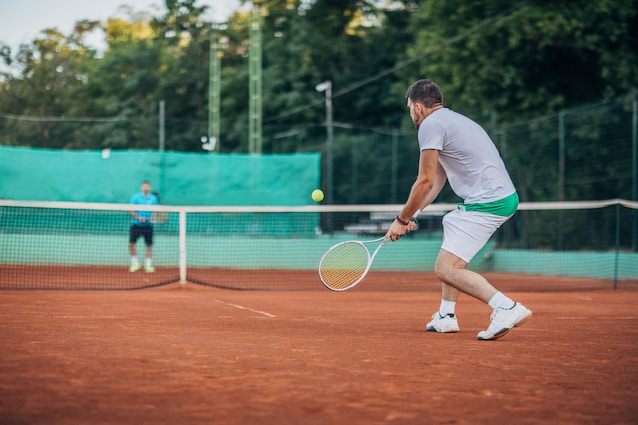
Tennis has ancient origins and a name full of curiosity. He was born in France around the twelfth century, where he was known as “Jeu de Paume” (Palma game), because the ball hit with his hands and not with the rackets. During the service, the players shouted “Tenz!” (“Keep!”), To warn the opponent. When the game arrived in England, that word became “tennis” in the British pronunciation, and from there spread in the rest of the world.
In 1873 the major Walter Clopon Wingfield codified the Lawn Tennisplayed on the grass, and patented him as “spharistike”. The complicated name was not lucky, but the rules yes: in 1877 the first Wimbledon tournament was played, the oldest and most prestigious in the world.
Marathon
The word marathon comes from the Greek city of Marathon, on the coast of the age According to tradition, in 490 BC an Athenian messenger, called Filippide, ran from there to Athens – about 40 km – to announce the victory against the Persians. After shouting “We won!”the runner would have fallen dead from the effort.
When the first modern Olympics took place in 1896 in Athens, it was decided to introduce a race that would recall that legendary company. The initial distance was variable, but was definitively fixed to 42.195 km during the 1908 London Olympics. Why is that distance? Because the route was stretched to allow the race to start from the Windsor Castle and end in front of the royal stage at the Olympic stadium.