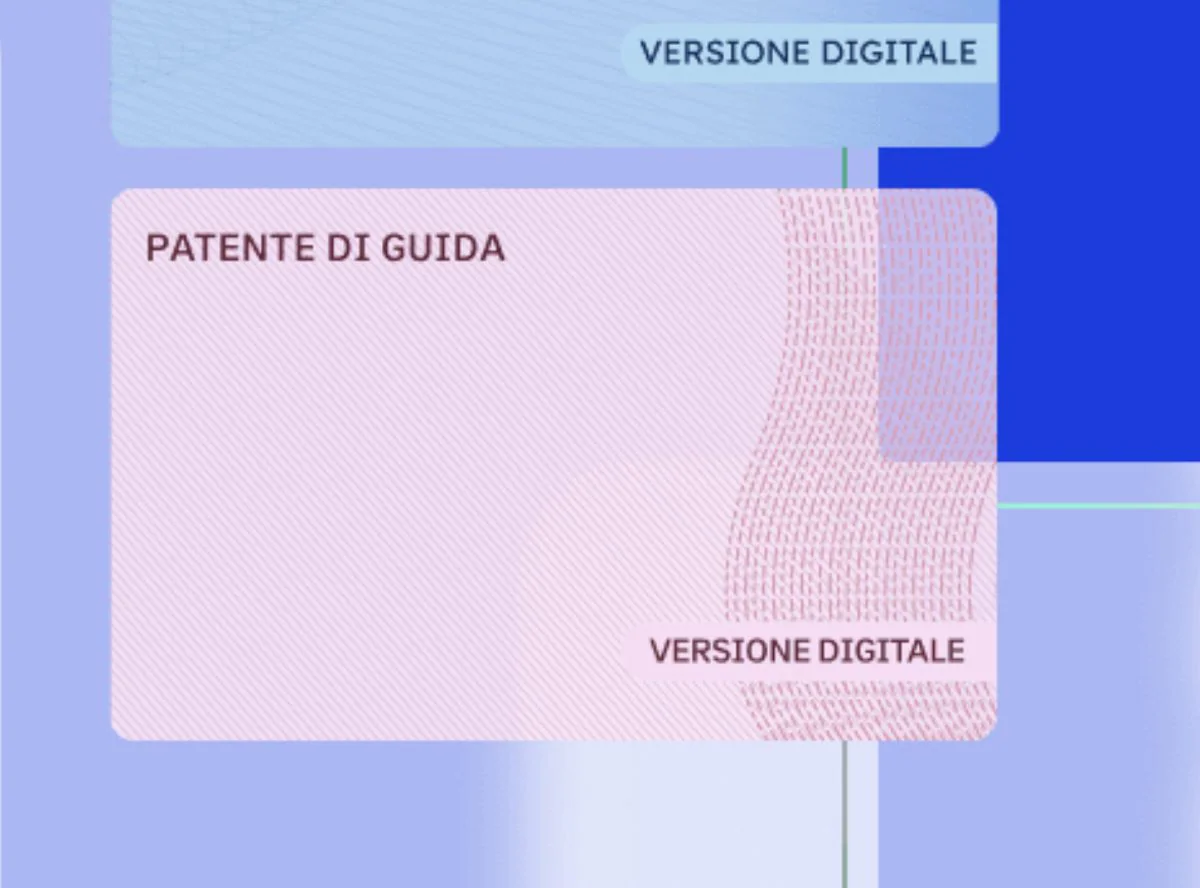
Imagine the scene: you open the IO app, start the procedure to load the digital driving license into the electronic wallet and you suddenly find yourself blocked by a message as laconic as it is irritating, which reads a generic “Registration problem”. This is what has been happening for some months now to some citizens in Alto Adige who, when trying to upload their digital driving license to the IO app, have seen the error in question appear because they have a name and/or surname with vowels featuring umlauts (the two dots that can appear above ä, ö, ü, which in this case is more correct to define as Umlaut since they concern words in the German language). According to what was documented by the tech newspaper D-DAYHowever, the problem would also appear for some citizens in possession of two names and would not be attributable to the IO app, but rather to the fact that the data present in the databases of the National Registry and those of the Civil Motorization may not coincide.
The umlaut problem when uploading the license to the IO App
The case exploded in Alto Adige, where for months many citizens have been unable to digitize their driving license. The provincial councilor of Team K, Maria Elisabeth Rieder, brought the issue to public attention with a question to the provincial council. In his response, the President of the Province Arno Kompatscher confirmed that the problem has been known since the beginning of the year and was also addressed in Rome, with the Minister of the Interior Matteo Piantedosi.
The crux of the problem are the letters with the umlaut – ä, ö, ü – typical of the German language, where the double dot above the vowel modifies its pronunciation. In computer systems, these characters can turn into a serious problem if they are not handled in the same way by all platforms involved.
And if in the first instance some pointed the finger at the IO app, the team at D-DAYanalyzing the code of the software in question, pointed out in an article dedicated to the topic that IO does not filter, does not alter or block any special characters. The app simply identifies the user by his tax code, sends it to the DMV servers and shows the name and surname on the screen as they are returned, without any modification.
The problem must therefore be sought in a mismatch between two large digital archives. When requesting a digital driving licence, the DMV systems compare their data with those of the ANPR, or the National Registry of the Resident Population, the official State database for the registry of citizens. If even the slightest discrepancy emerges, the system locks down for safety.
To jam the procedure, it seems that you don’t necessarily need to be in possession of a name and/or surname that contains umlauts: it could also happen to those who are in possession of a double name and this appears in one database (for example that of the ANPR) but does not appear in the other (that of the Civil Motorisation) or vice versa. This means, just to give a practical example, that if your name is “Marco Antonio” and you are listed as “Marco Antonio” in the ANPR database but you appear with only the name “Marco” in the DMV database, you could run into this problem. To resolve this you could try requesting a data alignment before you can complete the request.
Returning to the citizens of South Tyrol, similarly to the example just given, the problem could therefore be due to the fact that a surname like “Öhler” could be “Öhler” in the ANPR and “Oehler” in the archives of the Motorisation. In some cases the cause is even character encoding, the system that computers use to translate graphic symbols into numerical data: if the two databases adopt different encodings, a “ö” read correctly by one system may be illegible for the other.
A form of digital exclusion of some users
As long as the name registered by the DMV does not correspond, letter for letter, to that of the National Registry, the synchronization error will continue to appear. It is a form of involuntary but in fact real digital exclusion, which penalizes those with a linguistic identity that is not perfectly compatible with the rigid standards of state databases. To resolve it, a coordinated technical intervention is needed that aligns the information between the DMV archives and those of the ANPR once and for all.
In this regard, provincial councilor Maria Elisabeth Rieder explained:
It is important that the provincial government deals with the issue. This case demonstrates that the linguistic reality of South Tyrol is not yet sufficiently taken into account in state digital systems. (…) Digitalisation must not lead to the exclusion of people because of their name. Umlauts are a natural part of the German language and identity. For this reason I expect a rapid technical adaptation from the competent state offices, so that all citizens can use digital services in the same way.