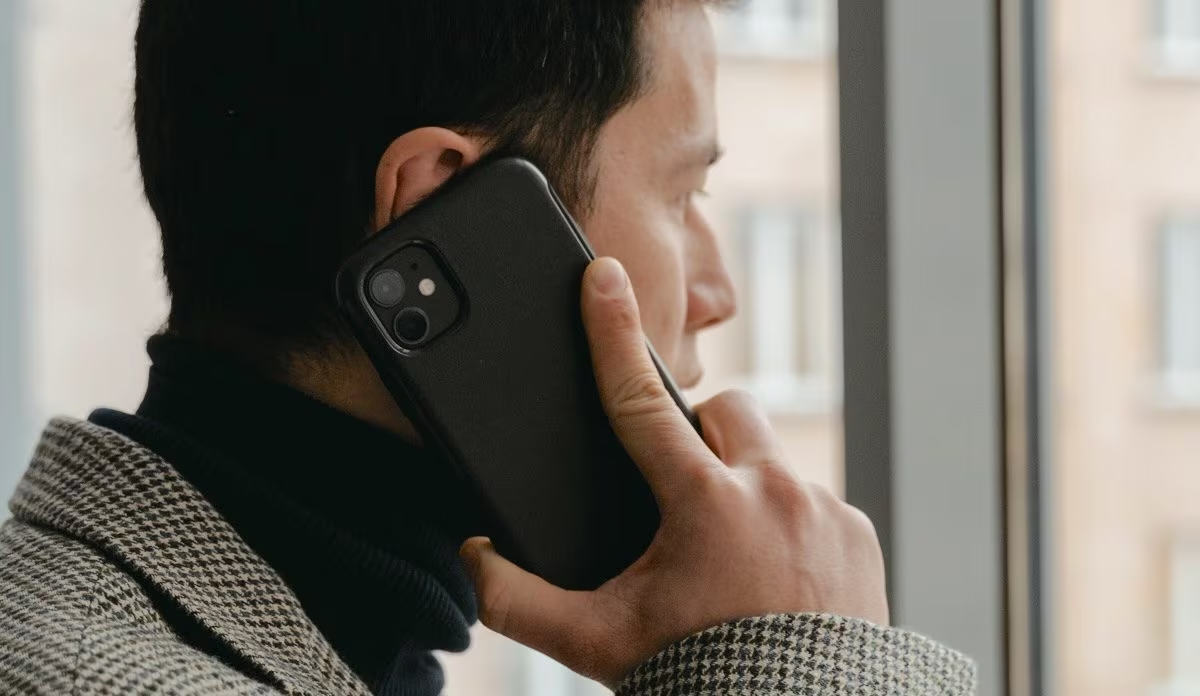
«Nexi alert: We found an outgoing payment». Should you receive a communication more or less like this, via a phone call or even via SMS or e-mail, be careful, especially if it is intended to convince you that someone is making a payment with your card. The risk is that, frightened by the possibility of an unauthorized operation made by someone on your account, you may communicate to the alleged Nexi operator (who is actually a scammer) the security codes necessary to access the services or complete online purchases. This means that, in an attempt to save your account, you will actually become complicit with your own executioners. Given the potential danger of this scam, which was already circulating via SMS in August, let’s proceed in order and see how the scam works and what to do to defend yourself.
How to recognize the Nexi suspicious fake payment scam
To recognize the scam, you must first pay attention to the way in which you are contacted. If you receive an unexpected call alerting you to a suspicious payment and the alleged operator asks you to provide security codes or other similar data, do not provide them. Requesting this information is a clear sign that the call is actually a pretext to perpetrate fraud.
It is no coincidence that Nexi specifies that its operators contact customers via the generic number 02 3488. If the call comes from a different number, it is therefore important to pay particular attention. The number, however, alone does not allow us to establish with certainty that a communication is authentic (since with the spoofing technique, cyber criminals could even simulate an official call coming from Nexi). In any case, an unexpected phone call accompanied by a request for confidential information and an attempt to instill a certain urgency or fear of encountering negative consequences if the instructions received are not followed, represents a signal that should not be ignored at all.
And the same applies if the communication were to be delivered to you via SMS rather than via a spam call. In this case you may receive a message reporting a payment or card issue and inviting you to click on a link. The link may take you to a web page where you are asked to enter personal information. Again, don’t do it!
A similar dynamic can happen with emails. On this support page, Nexi specifies that «never sends emails inviting you to click on links that lead to pages where you are required to enter personal data (e.g. card number, CVV, etc.) and fill out any form». If you are asked to do this, even in this case it is clear that you are dealing with a scam attempt.
Advice for defending yourself: what to do
What can you do in the event that you receive contact from a scammer? To protect yourself from scams, in the case of fraudulent phone calls you would do well to temporarily block the card and do so exclusively from the official channels made available by Nexi, therefore from the Nexi Pay app, from the Personal Area of nexi.it or, again, by using the Block Service available on 800 15 16 16. In this way you can temporarily use the card while you go and check what actually happened.
As regards suspicious emails, you can report them directly to Nexi by writing to [email protected]. In the report, indicate the sender’s address and the text of the email, so as to provide the information necessary to identify the scam.
If, however, you have clicked on the link contained in a suspicious SMS and have already entered your personal data, take immediate action by blocking the card as explained above. What if unfortunately you ended up on this article when it was too late? In this case, if you have already fallen into the trap and perhaps even had some money stolen from you, all you have to do is contact the Postal Police directly to receive all the necessary assistance.