
Throughout history, some iconic photographs have crystallized unforgettable moments and details: for this reason they have become famous all over the world and influenced public opinion on a series of events. On the occasion of the World Photography Day, which occurs every year on August 19, we examine ten of the most iconic and important photographs ever taken, arranged in chronological order from the oldest to the most recent.
Death of a militian (1936)
The famous photo taken by Robert Capa portrays a militia affected to death during the Spanish civil war that opposed the Republicans to the nationalists led by Francisco Franco.
The photo, taken in September 1936 in Cerro Muriano, near Cordova, became famous the following year, after being published by the American magazine Life. The authenticity of death of a militia, however, is not sure. Capa claimed to have immortalized, albeit casually, the exact moment in which the soldier Federico Borrell García had been hit by a bullet shot by Francoists. Some scholars confirm this thesis, but others believe that the scene had been built ad hoc by the photographer and that the death of the soldier had been simulated.
The child of the Warsaw Ghetto (1943)
In April 1943 the Jews locked by the Nazis in the Warsaw ghetto rebelled: it was an act of great courage, repressed after a few weeks by the German armed forces, who dismantled the ghetto and deported the inhabitants in the extermination camps (the rebellion should not be confused with the more general revolt of Warsaw, which took place in 1944).
The photograph of the child who surrenders to the Nazis, considered one of the most iconic images of the Holocaust, was taken by an SS photographer, Franz Konrad, and attached, together with 48 other images, to the report that the General of the SS Jürgen Stroop sent to his superiors to make them educts of the destruction of the ghetto.
The Flag of Victory in Berlin (1945)
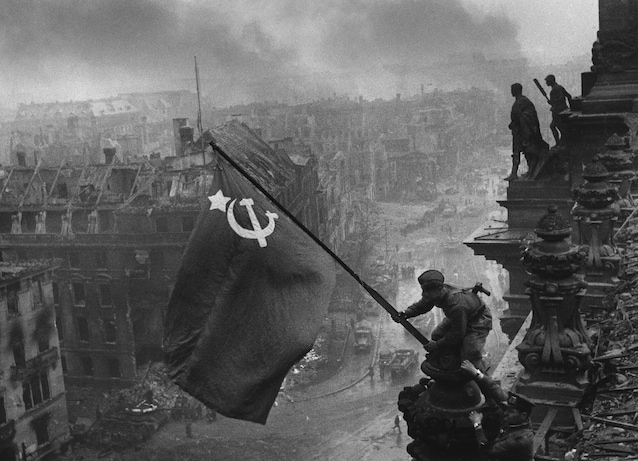
In April 1945, the soldiers of the Soviet Union reached Berlin, causing the definitive collapse of Nazi Germany. On April 30, the soldiers of the Red Army were able to hoist the Soviet flag on the ruins of the Reichstag, the Parliament building. The scene, however, was not immortalized by any photographer and therefore two days later, on May 2, it was reconstructed ad hoc: some soldiers in order to the same purpose and a photographer took a sequence of 36 images. The most famous photo, published for the first time in Russia on May 13, became one of the most widespread representations of the victory over Nazism.
Guerrillero Heroico (1960)
Ernesto Che Guevara was one of the most iconic figures of the twentieth century. His most famous photograph, entitled Heroic Guerrillerohe was taken to Havana on March 5, 1960 by Albert Korda on the occasion of the funeral of the victims of the explosion of the ship La Coubre, who transported weapons for the Cuban armed forces. The vessel exploded at the port on March 4, causing the death of 75 people, for an attack that, according to the Cuban government, had been organized by the CIA.
What is certain is that the photograph of Che Guevara was published by some Cuban newspapers, but at the moment it did not become popular. His fame is due to an Italian publisher, Gian Giacomo Feltrinelli, who in 1967 visited Havana and became aware of the shot. Back in Italy, he printed the image as a cover of the Bolivia diary of Che Guevara (who had been killed in the meantime) and on some posters. Since then, Heroic Guerrillero He has had a huge fortune: it is printed all over the world on T -shirts, stickers, posters, design objects. In Cuba it is even present on the three -pesos banknote (today in fact no longer used). According to many sources, it is absolutely the most reproduced image in history.
Buzz Aldrin on the moon (1969)
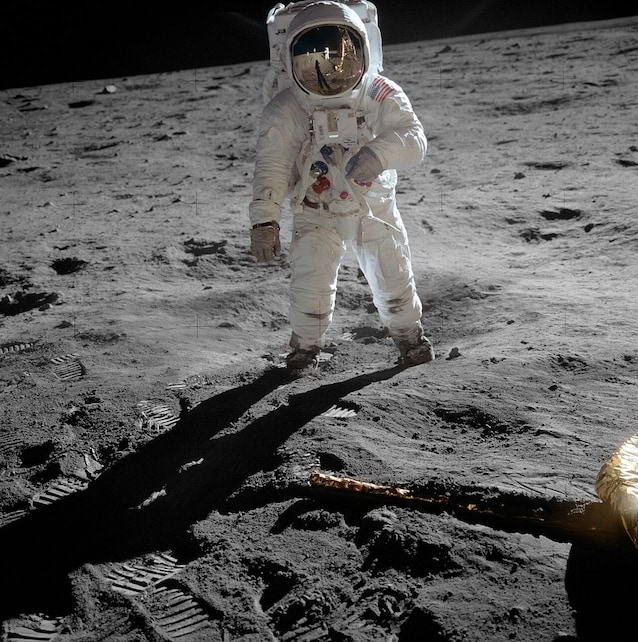
On July 20, 1969 the lunar module of the Apollo XI mission, with Edwin “Buzz” Aldrin and Neil Armeostrong on board, set off on the moon. Of the numerous photographs taken on the satellite by the astronauts, one of the best known is the one that portrays Aldrin frontally. In the reflection of his visor, the lunar module and the silhouette of Armstrong are clearly identified, which took the photo. And there is no doubt, despite the proliferation of conspiracy theories, that everything is true.
Napalm Girl (1972)
During the war in Vietnam, the Armed Forces of the United States and those of their South -Vietnamese allies did not scruple in making napalm bombings (an incendiary substance). The photo Napalm Girltaken on June 8, 1972, he portrays a nine -year -old girl, Kim Phúc, while fleeing naked from the village of Trang Bang after being seriously burned by the bombs released by the aviation of the South Vietnam. Phúc escaped screaming “Burning, burns”, together with other children. The burns caused serious damage and forced her to a long hospitalization, which lasted 14 months. Phúc, however, miraculously managed to survive. Today he lives in Canada and is UNESCO ambassador.
The photograph that made it famous was taken by Nick Ut, Vietnamese photographer present at Trang Bang (recently the attribution to UT has been questioned). Despite being known as Napalm Girlthe official name The terror of war.
Afghan girl (1984)
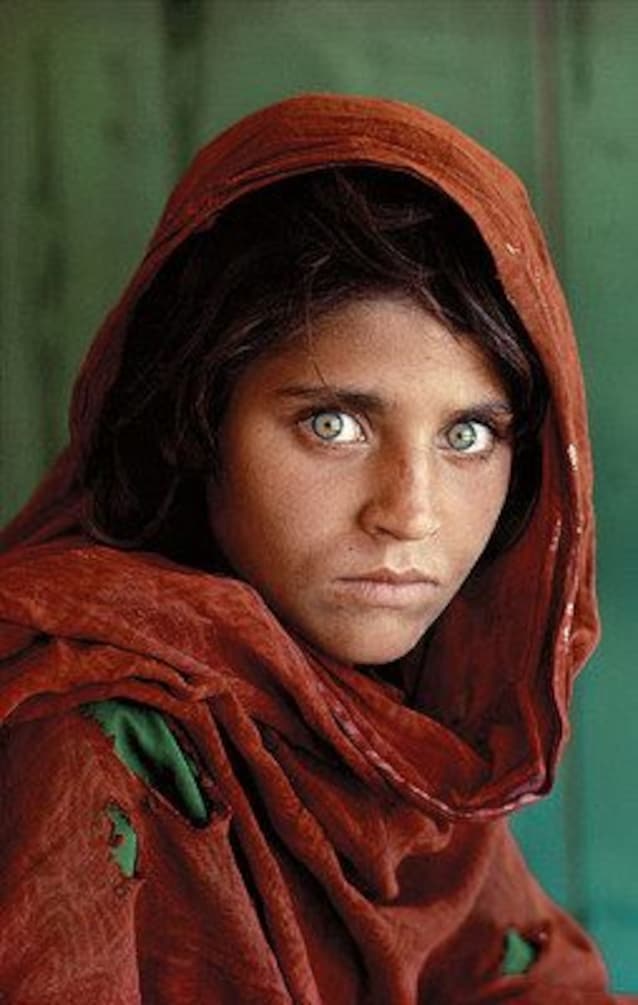
In 1984 the American photographer Steve McCurry visited a field of Afghan refugees in Peshawar, Pakistan, and photographed a girl with a vitreous gaze, whose name he ignored. The photo, entitled Afghan girlwas published by the National Geographic Magazine in 1985 and became the symbol of the conflicts of Afghanistan. The identity of the young woman remained unknown until 2002, when McCurry went to his research and, after various vicissitudes, he managed to find her: it was Sharbat Gula, born on March 20, 1972 and in the meantime became the mother of three children. In 2021, after the return to power of the Taliban, Sharbat left Afghanistan and was welcomed in Italy.
Creation pillars (1995)
Columns of interstellar gases and dust in the nebula eagle, 5,700 light years from the earth. The photography of the creation pillars was taken by the Hubble Space Telescope on April 1, 1995. In 2021 another telescope, James Webb, captured the image again. Photography is famous because it has made it possible to improve the knowledge of the stars’ formation process, but also because it demonstrates the skills of our technology, capable of taking images after thousands of light years. To get an idea, consider that a light year is equal to almost ten thousand billions of kilometers.
The death of Alan Kurdi (2015)
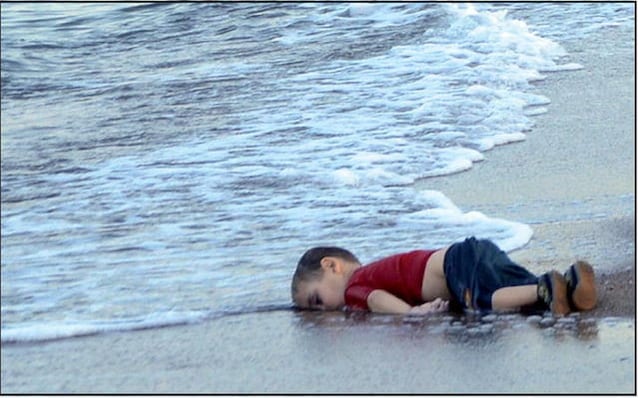
Alan Kurdi was a Syrian child, who died on September 2, 2015 while with his family he tried to cross the arm of the sea, just four kilometers wide, which separates the Turkish city of Bodrum from the Greek island of Coo. The dream was to reach the European Union and leave the wars and persecutions behind Syria behind. Alan’s family had paid a large sum for the short journey from Türkiye to Greece, but the rubber dinghy on which she traveled, loaded more than necessary, overturned at sea. For Alan there was no escape. The image of his body lying on the shoreline became the symbol of the Syrian refugee crisis.
Mahmoud Ajjour, the Palestinian child mutilated by the bombs of Israel (2024)
The genocide that the Israeli armed forces are making in the Gaza strip does not spare children, who die under the bombs, hunger and thirst every day. One of the photos that shows atrocities in the raw way portrays Mahmoud Ajjour, a nine -year -old boy seriously injured in March 2024: while he fled during a bombing, he turned to encourage family members to run and was hit by the explosion of a bomb that destroyed his arms, leaving him mutilated.
Mahmoud was welcomed in Qatar, where he is struggling to learn to live in his new condition.