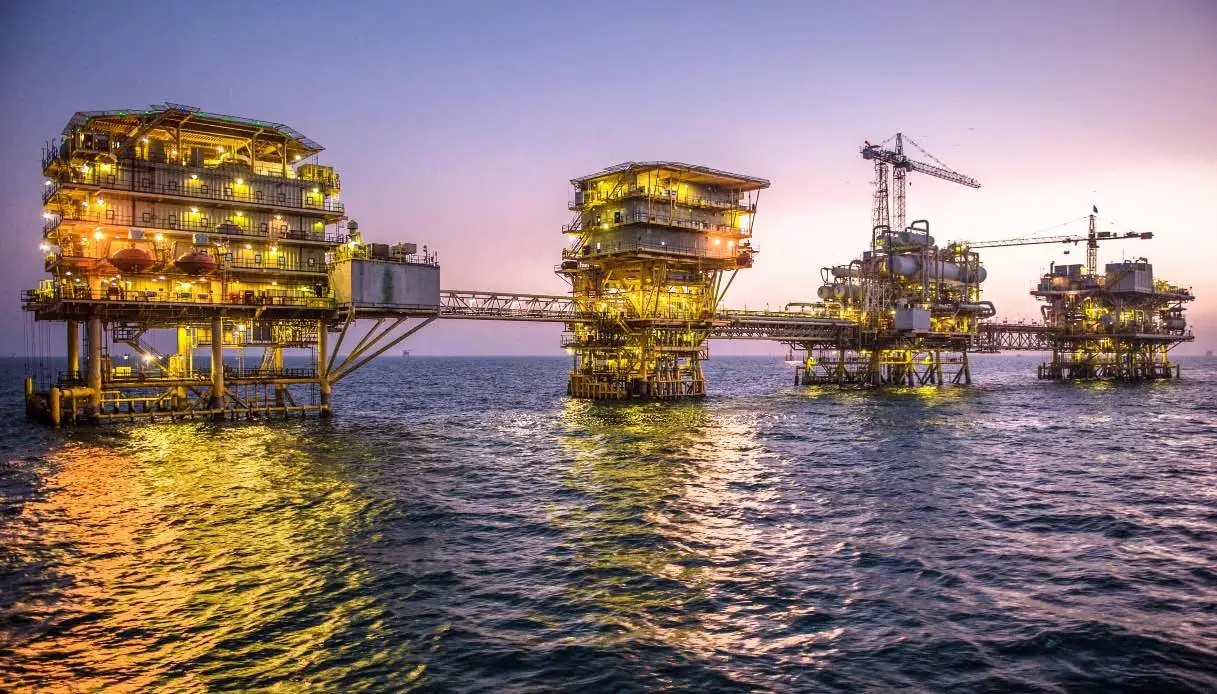
Saudi energy giant Saudi Aramco posted a solid performance in the first quarter of 2026, announcing a 26% year-on-year increase in first-quarter earnings, beating analysts’ forecasts, as it reached full capacity on a key pipeline that allows it to bypass the war-blocked Strait of Hormuz.
The numbers for the first quarter of 2026
Adjusted net profit for the first quarter of 2026 stood at $33.6 billion, compared to $26.6 billion in the same period a year earlier, the Saudi national hydrocarbon company led by CEO and President Amin H. Nasser said. Therefore recording a leap of 26% on an annual basis.
The progress becomes more consistent when compared with the previous quarter’s figure: the first quarter figure represents a 34% increase compared to the profit of $25.1 billion recorded in the fourth quarter of 2025.
Analysts had expected adjusted net profit of $31.2 billion for the first quarter, Aramco said.
Aramco reported a gearing ratio of 4.8% at the end of the first quarter.
The company’s board of directors approved a base dividend of $21.9 billion for the first quarter, an increase of 3.5% from a year earlier, Aramco said.
Results that reflect “strong resilience and operational flexibility in a complex geopolitical context”, declared CEO Nasser.
East-West Pipeline essential to mitigate Hormuz effect
“Our East-West Pipeline, which has reached its maximum capacity of 7 million barrels of oil per day, has proven to be a critical supply artery, helping to mitigate the impact of a global energy shock and providing relief to customers affected by navigation restrictions in the Strait of Hormuz,” Nasser noted, adding that recent events have “clearly demonstrated the vital contribution of oil and gas to energy security and the global economy, and are a stark reminder that a reliable energy supply is fundamental.”
Iran’s blockade of the Strait of Hormuz has caused the loss of nearly a billion barrels of oil, and the shortage worsens every day the sea route remains closed.
Oil prices on a roller coaster
Oil prices rose on Friday after Iran again fired missiles at the United Arab Emirates and the United States struck two Iranian oil tankers trying to evade the naval blockade.
Brent prices have risen 95% in the first quarter and 67% since the beginning of the year.
Trump’s no to the latest Iranian counterproposal caused crude oil prices to jump. Brent futures, the international benchmark, are currently up 3.9% at 105.3 dollars a barrel, while US West Texas Intermediate (WTI) futures advance 4.6% to 99.8 dollars.
During recent quarterly earnings conference calls, CEOs of major oil and gas companies warned that the world’s energy system will change dramatically as a result of the war with Iran.