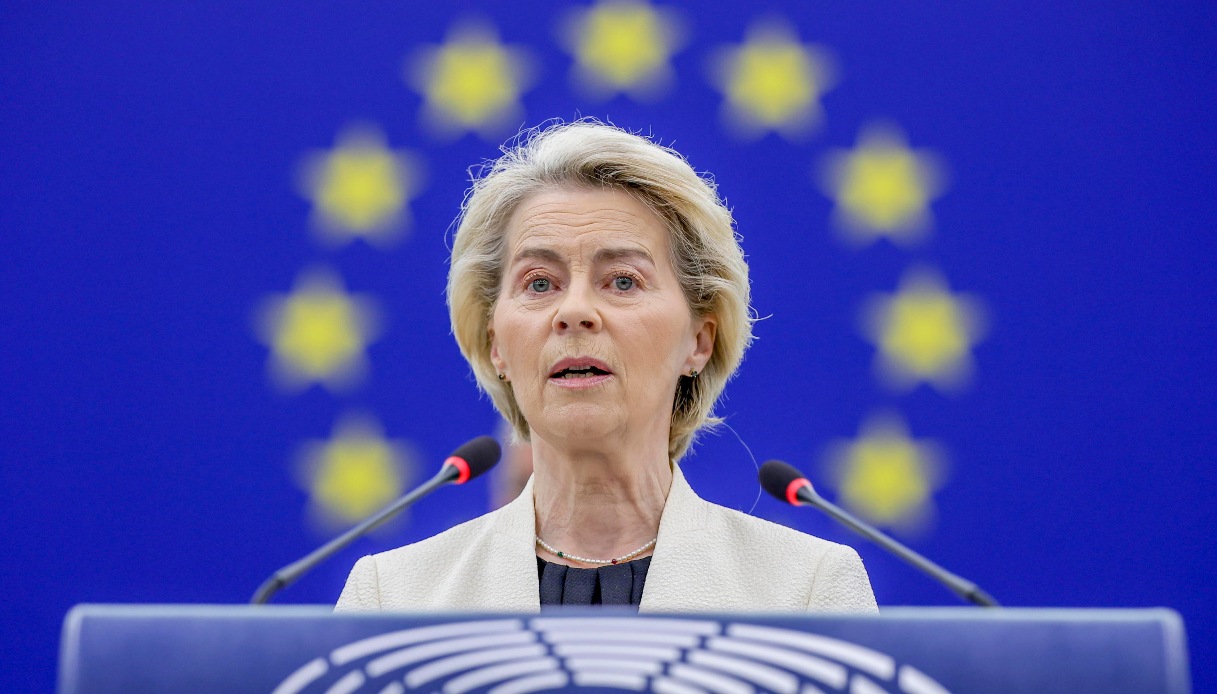
The European Union has reached an important commercial agreement to be reduced by customs duties with the Mercosur countries (Brazil, Argentina, Uruguay and Paraguay) and with Mexico. The rates will be reset or reduced for almost all products, opening a 700 million consumers market to European companies. 50 billion euros of benefits are planned and 440 thousand more jobs throughout the EU.
The text must be approved by the Council and the European Parliament, but several countries are against. The fear is that the protections included in the agreement are not enough to protect European agriculture from the competition of that of Latin America.
What’s in the agreement between the EU, Mercosur and Mexico
At the center of the commercial agreement signed by the EU with Mercosur and Mexico is the reduction of customs duties. The reduction will be total, therefore to zero:
- 83% of the agricultural products of Mercosur and Mexico imported into the EU;
- 92% of European agricultural products exported to Mercosur and Mexico;
- Within 10 years on 100% of the industrial products of Mercosur and Mexico imported into the EU;
- Within 10 years on 90% of the European industrial products exported to Mercosur and Mexico.
The agreement reflects the concerns and fragility of the economies of the two parts that signed it. The EU tries to have access to the 700 million consumers living in Mexico, Brazil, Argentina, Uruguay and Paraguay, to export the products of its industrial sectors. However, it fears that the considerable agricultural production of Latin America competes with the European one, for decades protected by very high customs duties.
In the same way, Mercosur and Mexico countries want to find new outlets for wheat, fruit and meat, but they fear that European industrial products invade local markets, riding the competition of the most fragile South American manufacture.
The next steps to approve the agreement
The agreement was signed, but has not yet entered into force. The European Union will have to approve it through two steps:
- the vote by qualified majority in the European Council;
- The simple majority vote on the European Parliament.
The most delicate moment will be the first. In the Council, each member country has a vote, expressed by the government in office. The majority must be qualified: 55% of states must vote, which represent at least 65% of the European population. However, the Commission has already announced that it will seek the widest possible consensus.
Because some countries are against
The skeptical front of the agreement is composed of the countries where agriculture has an important role, or which are governed by executives, tendentially center -right, which represent the interests of the first sector. Netinely against France, Poland, Ireland and Austria, in the balance instead Belgium and the Netherlands.
In Italy there are many associations of farmers and operators of the first sector who say they are worried about the agreement and ask for guarantees. Giorgia Meloni’s government initially seemed opposite to the signature, but some clauses included in the late negatives would have convinced the executive to vote yes. In a note, Palazzo Chigi explained:
The Italian government welcomes the insertion of a package of additional safeguards to protect European farmers. These additional safeguards provide, as actively requested in recent months from Italy, a mechanism of monitoring and quick intervention in the event of disturbances in prices, also at the level of a single Member State.









