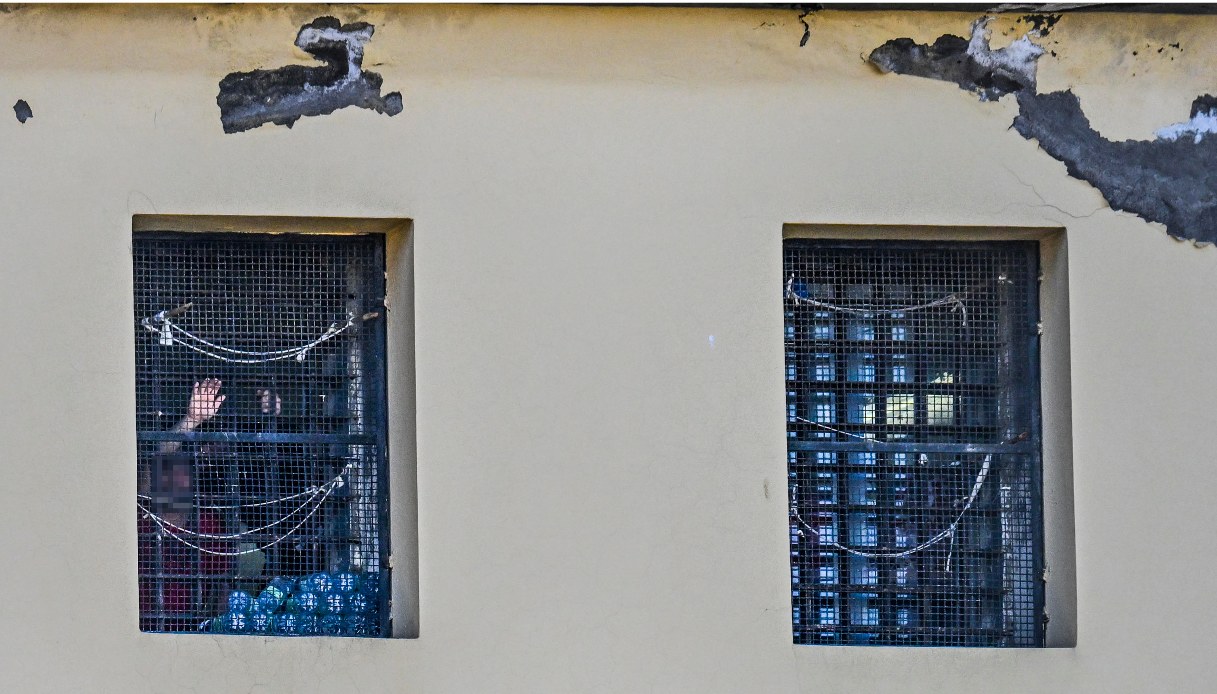
Sixty -two suicides between prisoners and penitentiary agents in just seven months. A 133% national crowding rate, with peaks over 200% in institutes such as San Vittore and Foggia. Work shifts of 26 consecutive hours for prison police officers. These are the numbers that photograph the emergency in Italian prisons in 2025.
Numbers that punch with government announcements, which with yet another “prison plan” promises to solve a structural problem accumulated in decades. But reality restores a different picture: not only the proposed solutions risk being ineffective, but the price and the dignity of people pay the price, inside and outside the cells.
The numbers of overcrowding
At the end of July 2025, the prisoners were 62,569, against a regulatory capacity of 51,276 seats. However, a capacity that descends further if the approximately 4,500 seats not available for unavailability or works are subtracted, stopping at 46,796 (according to Antigone data). The result is a crowding rate of 133.6%.
In 62 penitentiary institutions the crowding exceeds 150%, with dramatic tips:
- +236% to the San Vittore women’s ward;
- +214% in Foggia;
- In Rebibbia 1,576 imprisoned 1,068 places are divided.
The Nordio plan
The Minister of Justice Carlo Nordio presented an extraordinary plan of 15 thousand prison places on 22 July by 2027, for a cost of 758 million euros. “Finally certainty of the penalty,” said Giorgia Meloni, claiming the choice to adapt prisons to prisoners, not vice versa. Matteo Salvini underlined Mit’s commitment, which allocated 335 million for 2,500 new places, including the construction of the San Vito al Tagliamento prison, the first new structure for 14 years.
But the reality of the construction sites tells more. In 2024 an extraordinary commissioner had been appointed to create 7 thousand seats by 2025. A year later, the places actually increased were just 42, while those really available have fallen. The Court of Auditors, in monitoring on the PNRR, has certified that over 90% of the prison works are late or not started.
Cheap costs and waste
Of money in the system enter all right. The 2025-2027 budget provides for justice 11.2 billion euros, of which 3.4 intended for the penitentiary system. The average cost per prisoner is 149.56 euros per day, almost 55 thousand euros per year. The higher expenditure, over 2.1 billion, is for prison police staff (61.7% of the total).
The items intended for services and reintegration, however, remain marginal with just 1.2% for the provision of penitentiary services 3 9.3% for treatment and reception. Instead, investments for magistrates and administrative for +31.6% are growing in a year.
Still, alternative measures to prison could reduce overcrowding and costs. Today almost 24 thousand prisoners have a residual sentence under three years and would be potential beneficiaries of reliance in test or home detention. But the routes remain underutilized and you choose to invest in new structures (including those made of containers).
Life conditions: the invisible penalty
Behind the numbers are the broken lives. With the last, in chronological order, two suicides in Rebibbia, the detained dead since the beginning of the year are 59, to which must be added three agents. “A capital penalty that affects regardless of the crime committed”, reports Gennarino De Fazio, secretary of the penitentiary police.
In fact, the agents are not much better than detainees with inhuman workloads, shifts up to 26 hours and organic under 20 thousand units. De Fazio launches the alarm again:
In this situation, it is of tautological evidence that the prisoners do not monitor themselves ‘thanks’ to overcrowding, as the Minister of Justice would like to believe, Carlo Nordio, given that not only they escape with trivial ease, but continue to commit suicide with intolerable frequency in a civilized country.
Real solutions and not emergency plans
What would be needed is already known and it is not the calls for competitions to try to cover the turn over, without however succeeding. “Immediate measures are needed to explode the prison density, enhance the staff of the prison police, renovate buildings, implement technologies and equipment, guarantee health care and start system reforms”, concludes the secretary.
The European Court of Human Rights has already condemned Italy for inhuman and degrading treatments. In fact, the overcrowding of Italian prisons is not an “prison plan” emergency, but a chronic disease that must first of all be diagnosed. For decades, new cells have been promised as a solution, ignoring that the problem is not only of walls but of vision. Italy spends billions to maintain a system that produces violence, suicides, recurrence and waste. The “prison plan” risks being yet another useless patch.
Only if you think about the economic side, is there a further risk. Without structural interventions, new penalties will be added to a very salty account: since 2012 Italy has already paid 1.2 billion fines for European defaults.