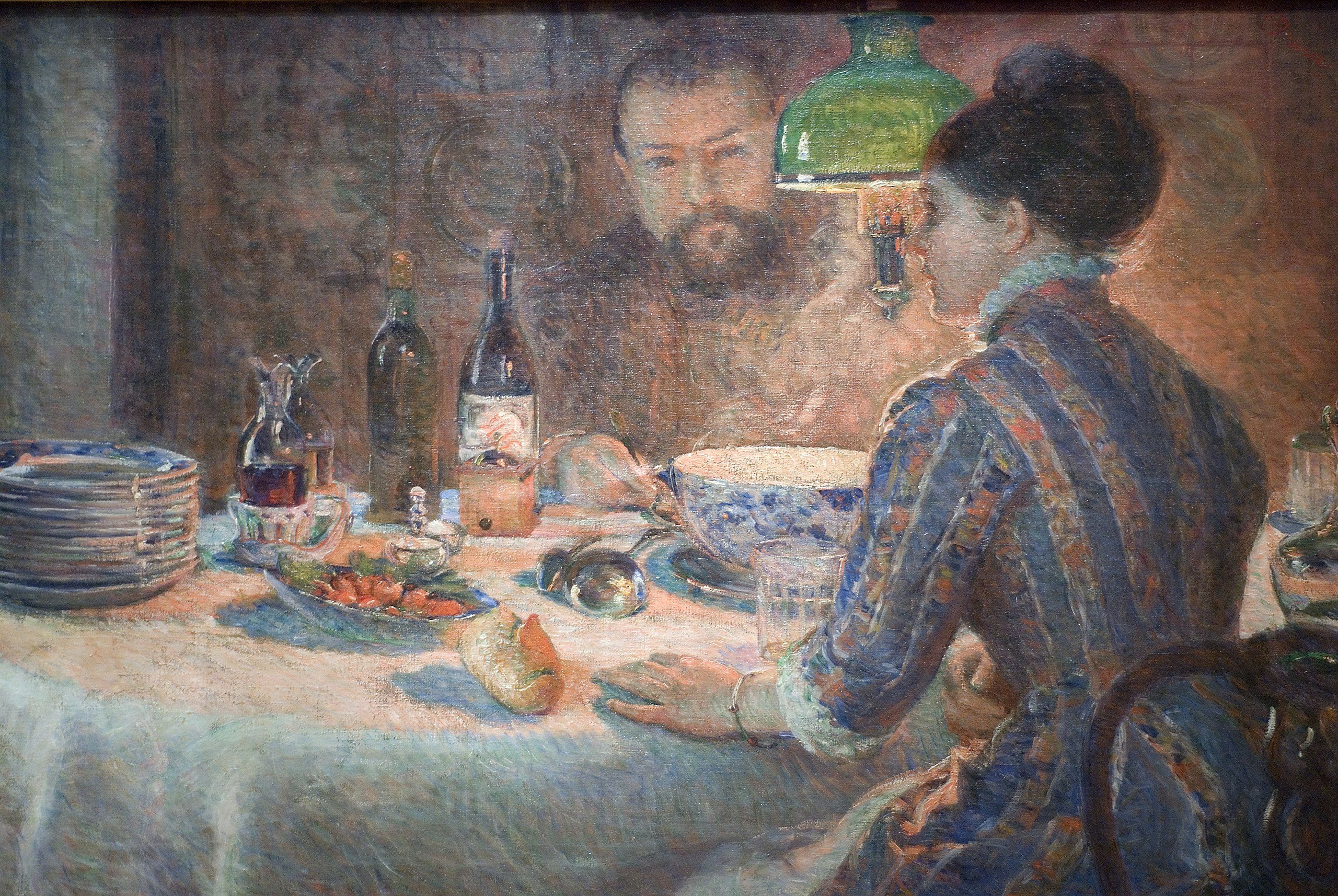
The impressionist painter Marie Bracquemond (1840-1916) was born in France and during his career he collected great success from contemporary criticism, attracting great patrons and participating in prestigious exhibitions but, due to the insistent criticisms of the husband, he decided to retire prematurely disappearing into oblivion. In fact, for more than a century Bracquemond has remained a relatively unknown impressionist, only in recent years his works have drawn the attention of museums throughout Europe and America, including the Musée d’Orsay, the Louvre, the Met of New York and the Art Institute of Chicago, and on the market his paintings have recorded record prices.
Born Marie Anne Caroline Quivoron in Brittany, he grew between France and Switzerland by taking painting lessons from a retired artist from a young age, his success came quickly. In 1857, when he was just 17 years old, the prestigious Salon of Paris accepted his work that portrayed his mother, sister and teacher. The illustrious painter Jean Augustte Dominique Ingres took it under his wing, and she began to receive numerous commissions from high -profile patrons, including the then general manager of the French museums and court officials of the imperator Eugenia, wife of Napoleon III. He then married the engraver Félix Bracquemond, whose name he took.
With the affirmation of the Impressionist movement at the end of the nineteenth century, Bracquemond studied the style en Plen Airbut unlike the men’s colleagues who could go out freely, she had to focus on domestic scenes. Even so the painter was able to capture that particular spontaneity that his contemporaries liked, including the great Claude Monet, Edgar Degas and, a few years later, Paul Gauguin. He was appreciated to such an extent that he became one of the very few women to participate in the historical impressionist exhibitions of the 70s and 80s of the nineteenth century.
But the marriage began to weigh on his career: according to an unprecedented biography written by his son Pierre, his husband developed a growing resentment towards his wife, who vented hiding his successes and attributing his ambition to an “incurable vanity”. Discouraged, Bracquemond ceased to professionally paint in 1890, more than two decades before his death in 1916, despite the fact that in 1894, the French critic Gustave Geffroy had declared Bracquemond one of the three “great ladies” of Impressionism, together with the most famous Berthe Morisot and Mary Cassatt.