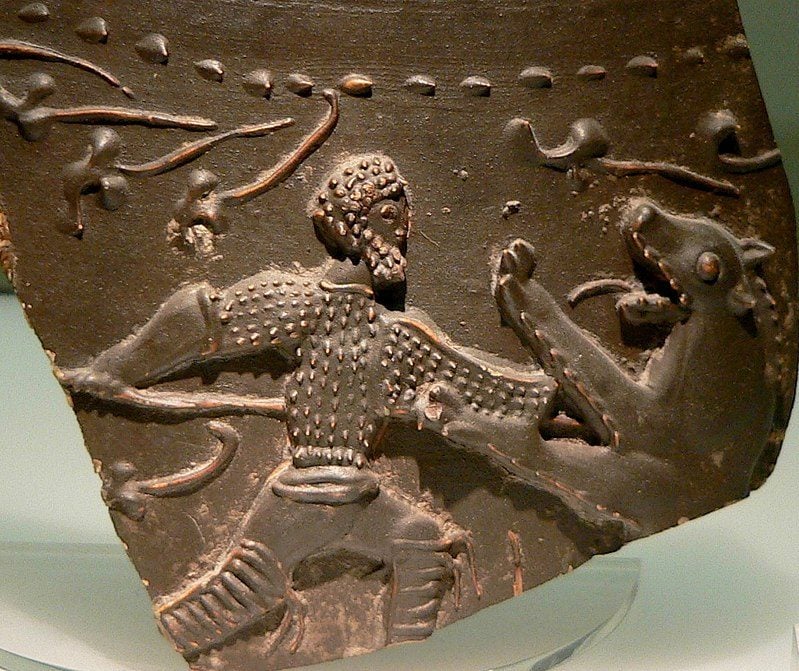
For centuries, the chronicles and representations of the gladiator games showed bears who fought with armed men in the arena. Now, a study conducted in Serbia offers the first material test that these animals were really protagonists of the venationes: a brown bear skull tells its history of captivity, wounds and fights. In fact, the participation of bears in Roman gladiator games is attested by numerous iconographic and written sources, and remains of brown bears (Ursus Arctos) have been found in some archaeological contexts related to amphitheatri, but only recently the study of a skull of a male of about 6 years of age found in the Ancient Amphitheater Viminaciumtoday Kostolac in Serbia, seems to have found confirmation not only of the participation of a bear in the fighting, but also of the state of captivity in which the animal was held.
Viminaciumfounded as a military center, was one of the main Roman cities in the territory of the current Serbia. Like many other military cities, it was equipped with an amphitheater to host venationes And gladiatorii games, some of the favorite activities of the soldiers stationed at the frontier of the empire. The bear skull topic of the study was found in 2016 a few meters away from the amphitheater, in an archaeological layer dated between III and IV century. DC that has returned the bone remains of numerous other animals, such as other bears and a leopard.
The skull, fragmentary but well preserved, has allowed a multidisciplinary study (published on Antiquity) which saw the contribution of archeozoology (the science that deals with the study of animal remains in archaeological contexts), paleopathology (the study of diseases on ancient remains) and ancient DNA. The research group, led by Nemanja Marković of the Institute of Archeology of Belgrade, made use of the collaboration of scholars affiliated to the universities of Belgrade, Warsaw and Indiana. The crossed data made it possible to obtain numerous information. The individual of Orso Bruno was male, who died at about six years of age, probably in the autumn, considering the dental growth: the most important information was in fact the study of the teeth of the animal and the frontal bone of the skull.
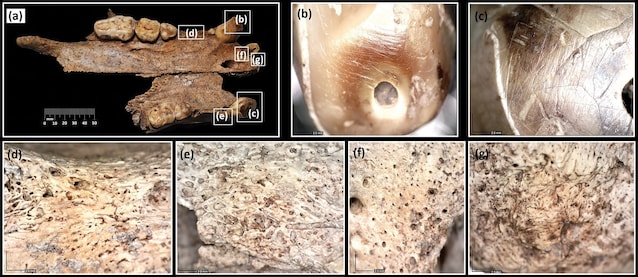
The teeth had particular traces of usury, and on the jaw there were evident signs of a chronic alveolar osteomyelitis, an inflammation of the rather common bone in numerous animals kept in captivity also in modern contexts (especially zoo animals), connected directly with the action of chewing the bars of the cage. The front bone of the brown bear of Viminacium He also had a showy depression on the left side. It is probably a trauma caused by the impact of a pointed object, perhaps the tip of a spear, considering the size. The traces of the formation of new bone tissue around the wound and a subsequent infection testify how the animal survived for a certain time after the wound.
In the numerous representations of venationes Notes throughout the Empire, the Lancia, one of the hunting tools par excellence, was one of the most used weapons. The study of the DNA of the bear also shown that the animal came from the local population of brown bears of the Balkans, still present, suggesting that it was probably captured in the area, not far from Viminacium. Numerous military inscriptions throughout the empire testify to the existence at the legionary fortresses (such as Viminacium) of the Ursariithat is, specialized hunters in the capture of bears.
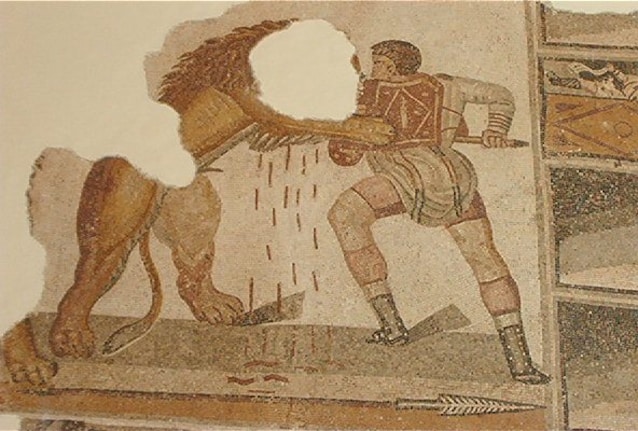
Although the remains of bears are attested in different archaeological contexts linked to gladiatorii games, until now there was no direct proof of fights that involved these animals, outside the iconographic and literary sources. The archaeozoological study of the skull has made it possible to recognize in the remains of this specimen of Orso Bruno the first archaeological proof at the bone level of fighting between gladiators and bears within amphitheatres in Roman times.