Starting from 8 September 2025 the Nepal Federal Democratic Republic, in particular its capital Kathmandu, is the subject of imposing events degenerated in real urban battles and lynching aimed at hitting the leaders of politics and guilty elites, according to the demonstrators, of having made the country precipitate in an endless decline. Although most of the world public opinion and the western chancelleries was once again caught unprepared by the tight succession of events, in reality the process of destabilization of Nepal has begun almost thirty years ago and at the moment it is very difficult to hypothesize when it ends.
The fragility of Nepal
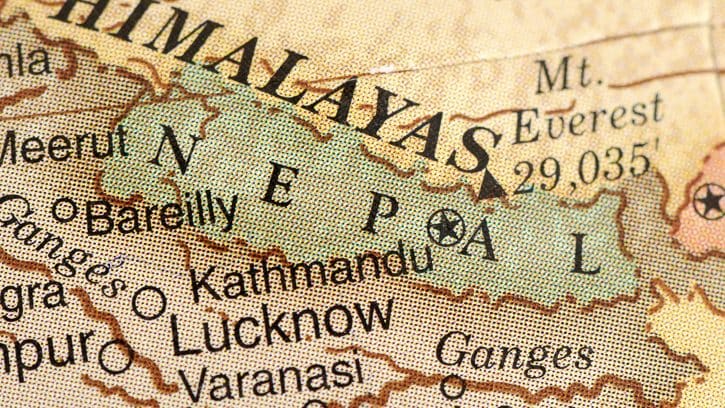
Located on the Himalayana Cordigliera, set between India and China, Nepal is a democratic and federal republic that collects 125 ethnic groups under the same roof that speak 123 languages all recognized by the Constitution, even if the Nepal idiom is the only one to have been elevated to the “official language” rank of the country. According to the most accredited estimates, Nepal is the home of 31 million inhabitants of which only 21.9% is urbanized while the remainder lives in the countryside in a situation of extreme poverty.
According to the data relating to 2018, the national literacy rate was 67.9% and improved, but a strong difference between men and women persisted, with a 18.9% gap between the sexes (78.6% of men knew how to read and write against 59.7% of women). Although the demographic transition process is taking place on the slopes of the Himalaya right now (in 2025 the total fertility rate is at 1.94 children per woman against a threshold of 2.11 necessary to maintain a population in demographic balance), decades of particularly high fertility rates have delivered the reality of a country with an average age of about 25 years.
The absence of landing on international markets, the result of the isolated position and by the lack of an outlet to the sea, has had as a consequence the substantial inability to develop a competitive economic fabric and in line with world trends, which in turn translates into a condition of extreme poverty that affects too many young people who, according to the estimates of international organizations and associations of the Nepalese diaspora are obliged to emigrate to the rhythm of over 2,000 day.
The legacy of the civil war
The process of progressive destabilization of Nepal began to be precise on February 13, 1996 when the Nepal Communist Party (Maoist) launched an insurrection against the Shah family monarchy which kept the country under the strict control of an absolute regime that left no room for any type of dissent or party representation.
The Nepalese civil war that followed, lasted 10 years, causing about 20,000 deaths and disappeared (but according to some estimates there were many more) in addition to hundreds of thousands of internal displaced people, and ended on November 21, 2006 with the signature of the so -called “comprehensive Peace Accord” which inaugurated a transition period culminated on May 28, 2008 with the abolition of the monarchy (after 240 of Kingdom) and the proclamation of the Nepal Federal Democratic Republic.
Although this historical turning point was accepted with great expectations and hopes both inside and abroad, the fragile Nepalese democracy was unable to hold the impact of the historical and social changes that have followed each other in the following three lusters generating a complete disaffection of civil society for “public affairs”.
Between absolute monarchy and dysfunctional democracy
Currently in Nepal there are two contrasting forces that fight to give a turning point in the country’s politics. On the one hand, there were the parties of the constitutional arch which, between 2006 and 2008, ferried the country to the modern federal and democratic republic but in the meantime they have turned into authentic “business conglomerates” in the shade of which the interests of “public affairs” are cleverly diverted by corrupt politicians and bureaucrats more worried about sprinkling the lean resources of the country than to start any development path. for the benefit of the community.
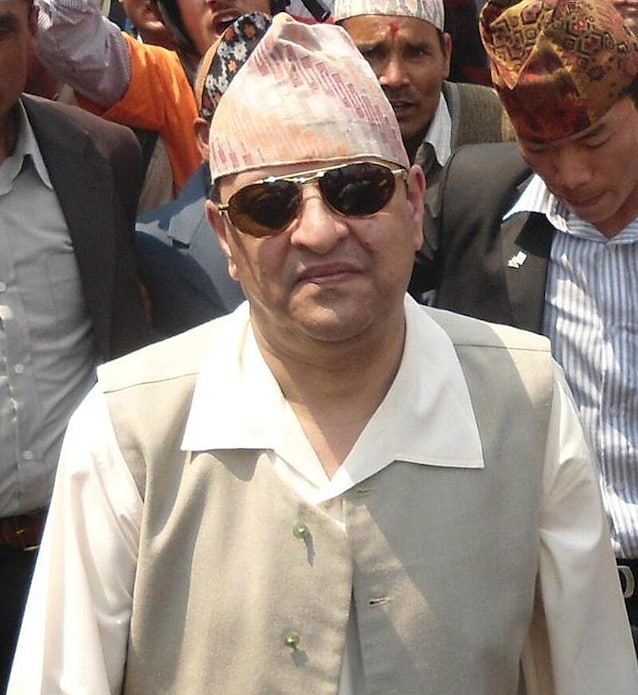
On the other hand, there are the “Panchayat” standard bearers, the absolute monarchical regime without any “weight and counterweight” of constitutional nature that would recover the Nepal in the same condition in which it has found itself for centuries. It is easy to guess as a possible victory of the monarchists, led by the deposed sovereign, Gyanendra Bir Bikram Shah Dev, would put an end to the short Nepalese democratic experiment, but at the same time the persistence of the dysfunctional system that has ruled the country in the last two decades is the last guarantee that Nepal turns into yet another failed state.