The Bagher, a term of Czechoslovak origin (“Bagr” – “digger” because of the gesture), represents one of the most significant gestures of modern volleyball. Usually, it is performed with the tense and united forearms, with which the ball is rejected from the bottom up. It was introduced in the last century and, through the different methods of execution and the four different sockets, represents the reception technique most used in volleyball. Let’s find out his secrets together.
What is the Bagher and how to do it in volleyball
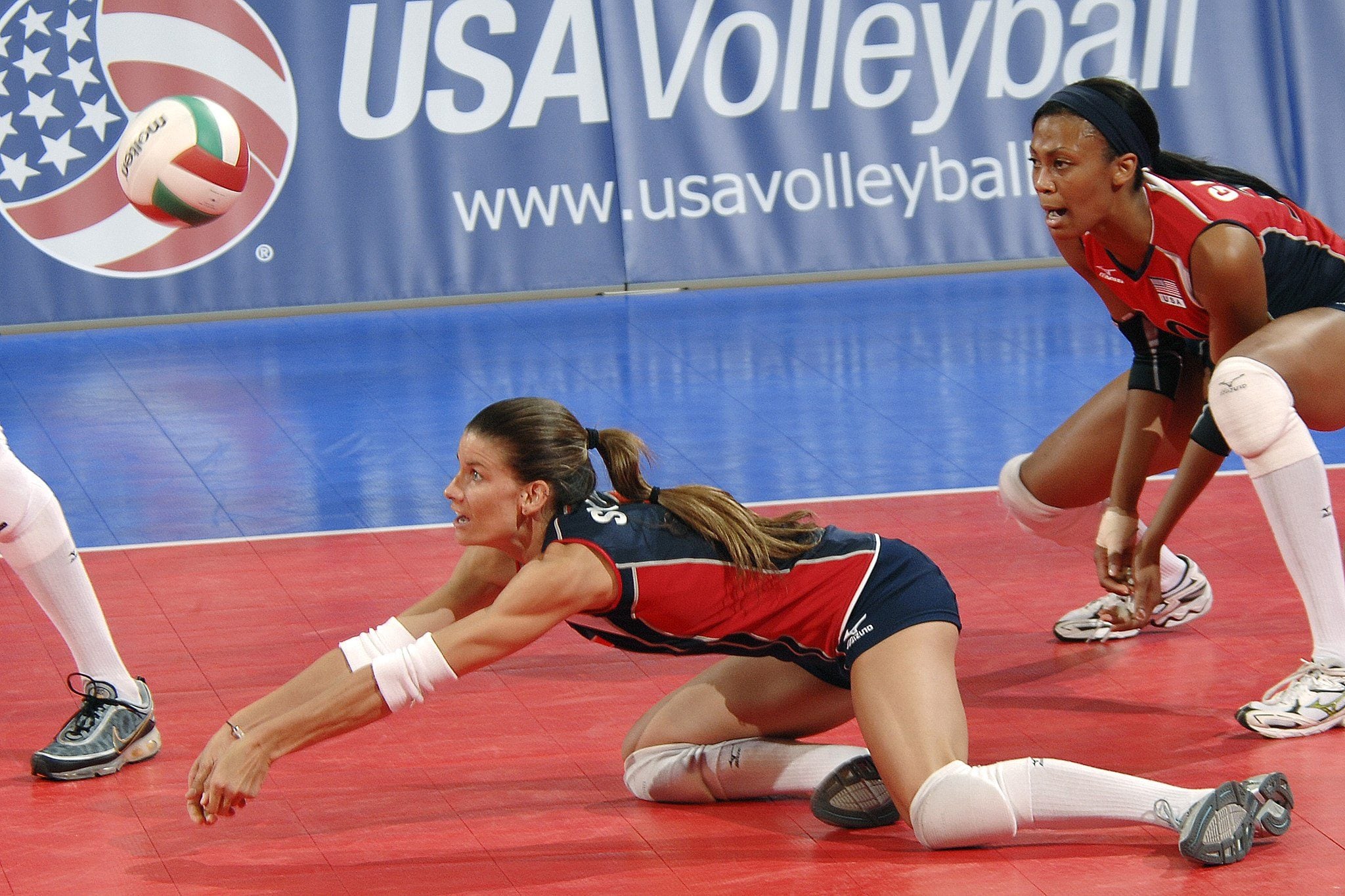
The Bagher is performed by joining his arms, to be precise at the height of the forearms that, thesis and united, help to hit the ball with a movement from the bottom up. It is used for reception, in particular in cases where the ball travels at significant speeds (as following a joke, when it can reach even more than 100 km/h) and any other technical gesture would be not very reliable.
General indications suggest keeping the arms stretched, but not rigid, and to move them as little as possible. The shoulders have the task of giving direction to the ball and, to allow this, it is necessary that the movement remain relaxed during the whole.
There are four different sockets of the Bagher, each characterized by small variations in the position of the hands and arms, but above all of the fingers and in particular of the thumbs: these light changes allow extra rotations of the forearms and are learned over time, by the athletes.
The origins and etymology of the term
The Bagher began to depopulate in the game of volleyball around the mid -twentieth century and its origins are still uncertain. In fact, the theories and legends that have taken hold and spread over the years are different. Most likely the birth is to be traced back to central Europe, for some in Germany, but more likely in Czechoslovakia, where with the term “bagr” we indicate the “digger” which, in some way, recalls the biomechanics of the sports gesture.
Leaving aside the etymology of the word, the birth of the Bagher is wrapped in a veil of mystery that leaves room for a popular legend. According to the latter, to invent the Bagher was a player and former Czechoslovak soldier who, returning from the Second World War without some fingers lost in battle, could no longer receive in dribble and, therefore, reached the movement giving rise to the very famous blow that all of us, at least once, have performed or saw.