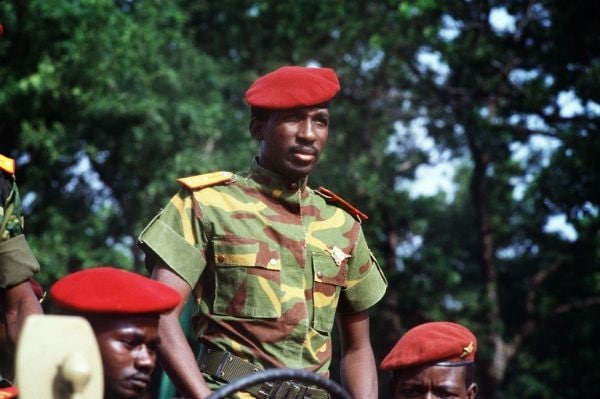
Thomas Isidore Noël Sankara, born in Yako in 1949 and killed in Ouagadougou in 1987, was a military and politician of Burkina Faso, president from 1983 to his death. After embarking on a military career, he came to power with a coup d’état: during the years of his presidency he promoted important social reforms and, in foreign policy, he was a proponent of an anti-colonialist approach. He also changed the name of the state from Upper Volta to Burkina Faso. He was assassinated by his former partner and future president Blaise Compaoré in 1987. Despite the attempt to damnatio memoriae promoted by Compaoré, Sankara is still very popular at home and abroad.
Birth and youth of Thomas Sankara
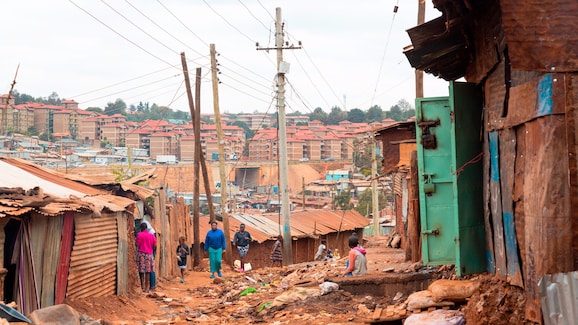
Thomas Isidore Noël Sankara was born in Yako, a town in the then French colony of Upper Volta, on 21 December 1949. In 1960, when he was 11 years old, Upper Volta gained independence. The country, however, was in a very difficult condition: it was one of the poorest states in the world and had to face constant political instability, heated inter-ethnic conflicts and frequent coups d’état.
Sankara belonged to a Catholic family but, after attending school, he rejected the proposal of his parents who wanted him to become a priest, and attempted to enroll in medical school. Having failed, he chose a military career and in 1967, when he was 18, he joined the army. Between 1971 and 1972 he followed a training course in Madagascar. Upon returning home, he took part in a war with Mali for the control of a portion of territory on the border between the two states. From a young age he developed anti-imperialist and Marxist political beliefs, believing that colonialism, in its various forms, was the main cause of Africa’s ills, and developing a strong focus on the conditions of the poorest sections of the population
From Upper Volta to Burkina Faso: what Thomas Sankara did
As the years passed, Sankara rose through the ranks and in 1976 was appointed commander of a military training center. However, he did not abandon his ideas and a few years later he formed the “Regroupement des Officiers Communistes” (Group of Communist Officers), which intended to counter the presidency of Saye Zerbo, who came to power in 1980 with a coup d’état. Among the other founders of Regrouping future president Blaise Compaoré was included.
Sankara was a popular figure and Zerbo tried to co-opt him into his entourage, appointing him minister of information in September 1981. The young soldier accepted, but soon found himself at odds with the government’s policies, which in his opinion paid little attention to the needs of the citizens. Furthermore, he did not like the lavish lifestyle of his colleagues, preferring simplicity. For example, he traveled by bicycle and not in luxury cars like other ministers. For these reasons, in April 1982 he resigned. In November, a new coup d’état shook Upper Volta: Jean-Baptiste Ouédraogo ascended to the presidency, choosing Sankara as his prime minister. The young officer, however, also came into conflict with Ouédraogo, who was not willing to promote extensive social reforms, and was therefore forced to resign and imprisoned. The arrest pushed Compaoré to organize a new coup d’état, carried out in August 1983, following which Sankara, released from prison, assumed the position of president of Upper Volta.
From Upper Volta to Burkina Faso: Sankara’s presidency
Thomas Sankara was appointed president on 4 August 1983. Exactly one year later, on 4 August 1984, the name of the state changed, which became Burkina Faso, i.e. Land of upright men. He also changed the flag and the anthem, which he wrote personally.
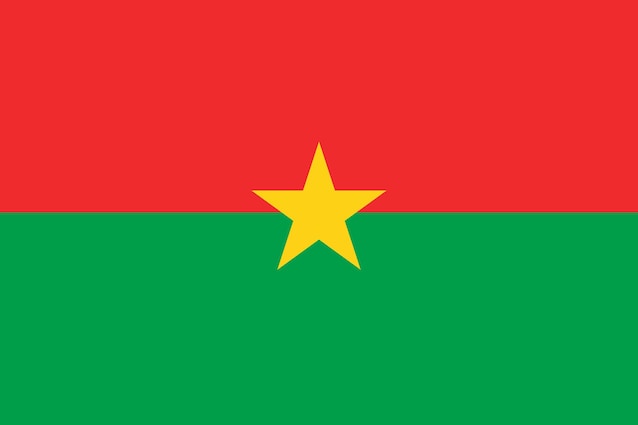
Sankara’s presidency was characterized by reforms and an anti-imperialist approach, inspired by figures such as Fidel Castro and Che Guevara. Sankara set out his program in the Political Orientation Speech, held in October 1983 in Ouagadougou, the country’s capital, and called his system of power Democratic and Popular Revolution.
During the years of his presidency he tried to reduce public spending, cutting the privileges of the ruling class, and to lower the prices of the main consumer goods, such as meat, to allow all the inhabitants of the country to have access to them. He was also one of the first African political leaders to realize the dangers of AIDS and invested large resources in the health sector, allowing millions of citizens to be vaccinated against infectious diseases. He also implemented a vast public building program, through which schools, hospitals, sports fields and other facilities were built. He also waged a brief war against Mali between 25 and 30 December 1985, known as the Christmas War, for control of a portion of territory.
In foreign policy, he took a decisive stand against every form of neo-colonialism and took a stand against foreign debt: in a famous speech given in 1987 in Addis Ababa (Ethiopia) to the Organization of African Unity, he stated that the debts contracted by Burkina Faso and other countries in the South of the world with the industrialized world were due to colonialism and should therefore not be paid.
Such clear political positions meant that Sankara, together with many supporters, also had many enemies, both within Burkina Faso and abroad. In particular, the president alienated France, led by President François Mitterrand, who continued to exert influence over its former colonies. He also attracted criticism for his lack of respect for human rights and his authoritarian management of power, which involved the arrest and detention of many opponents. The majority of the Burkinabé population, however, appreciated his work.
The death by assassination of the former president of Burkina Faso and its myth
Sankara was killed on 15 October 1987 by his former friend and companion Blaise Compaoré. There are conflicting versions regarding the dynamics of the murder. The most widespread holds that, during a heated argument, Compaoré pulled out his gun and fired two shots at Sankara. Compaoré, however, denied this version, claiming that he shot the president by mistake or, on other occasions, that he was not responsible for the murder. Another version actually has it that Sankara was killed by militiamen loyal to Compaoré while he was in the car. What is certain is that, after the death of the president, Compaoré came to power and remained there for almost thirty years, until 2014, when protests from the population forced him to resign and take refuge abroad. During the years of his presidency, Compaoré made every effort to make Sankara forgotten, but he was unable to erase his popularity. Sankara is in fact an appreciated figure both in Burkina Faso and abroad and is considered a symbol of the fight for the freedom of peoples and the independence of Africa.
Recent events demonstrate how the former president is still popular in Burkina Faso: in 2021 a court convicted Compaoré in absentia for the murder of his predecessor and the current president, Ibrahim Traoré, explicitly states that he is inspired by Sankara’s policies.