In recent days, several Alpine locations have been affected by avalanches, which in some cases have also swept away people: while in Livigno an avalanche broke off at the height of Carosello 3000, overwhelming a snowboarder, in Courmayeur a block of snow broke off from the slope of Mont Blanc, descending to a ski area where several athletes were present. Looking outside Italy, an avalanche in California swept away a group of 16 skiers, with 10 of them still missing in the Sierra Nevada.
As reported by the bulletins of AINEVA (the Interregional Association that produces bulletins relating to snow and avalanches), at the moment on a large part of the mountain range the risk of avalanches is classified as strong, with a danger level of 4 – on a scale ranging from 1 to 5. The Association has in fact warned that «with the snowfall and the at times stormy wind coming from the North-West, new accumulations of snow have formed in the last three days wind”: the problem is that these unstable accumulations can easily “suffer a detachment following the passage of a single winter sports enthusiast”.
Before embarking on an excursion in the mountains, it is good to know how to behave, what is best to avoid and above all how to act safely in the event of an avalanche: the best prevention, in fact, is knowledge of the area and the risks involved.
What to do before starting a mountain excursion: prevention and safety
Before organizing an excursion in the mountains, it is necessary to know well how to behave: prevention in the case of avalanches consists first of all in knowing which areas are most subject to this type of phenomenon. In this case, it is possible to consult the AINEVA bulletins, which classifies the risk of avalanches in the various mountainous areas day by day: the danger scale goes from 1 (weak danger, rare and small avalanches) to 5 (very strong, large natural avalanches expected which can also threaten anthropic areas).
As the Association itself highlights, most accidents occur with a danger level of 3 (considerable), because the risk of avalanches is underestimated. If the first suggestion is to consult the snow reports, the other guidelines provided by the Civil Protection include:
- Never be alone: for self-rescue to be possible, it is essential that at least one member of the group is not overwhelmed by the avalanche.
- Respect the signs and instructions on the slopes, especially those regarding off-piste descents.
- Avoid passing through slopes with steep slopes and considerable snow cover, especially in the hottest hours, or taking unknown paths.
- Avoid crossing suspicious areas such as open slopes, gullies, leeward areas, moving instead to safer points of the terrain, such as rocks and flat sections.
- Always tell family or friends where you are going.
- In case of heavy snowfall, find a safe route to reach shelter.
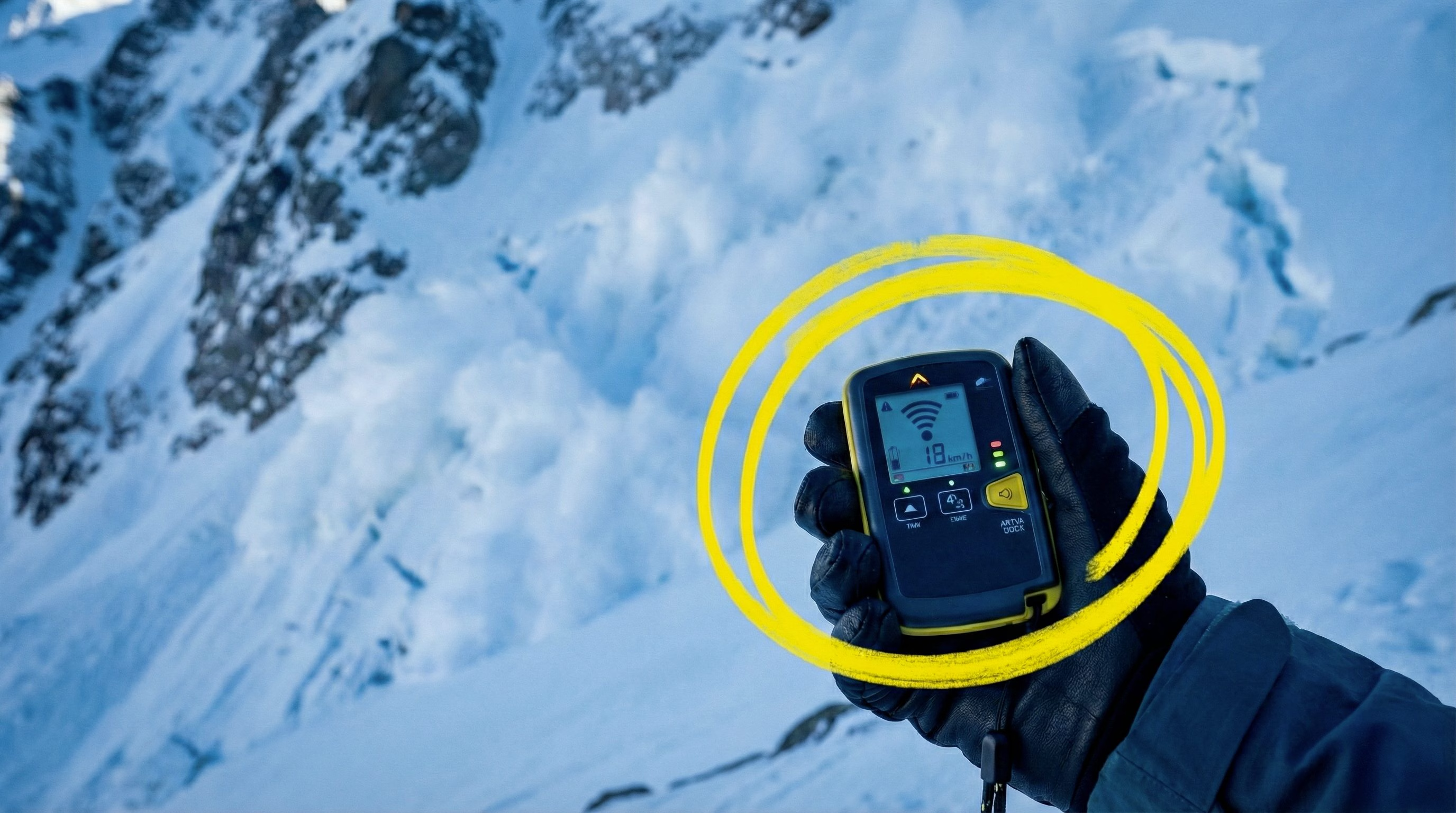
- During outings in the high mountains, the Civil Protection also suggests carrying the ARTVA device with you: it is an always active transmitter which signals the presence under snow and avalanches and which is essential in the event of loss of consciousness.
What to do in case of an avalanche
Once you understand how to prepare for a mountain excursion, what should you do if an avalanche overwhelms you or someone in your group? Avalanches are nothing more than a sudden loss of stability of the snow present on a slope, with the subsequent sliding of that portion of the snowpack towards the valley. Avalanches, however, almost always occur in the same places, i.e. in high mountain areas with bare rocky terrain, between 2,000 and 3,000 metres, mostly devoid of plant cover.
In the event of an avalanche, therefore, it is necessary:
- Remember that during an avalanche the snow tends to accumulate in the central area and therefore it may be easier to find a lateral escape route.
- Try to maintain a free space in front of your chest, trying to create a “funnel” in front of your mouth and nose.
- Move your arms and legs, as if you were swimming, to try to get closer to the edge of the avalanche and stay on the surface.
- If you have an airbag backpack, you should open it as soon as you realize the danger of an avalanche.
- If you witness an avalanche, it is essential to call mountain rescue as soon as possible, dialing 112, the single number for emergencies, providing your name and surname, telephone number and your position if you have a locator or GPS.
As with all emergencies, in this case too it is essential to act as soon as possible: this is because when a person is trapped in an avalanche, the snow covers their mouth and nose, preventing them from breathing. At the same time, the mass of snow could prevent movement, also quickly leading to hypothermia and frostbite.