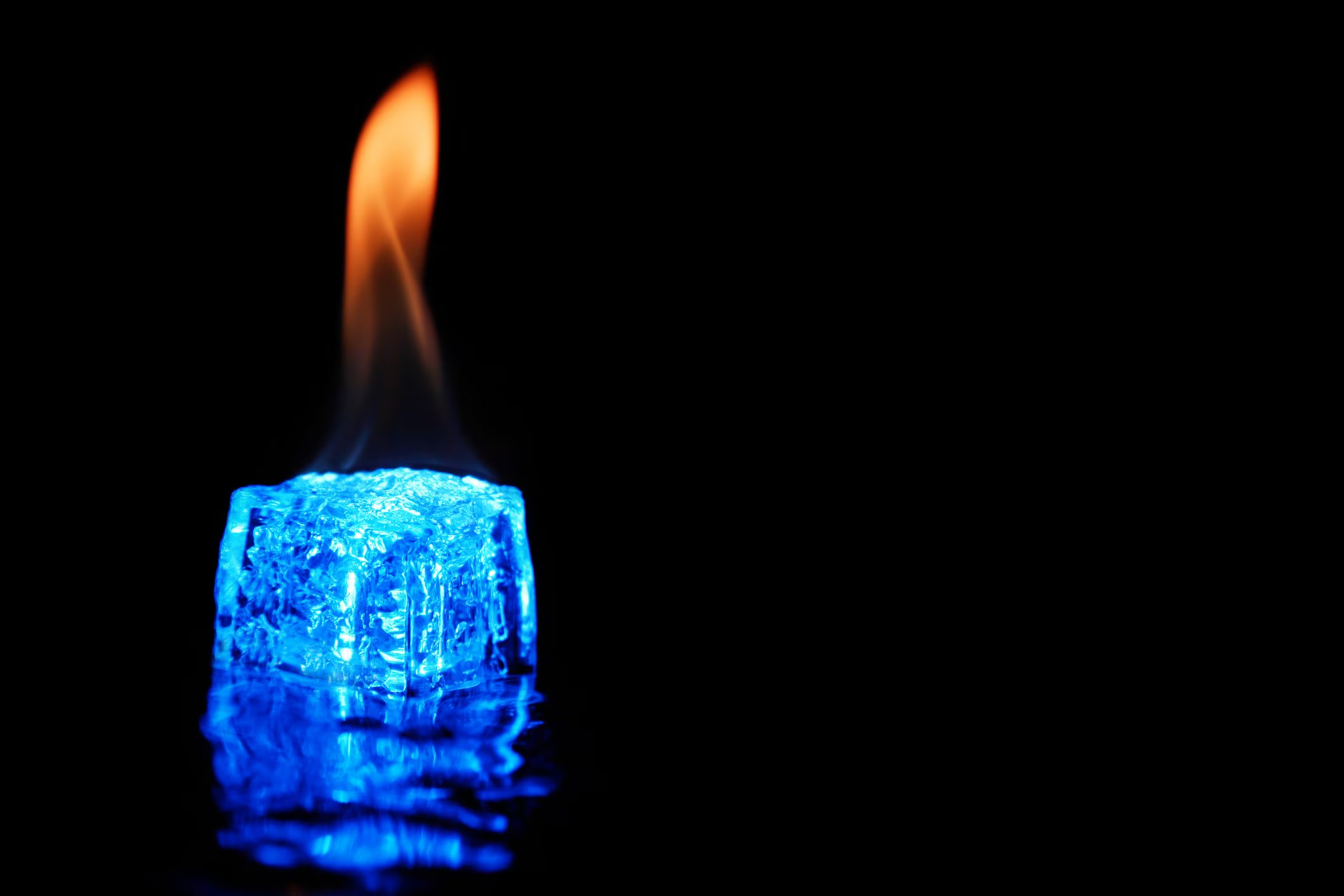
An oxymoron is a figure of speech that combines two words or ideas with opposite meanings. Some examples? Deafening silence, hot shiver, living dead. The contrast, only apparently irreconcilable, produces a more intense expression capable of suggesting a new meaning. The term comes from Greek oxýmōronmade up of oxýs (“sharp”) e mōrós (“obtuse, foolish”): the word already contains within itself the union of two contrary concepts. The oxymoron arises precisely from this juxtaposition: two elements that seem to exclude each other are placed next to each other. The result is an effect of surprise that invites us to focus on the overall meaning of the expression.
What are oxymorons for and why are they used?
In most cases the oxymoron is composed of two consecutive terms, often an adjective and a noun as in “hot ice”, or two words linked together by a direct relationship. The union of opposites means that the expression becomes more incisive and is able to communicate nuances of meaning that are difficult to convey with a linear formulation. For this reason the oxymoron is frequent in poetry and fiction, but also appears in everyday language, especially when one wants to express a complex state of mind or a situation full of contrasting tensions. A good example is “deafening silence.” Literally it is a contradiction, because silence does not produce sound; figuratively, however, it describes a silence so full of tension or emotion that it is almost oppressive.
Other very common expressions are:
- Hot ice
- Sweet bitterness
- Lucid madness
- Illustrious unknown / illustrious unknown
- Virtual reality
- Eternal fleetingness
In all these cases, the contrast between the terms does not create confusion, but strengthens the meaning, making it more precise and suggestive.
The oxymoron in Italian literature
In Italian literature the oxymoron often becomes a tool for describing emotions and realities that cannot be explained in a linear way. Dante, at the beginning of the last prayer of Paradise, addresses Mary by calling her “Virgin Mother” (Divine ComedyParadise, XXXIII, vv. 1–2): two opposite words that express the mystery of his figure in a simple and powerful way.
Petrarch also relies on contrast to describe the internal conflicts of love and writes: “And I hold nothing, and I embrace the whole world” (Songbook – Rerum Vulgarium Fragmentasonnet CXXXIV, I can’t find peace and I don’t have to make war), giving voice to that feeling of emptiness and fullness that coexist at the same time.
In Pascoli the oxymoron becomes an image: the “white darkness” (Snowy night) conveys the suspended atmosphere of a snowy landscape, where the light of the snow and the silence of the night create an almost unreal space. D’Annunzio instead speaks of “this discordant concord” (Undulnain Alcyone), an expression that tells of a harmony built precisely on the meeting of different and tense elements.
In the twentieth century, Quasimodo wrote “they burn with snow” (Letter to the motherin Life is not a dream1949): the cold becomes fire and the image makes concrete the pain of distance and memory. In all these texts, the oxymoron is not a simple stylistic effect, but a direct and immediate way to give shape to the complexity of human experience.
Difference compared to antithesis
The oxymoron is close to the antithesis, but the two figures do not coincide. In the antithesis the opposing concepts appear separately within the sentence, as in: “I love and hate this city”. In the oxymoron, however, the antonyms are merged into a single compact expression, such as “sweet bitterness” or “loving hatred”. The oxymoron can therefore be considered a concentrated form of antithesis: the contrast is reduced to a few words, but for this reason it is more immediate and effective.