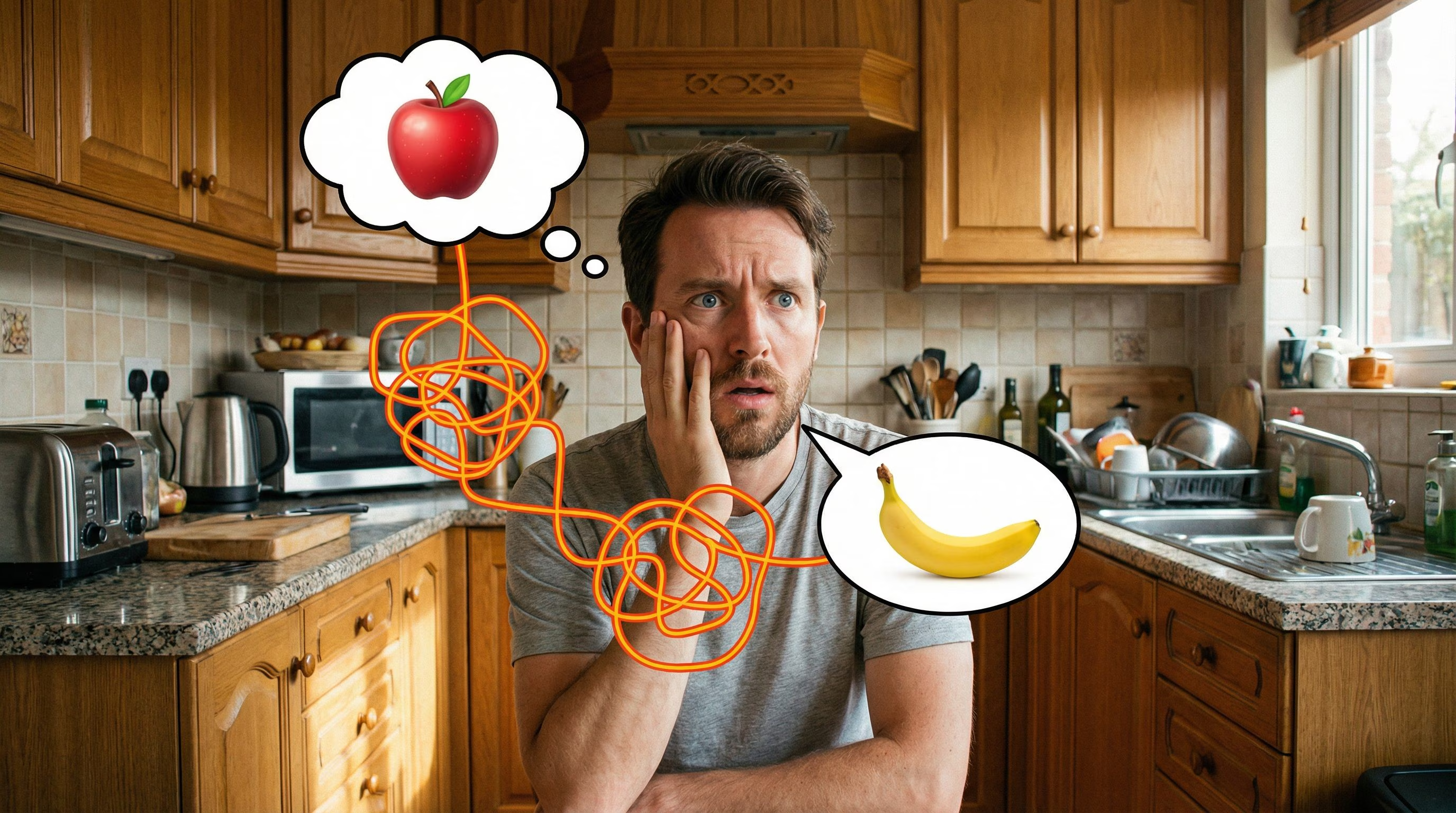
Generally, we are used to using the word slip to indicate a simple distraction or inaccuracy: a word pronounced by mistake, a forgotten name or a typo, a sort of apparently involuntary “slip” in speaking.
In fact, in most cases it is used improperly. For psychoanalysis, it is not just a linguistic or mnemonic oversight: it is the expression of an internal conflict, a signal that something in the unconscious is trying to emerge.
The slip described by Freud: the failed act
The slip is analyzed from a psychoanalytic point of view for the first time in the work Psychopathology of everyday lifepublished by Sigmund Freud in 1901. This text analyzes a vast range of apparently insignificant errors: forgetfulness, mix-ups, names that “escape”, inaccuracies in writing and reading. According to Freud, such banal errors are motivated, they are not random, nor are they the result of lack of attention: behind them lies a psychic conflict, a repressed thought or a repressed emotion, which makes its way despite the censorship of the conscious ego.
Freud realized the psychological significance of slips by observing himself and his patients. To give some examples from his book:
- During a trip, Freud wanted to mention the painter Luca Signorelli, but the name completely escaped him, replaced by others such as Botticelli or Boltraffio. Analyzing the episode, Freud realized that shortly before he had talked about emotionally significant topics for him, such as death and sexuality, during a conversation about Bosnia and Herzegovina. Those removed contents had interfered with the re-enactment of the painter’s name. Unconscious censorship, to protect the subject from disturbing thoughts, had temporarily blocked that name, leaving room for more neutral replacement words. In particular, the word Bosnia was linked to other neutral terms such as Botticelli or Boltraffio (which share the initial syllable), interfering with Signorelli’s target re-enactment.
- Furthermore, the psychoanalyst noticed that his patients replaced one word with another which, when analyzed, revealed a hidden desire or a repressed feeling. Struck by the coherence of this mechanism, he began to consider slips of the tongue as real “parapraxes”, that is, apparently wrong but psychologically significant actions.
In short, for Freud, the slip is a compromise between what the subject wants to say and what he would like to keep quiet.
What is a slip of the tongue according to psychoanalysis and how does it manifest itself
In psychoanalysis, therefore, a slip of the tongue is an error that arises from an unconscious conflict. It is not a simple oversight, but a sort of “breach” in which the repressed mental contents manage to emerge, disguised as an error. According to Freud they belong to the category of “parapraxes”, i.e. involuntary behaviors that reveal unconscious motivations, together with:
- significant forgetfulness;
- temporary loss of names or words;
- repeated carelessness.
The slip is therefore the manifestation of a tension between two forces: the desire or the unconscious representation that wants to emerge; psychic censorship, which tries to block it. Error is the result of compromise. The main types of slips that can occur are:
- Lapsus linguae (verbal error): it is the best known and indicates an error in speaking; it may consist of a substitution of one word for another, a reversal of syllables or an inadvertent use of a “forbidden” or embarrassing term. A classic example is calling your partner by the name of your ex-boyfriend. Or it may happen that during a work meeting the boss says: “This project will be a failure….err I meant success!”. In this case the error may reveal the fear that things will not go as well as hoped or an unconsciously negative opinion of the project.
- Lapsus calami (writing error): occurs when, while writing, you insert incorrect words, skip letters or report terms other than those intended. Writing in a work email: “I remain available to resolve any doubts” instead of “resolve”, may mean that you are worried about appearing incompetent and you use more formal terms in an involuntary way.
- Reading slip: occurs when you read a word or phrase differently than it is written, often replacing it with a term that reflects a mental or emotional state. Reading the word “friend” as “love” in a message can happen because there is a hidden desire or because that topic is emotionally relevant to the person.
- Memory lapses (significant forgetfulness): these are situations in which you forget a name, an appointment or a specific object. According to Freud, it is not just distraction: the mind avoids what generates tension in it. It can therefore happen that you forget to call a person with whom you have an unexpressed conflict, or you cannot remember the name of someone who causes anxiety or embarrassment.
The explanation of modern psychology: slip or stress?
Modern psychology recognizes that many everyday mistakes can also be explained by cognitive factors such as tiredness, stress and mental overload. Our mind, when tired, stumbles more easily into verbal confusion and forgetfulness. In short, not everything is the result of an unconscious conflict. Yet, this does not erase the fascination of the Freudian slip, nor the fact that it is a widely studied and far from trivial phenomenon. Our mind is not a perfect mechanism: it is crossed by memories, emotions and desires, which sometimes escape conscious control. They are small accidents along the way which, however, reveal much more than we would like to admit.
The next time we happen to say one word instead of another or forget to do “that very thing”, let’s try to ask ourselves: “Is it really just an oversight caused by tiredness?”. Maybe yes… or behind that banal mistake lies a part of us that, on tiptoe, is trying to get noticed.