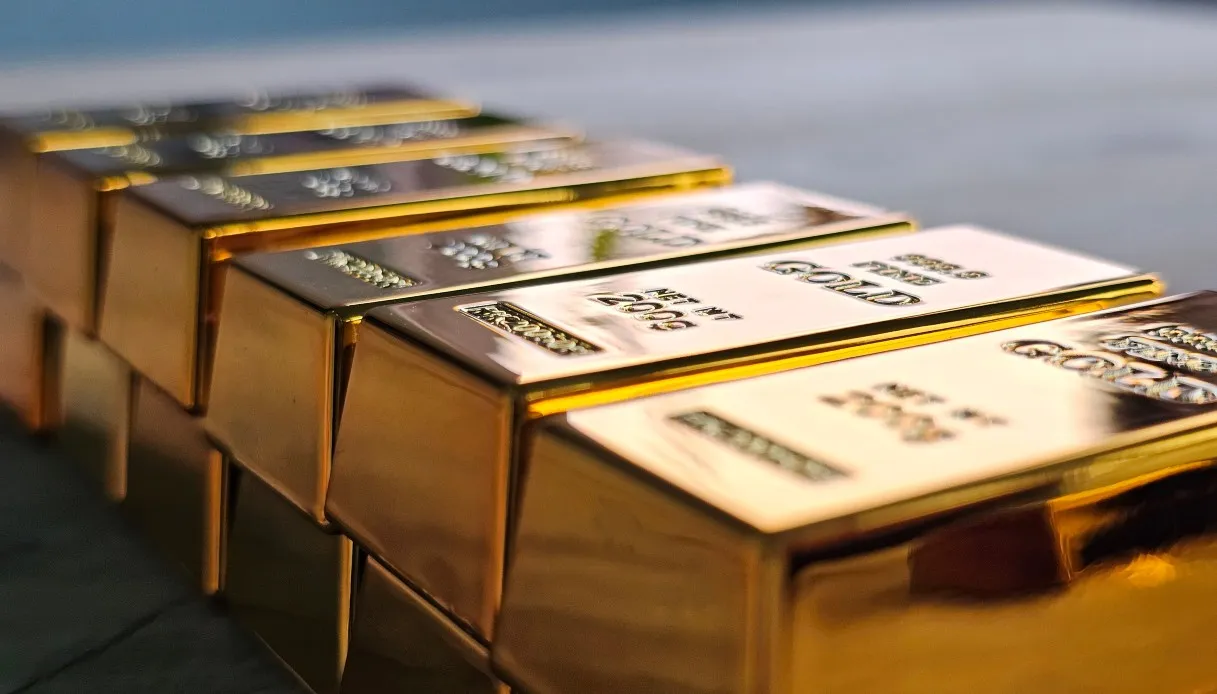
Gold rebounds from the lows reached at the end of March, in the wake of the surge in oil prices and pessimism about the solution to the crisis in Iran. Pessimism that was unraveled by the de-escalation induced by the words of President Donald Trump, who announced an imminent solution to the conflict in the Middle East. The precious metal therefore rebounds from the lows reached in March, the worst month for over a decade, with a negative performance comparable to 2013. Indeed, for the spot price it is the worst performance since 2008, the year of the outbreak of the financial crisis which led to the bankruptcy of Lehman Brothers.
Gold returns above $4,700
The gold future for June delivery has returned above 4,700 dollars, settling at 4,759.15 USD/ounce, up 1.67% compared to yesterday, after having reached lows of 4,235 dollars on March 23rd and compared to an intraday peak reached at the end of January at 5,626 dollars. The performance of gold in the last month has been terrible, with a decline of -9.4%, while the three-month variation shows a +9.6%. In the last week, gold has gained around 4%, recovering from the lows of the year.
Clear weather arrives from Iran
The de-escalation in Iran contributed to the rise in gold in the last two days. After reiterating several times (not without outright denials) that “very positive” negotiations are being held with Tehran, President Trump announced yesterday evening the withdrawal of US military forces from Iran within two or three weeks, stating that the objective of destroying Iran’s nuclear infrastructure has been achieved. US Secretary of State Marco Rubio had also spoken about the achievement of objectives in Iran, anticipating that the end of the conflict would take place within “weeks, not months”.
The monetary policy implications
The war in the Middle East and the repercussions on energy prices and inflation obviously have direct repercussions on the economy and monetary policy, strongly and negatively influencing the performance of gold. Higher inflation, in fact, risks inducing central banks – primarily the Fed and ECB, but also the Bank of England and the Bank of Japan – to change the course of their monetary policy strategy and move to a more restrictive policy, raising interest rates. A very negative factor for gold, which is disadvantaged by higher rates.
Analysts’ opinion
“Our view is that, over time, gold has proven to be a valuable portfolio diversification tool and a valuable hedge against the long-term trend increase in geopolitical and fiscal tensions,” say experts at Schrodersadmitting that “gold has often not been a good short-term geopolitical hedge, nor a hedge against significant market stress.”
In motivating the gold correction, James LukeSenior Portfolio Manager, Gold and Commodities at Schroders cites three short-term drivers: a knee-jerk reaction to the lower likelihood of rate cuts, risk-avoidance market dynamics, and concerns about fiscal tensions. According to the expert, however, the gold “bull market” has not yet come to an end due to a series of factors, such as the multipolarity between great powers and fiscal tensions.