We use them to listen to music, listen to podcasts, make calls and participate in online meetings. We are talking, of course, about earphones and headphones. Their diffusion is such that in some countries consumers spend enormous sums of money to purchase them every year and, among all the models available, the wireless ones are becoming increasingly popular. Precisely this constant presence in our ears has fueled a recurring doubt: can Bluetooth headphones be harmful to the brain? For “safety” reasons should we go back to wired ones? We would like to inform you that, even if wired headphones do not use radio transmissions, in principle even wireless ones are not harmful to health. Bluetooth uses non-ionizing radiation, which is not powerful enough to change DNA. In fact, as confirmed by National Cancer Institute (NCI) and byEnvironmental Protection Agency (EPA) there is insufficient evidence to say that they represent a health hazard or a risk for the development of cancer. For both types of headphones it is much more important to pay attention to prolonged exposure to high listening volumes.
What radiation do wireless headphones emit
Wireless headphones connect to your smartphone via Bluetooth, a communication technology that uses radio waves to transmit data over short distances. An electromagnetic field is generated around the device, i.e. a region of space in which there are electromagnetic waves produced by an energy source. When we hear about “electromagnetic fields” we might be alarmed and think that it is something worrying and dangerous for our health. But we must not be fooled by any bias and think about one fact: radiation is not all the same. There is, in fact, a substantial difference between ionizing radiation and non-ionizing radiation. The former are high-energy radiations that can modify the structure of atoms and molecules, in some cases damaging DNA; Typical examples are X-rays used in radiographs or CT scans. Non-ionizing radiation, on the other hand, has much lower energy and does not have the ability to directly alter genetic material.
Bluetooth headphones belong to this second category. Bluetooth, in fact, transmits data using radio frequency radio waves operating at a frequency of 2.4GHz. These waves belong to the category of non-ionizing radiation: that is, they have such low energy that they cannot damage DNA or alter cells.
What effect do they have on health
The IARC (International Agency for Research on Cancer) classified radio frequencies as possible carcinogens (Group 2b), meaning there is limited evidence of carcinogenicity in humans and less than sufficient evidence in animals. So there is no need to be alarmed: both the National Cancer Institute (NCI) that theEnvironmental Protection Agency (EPA), both US bodies, reassure that, based on current scientific evidence, there is no solid evidence that the use of wireless earphones causes brain damage or increases the risk of tumors. On this point, Dr. Sanjay Gupta, an American neurosurgeon and assistant professor of neurosurgery at the Emory University School of Medicinespeaking on the “Chasing Life” podcast of CNNexplained:
We are always exposed to non-ionizing radiation. We are exposed to it simply by living on planet Earth. And there are radio waves that essentially run our world. Wi-Fi, TV signals, microwaves, even our remote controls, all emit non-ionizing radiation. And yes (…) the same goes for Bluetooth headphones. (…) We decided to contact the FDA (the organization responsible for protecting public health in the USA, Ed.), and they looked specifically at non-ionizing radiation for headphones and found no link to health problems due to the radio waves emitted by these devices. In other words, the best available scientific evidence suggests that cell phones and headphones do not cause cancer.
Decibels matter more than Bluetooth
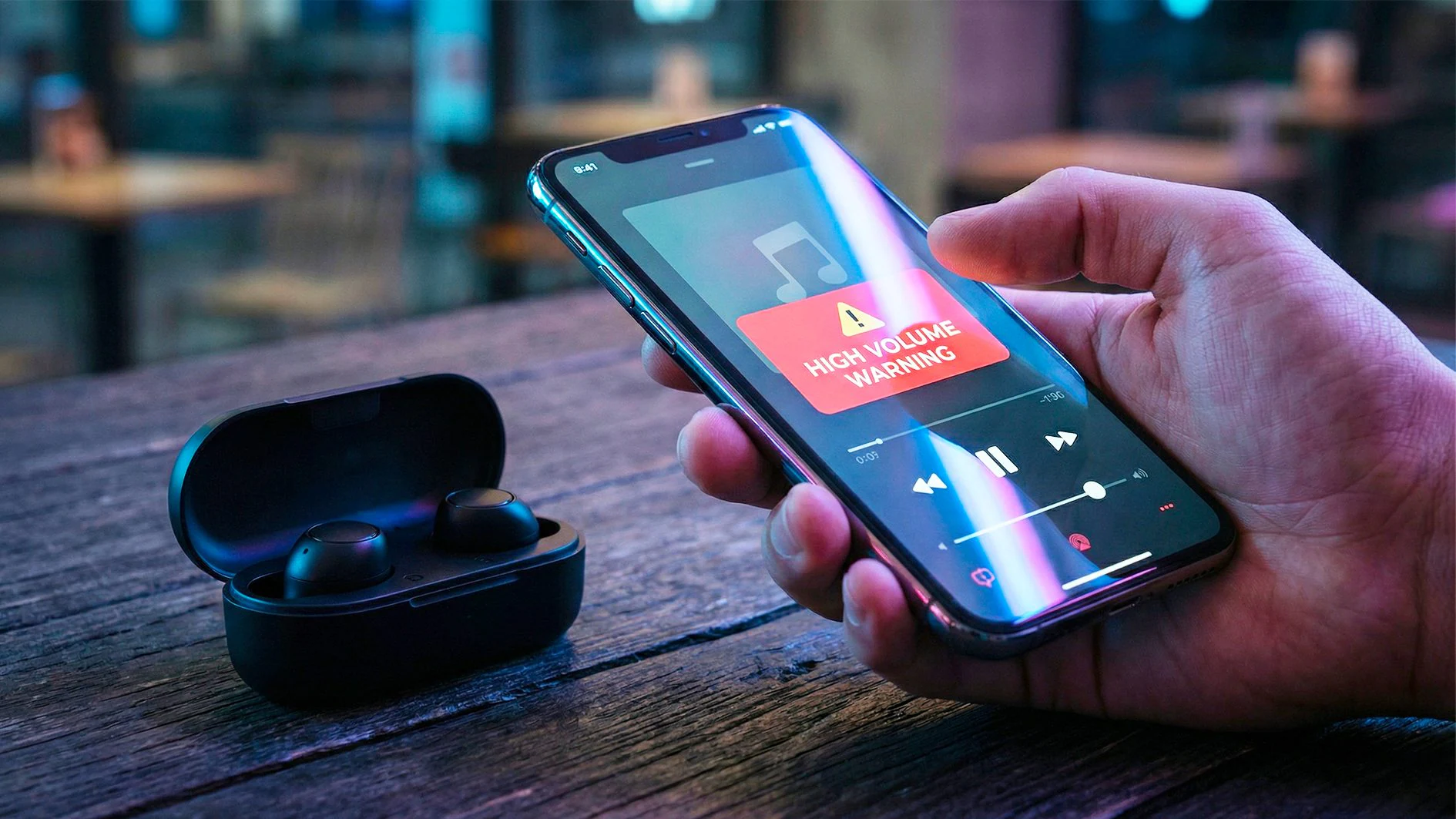
When we talk about health and headphones, the real risk factor to take into consideration concerns not so much the type of connection (wireless or wired) but the volume at which we listen to the contents. Audiology experts remind us that we must adopt good “listening hygiene”, that is, a series of habits useful for protecting hearing over time. Claire Benton, president of British Academy of Audiologyfor example, in an interview with the BBC explained:
Give your ears breaks from listening, keep the volume at a safe level, because the temptation to turn it up is always strong. Some people really love loud music, but we know that it is very dangerous to listen to it for too long.