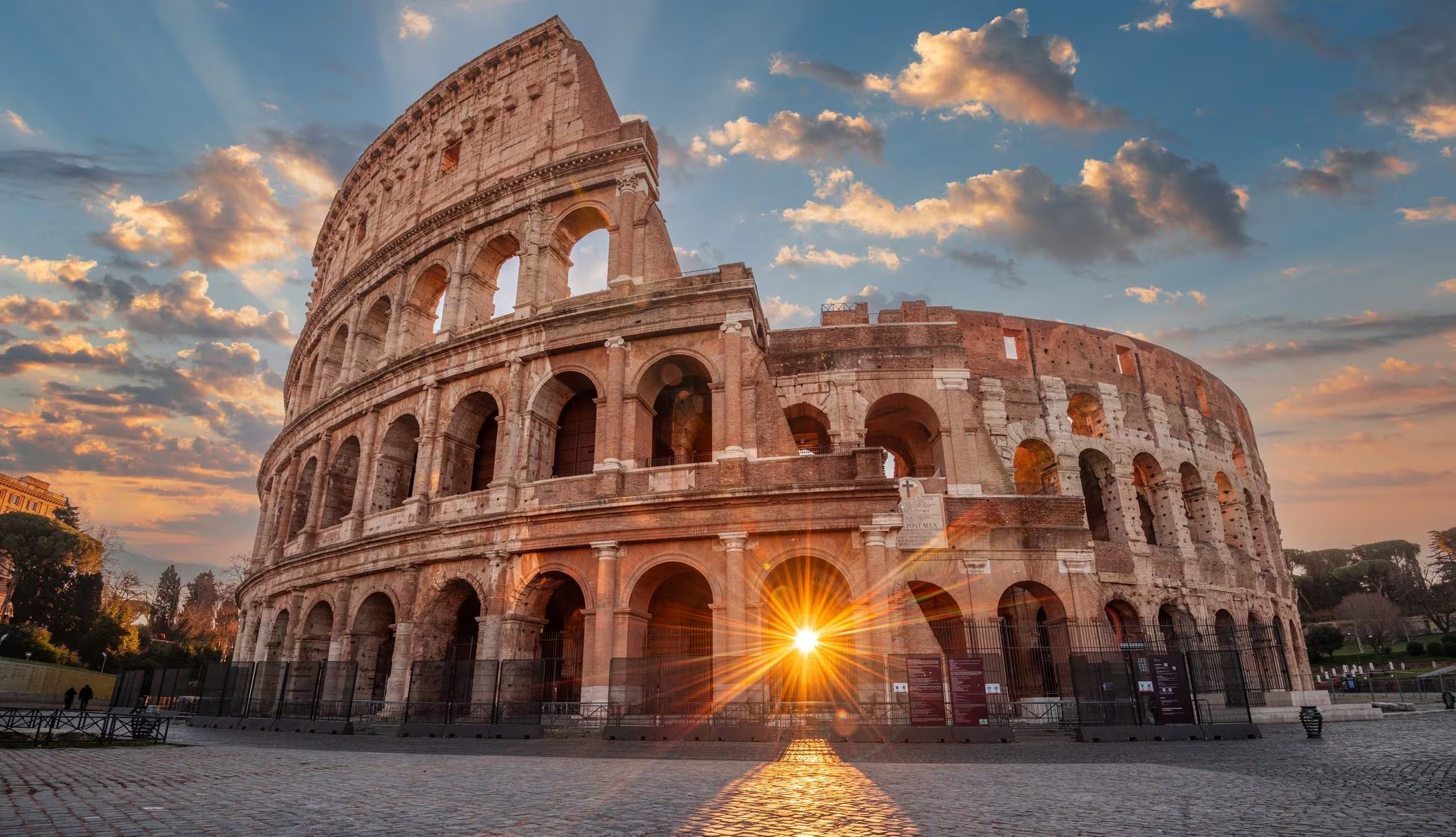
Among the UNESCO sites considered the most beautiful in Italy there are natural places, such as the Dolomites, landscape areas, including the Amalfi Coast and Cinque Terre, but above all many cultural areas such as the historic centers of Rome and Naples, the Venice lagoon and the archaeological park of Pompeii.
Italy is the country with the most UNESCO sites in the world: 61 places registered in the World Heritage List. Of these, 47 are cultural, 6 natural and 8 cultural landscapes. To understand its extent, on a global level there are 1223 UNESCO sites distributed in 168 countries: the world average is below 7 sites per single country. Italy also stands out for its intangible heritage: 20 recognized elements, as well as 14 cities included in the international network of UNESCO Creative Cities.
But what are really the most visited UNESCO sites in Italy? The answer is not easy: many UNESCO sites do not coincide with a single ticketed monument, but include entire cities or landscapes. For this reason, estimates based on tourist flows or data from the main internal monuments are often used.
Rome: the most visited UNESCO site in Italy
The Historic Center of Rome, the second Italian site to be included among the UNESCO heritage sites (in 1980), is one of the largest and most complex areas to measure in terms of visitors. In fact, there is no single access point, but we can estimate the numbers by considering the main monuments.
According to data from the Ministry of Culture, in 2024 the Colosseum recorded almost 15 million visitors, making it the most visited museum site in Italy. Among the most visited places in the historic center there are also other symbols of Rome, such as the Pantheon and Trevi Fountain. These three monuments alone collect over 300 thousand reviews on Tripadvisor, which places them first, second and fourth place respectively in the ranking of unmissable attractions in Italy.
Venice and its lagoon
The UNESCO site Venice and its lagoon, recognized in 1987, is another of the most famous destinations in world tourism. In 2024, estimates of tourist flows tell us that around 6 million visitors passed through Piazza San Marco alone. Other much visited places are also the Doge’s Palace, the Grand Canal and the Basilica of San Marco.
Considering the limited size of the area, the tourist pressure is among the highest in Italy and has led in recent years to the introduction of flow management measures, such as the access fee for daily visitors.
The Historic Center of Florence
The Historic Center of Florence, declared a UNESCO heritage site in 1982, represents one of the most important cultural centers in Europe, thanks to the unique concentration of Renaissance works. In 2024, the Uffizi Gallery alone recorded around 5.3 million visitors, confirming itself among the most visited museums in Italy. Among the most popular panoramic and cultural points there are Piazzale Michelangelo, Florence Cathedral and Ponte Vecchio.
The Italian Dolomites

The Dolomites are one of the most visited natural sites in the country. In recent years, popularity on social media has also contributed to a significant growth in tourist flows, attracted by images on social media that make these landscapes irresistible: according to the 2025 report of the Demoskopika Institute, Alto Adige and the entire Dolomite arc are among the Italian areas with the greatest tourist pressure, alongside cities such as Rimini and Venice. On a numerical level it is difficult to make a precise estimate of the number of visitors but the data tells us that the Belluno Dolomites alone have in fact recorded record numbers, with over 4 million visitors in 2024. And if the UNESCO recognition in 2009 has already given an enormous boost to tourism development, now the Olympics effect is looming.
The Amalfi Coast
The Amalfi Coast, included in the UNESCO list in 1997, is one of the most iconic cultural landscapes in Italy. Estimates indicate around 5 million visitors a year, distributed between well-known locations such as Positano, Amalfi and Ravello. In this case, the area, characterized by perched villages and coastal views, is particularly subject to seasonal tourist overcrowding, especially in the summer months.
The Archaeological Park of Pompeii
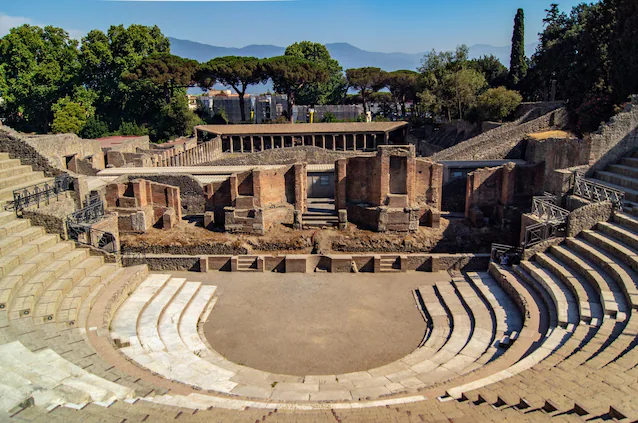
The Archaeological Park of Pompeii, a UNESCO heritage site since 1997, is among the most important archaeological sites globally and represents one of the few Italian UNESCO sites for which it is possible to obtain precise and annual data on admissions: over 4 million, also thanks to the opening of new domus, digital and interactive itineraries and large-scale restoration interventions.
The Cinque Terre
The Cinque Terre, recognized as a UNESCO heritage site in 1997, register around 4 million visitors a year, according to estimates by the Liguria Region. This site is particularly sensitive to mass tourism, as it includes small coastal villages, scenic trails and protected natural areas. Therefore, here too in recent years measures have been introduced to regulate tourist flows, especially on the most popular paths.
The Square of Miracles in Pisa
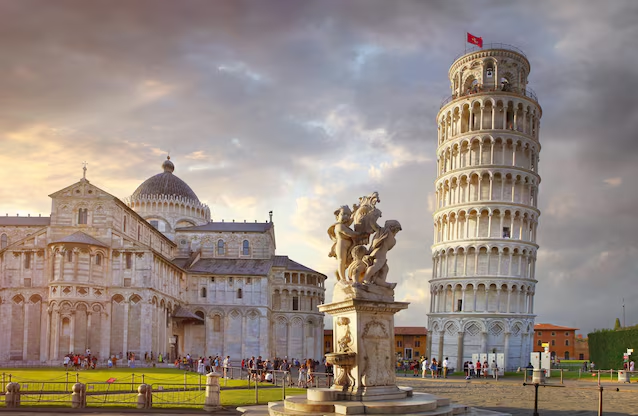
The Piazza dei Miracoli in Pisa, included in the UNESCO list in 1987, is one of the most visited monumental complexes in Italy. Estimates indicate around 3 million visitors per year to the Tower of Pisa alone, one of the most iconic and recognizable monuments in the world.
The historic center of Naples
The Historic Center of Naples, recognized as a UNESCO heritage site in 1995, is one of the largest in Europe. According to municipal estimates, it records over 3 million visitors a year, with significant growth in recent years. Among the most visited attractions are the Sansevero Chapel Museum, the Galleria Borbonica and Napoli Sotterranea. Here, cultural tourism is combined with gastronomic tourism, making the city one of the most dynamic destinations in Southern Italy.