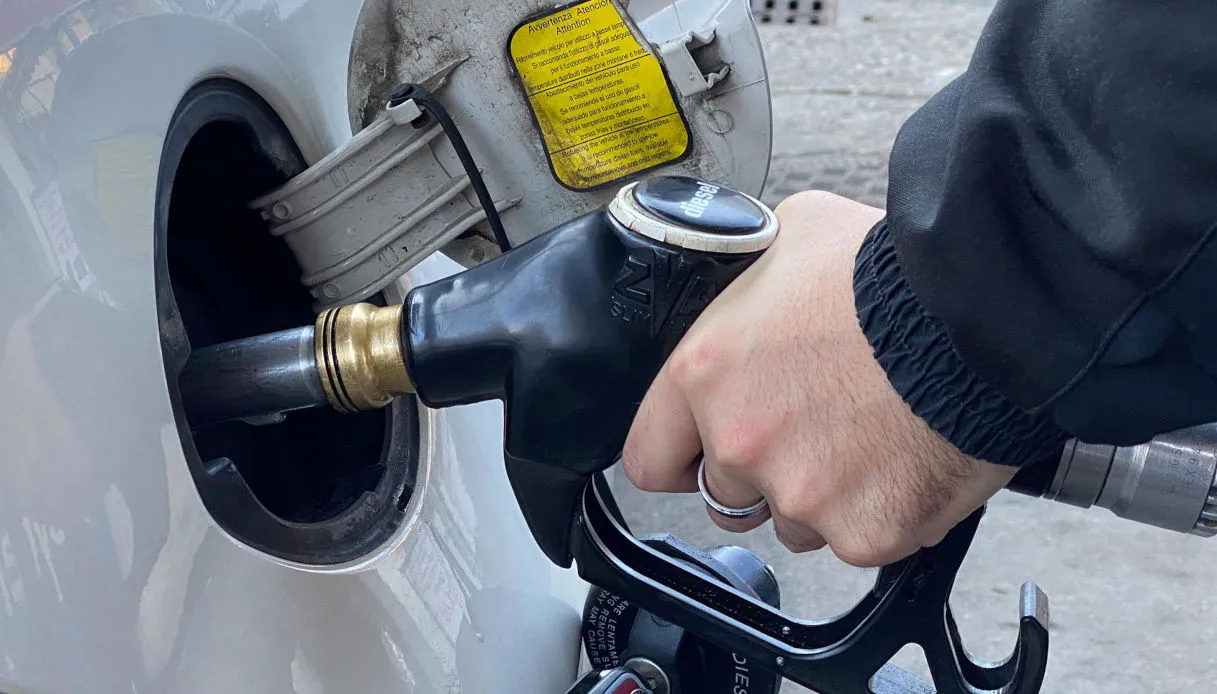
From 2 May 2026 the discount on excise duties remains, but it is no longer the same for everyone: diesel continues to be supported consistently while petrol sees the benefit reduced. The new intervention by the Meloni Government will last until May 23rd. The excise duty cut is maintained at 20 cents per liter for diesel, while it drops to 5 cents for petrol.
This means that, compared to previous weeks, those who use a petrol car will find themselves spending more. Estimates speak of an average price that can reach around 1.93 euros per litre, with even higher values on the motorway. Translated into practice: a full tank of petrol can cost around 9 euros more.
Excise duty, because diesel was favored
The basis for the difference in treatment between petrol and diesel is the recent price trend, with diesel having increased much faster. In recent weeks, petrol has risen by around 6% while diesel has recorded increases of around 24%.
The price dynamics pushed the Government to focus above all on diesel. But there is also an economic reason: diesel is essential for the transport of goods and for sectors such as agriculture and fishing. If it increases too much, the effect ripples through the entire price chain.
The bill for motorists
According to estimates by consumer associations, the increase translates into millions of euros more to be paid by motorists every day. Over the three weeks of validity of the measure, the figure reaches approximately 92 million in total.
This is what Codacons estimated:
The reduction in the excise duty cut on petrol to 5 euro cents, if VAT is not also considered, will lead to a liter of green fuel costing 18.3 cents more than today, on average 9.15 euros more on a full tank, with the price which, at today’s price list levels at the pump, will rise from next May 2nd to 1.929 euros per litre, while on the motorway the average price will reach 1.98 euros per litre.
Consumer associations speak openly of a penalty for those who use petrol. The disputed point is the difference between the two fuels, which creates an immediate effect on daily costs. There is also no shortage of criticism on the diesel front: despite the discount, fuel prices remain high and in many cases still exceed 2 euros per litre, especially on the motorway.
Because the excise tax discount is only temporary
The Government has made it clear that this is a time-limited intervention. The objective is to manage a phase of strong uncertainty without committing resources that are difficult to sustain in the long term.
The main problem remains that of economic coverage. The excise duty cut has a huge cost and is financed with variable revenues, such as Antitrust sanctions and the extra VAT revenue linked to the increase in prices. In this context, making definitive decisions becomes complicated. The hope, as always, is that the Strait of Hormuz crisis can finally find a solution.
Excise duties, what can happen after May 23rd
As for the near future, much will depend on the trend of oil and the evolution of prices. If the pressure continues, it is possible that we will move towards a new extension. But hardly with identical interventions for everyone: the trend seems to be that of targeted and short-term measures.