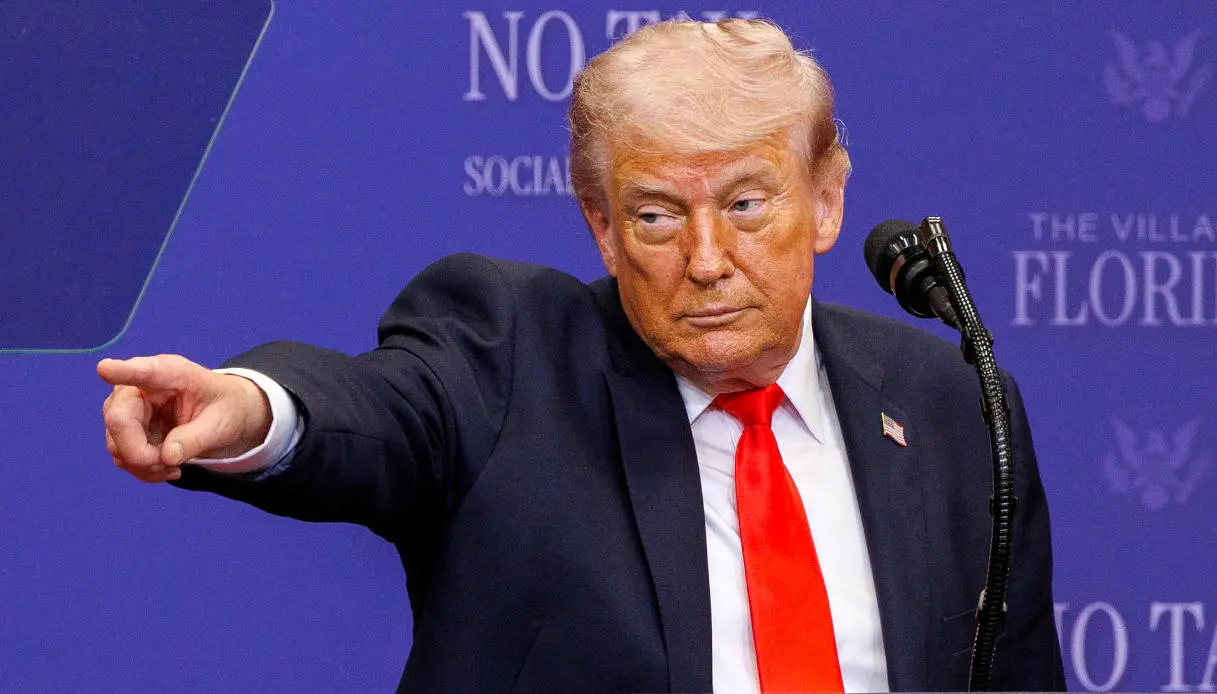
Donald Trump starts again with tariffs. And the trade conflict over tariffs is just one of the sticks used by the US president against the European Union.
Trump said tariffs on cars and trucks imported from the EU would rise to 25%. The choice is justified by an accusation: the EU did not respect the trade agreements.
Trump and the new 25% duties on cars
“The European Union is not respecting our trade agreement,” he wrote on Truth Social, stressing, however, that vehicles produced in the United States will not be subject to any tariffs.
Trump wants to attract investments on US soil to reduce unemployment, relaunch entire supply chains and counter Chinese competition.
The EU’s reaction: “Unacceptable move”
The European response was immediate and harsh: Bernd Lange, president of the International Trade Commission of the European Parliament, defined the plan as “unacceptable”, openly speaking of the United States as an “unreliable” partner.
Lange reiterated that the EU is respecting the agreement signed in Scotland and is completing the planned legislative process. “While the EU keeps its commitments, the American counterpart continues to fail to respect them,” he declared, also referring to previous tensions over steel and aluminium.
Brussels: “Ready to defend our interests”
A spokesperson clarified that, in case of measures incompatible with the joint declaration, the EU will “keep all options open” to protect its interests.
Brussels stresses that it has acted in line with standard legislative procedures, maintaining constant dialogue with Washington. However, uncertainty is growing: the risk is a commercial escalation that could hit one of the most important sectors for the European economy, the automotive sector which is already battered by Chinese competition, ecological constraints and rising energy prices.
The increase in duties to 25% will have direct consequences, with repercussions throughout the supply chain for car manufacturers, suppliers and workers.
Growing tensions between the US and the EU
The issue of duties is part of a broader context of tensions between the United States and Europe. Trump goes to attack old allies with three combined strategies:
- trade duties;
- reduction of the US military presence in Europe with the proposed withdrawal of thousands of American soldiers from Germany and Italy;
- pressure on military supplies with Washington warning of possible delays in the delivery of weapons and ammunition to European allies and Ukraine.
The triple thrust against Europe has the effect of increasing economic and security uncertainty, as well as defensive capabilities.
The European Union, for its part, is trying to maintain a position of dialogue but is preparing possible countermeasures. The real risk is the opening of a new phase of economic friction between the two sides of the Atlantic.
Trump and tariffs on the United Kingdom
At least one country on the Old Continent has been partially pardoned: Trump has announced his intention to remove duties on whiskey from the United Kingdom:
In honor of the King and Queen of the United Kingdom, who have just left the White House and are about to return to their wonderful country, I will remove the tariffs and restrictions on whiskey that limit Scotland’s ability to collaborate with the Commonwealth of Kentucky in whiskey and bourbon, two very important industries in Scotland and Kentucky.