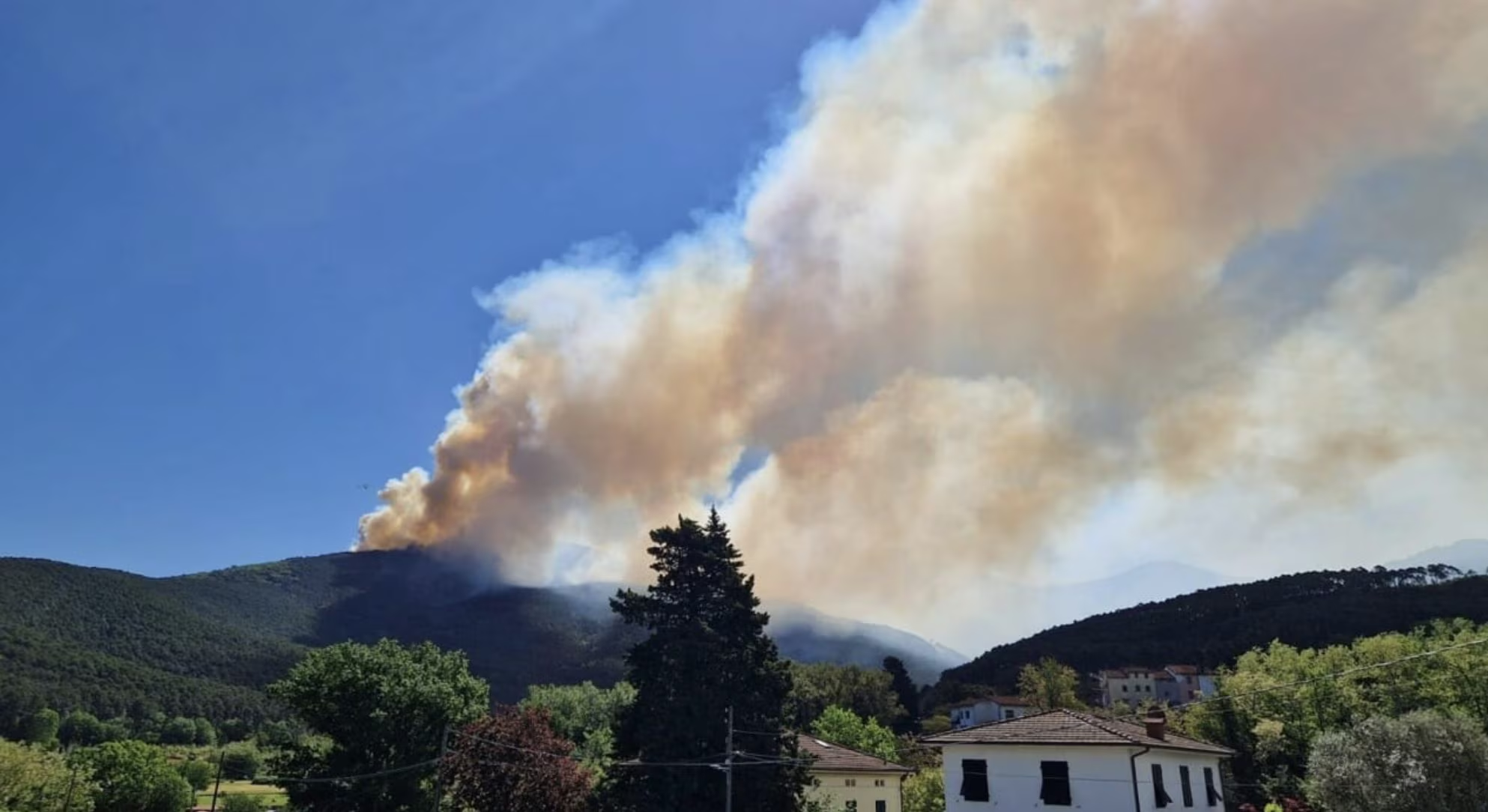
800 hectares burned, a perimeter of 17 km, 3500 people evacuated in the middle of the night from Asciano, a hamlet of San Giuliano Terme (PI): these are the numbers provided by the Civil Protection of the Tuscany Region on the forest fire that started in the last hours of April 28 on Monte Faeta, between the provinces of Lucca and Pisa, which fortunately is now being extinguished and cleaned up. The perimeter of the fires is largely under control and the evacuees were able to return to their homes on the evening of May 1st, thanks to a reduction in the wind and the intervention of the Fire Brigade and the army.
According to the first information gathered by the mayor of San Giuliano Terme, it seems that the fire started from the San Pantaleone valley, in the province of Lucca, due to a burning of olive tree prunings – a practice prohibited during windy days, as declared by the President of the Tuscany Region Eugenio Giani – which got out of control. However, the investigations are ongoing and the response from the Judiciary is awaited to confirm this hypothesis.
The Monte Faeta fire is one of the most serious fires in recent years in Tuscany, second only to the Monte Serra fire in 2018, where 1200 hectares of forest went up in smoke.
The dynamics of the fire on Monte Faeta: the role of wind and air spotting
The first fire outbreak probably started at the end of April 28, but the situation worsened the following day. As anticipated, the hypothesis – to be confirmed – on which the first reconstructions are based is that a private farmer in the Lucca area was burning olive prunings when the flames got out of hand due to the north wind blowing in the area.
The wind would then have fueled the extension of the fire front, which in an initial phase may have already reached the Pisan side of Monte Faeta, threatening some homes in the Asciano valley in San Giuliano Terme on April 30th. At that point the area covered by the fires already extended to 250 hectares.
The situation worsened throughout the day due to a mechanism called spotting. This happens when the wind carries burning embers beyond the containment lines, where they fall, igniting new outbreaks at a distance from the main front. In the case of Monte Faeta, numerous outbreaks generated by close spotting phenomena have been reported, making it effectively impossible to intervene on a single front. This makes extinguishing operations much more complicated and causes an uncontrolled extension of the fire front.
This led to the situation worsening during the night between 30 April and 1 May, so much so that the evacuation of around 3000 people was requested between Asciano and San Giuliano Terme. A new evacuation order then extended the measure to other residents of the area, for a total of 3,500 people who had to leave their homes with the help of the Army and the Carabinieri.
The interventions saw an impressive deployment of resources: on the air front, 4 Canadairs and an Erickson S-64 helicopter were used, while on the ground 104 Fire Brigades carried out a total of 85 interventions on the Pisan side, while on the Lucca side another 57 Fire Brigades were employed. The teams of the forest fire prevention system (AIB) of the Tuscany Region also intervened.
On May 1st the emergency began to ease thanks to a drop in the wind: the cessation of the gusts stopped the spotting phenomenon and allowed the intervention teams to consolidate the perimeter of the fires and contain the flames. As Giani stated, an artificial lake created a few months ago also proved to be decisive, allowing helicopters to intervene quickly. At the moment, the fires on the Lucca front have been extinguished while on the Pisa front the perimeter is 70% contained. This led to the revocation of the evacuation order on the night of May 1st, restoring relative tranquility in the area most affected by the fire (of the 800 hectares burned by the flames, approximately 600 belong to the Pisan municipality side).
The fire season in Italy starts early again this year: EFFIS data
Although the situation is now fortunately receding without causing any casualties, there remains some concern over the fact that such a serious fire developed at the end of April, ahead of the summer fire season. An increasingly frequent problem due to climate change: last year, for example, the fire season started early in Italy.
In the image below we can see the data provided by the European Forest Fire Information System (EFFIS) on the trend in the number of forest fires in Italy since 2006, which shows a significant increase in the average over the last decade.
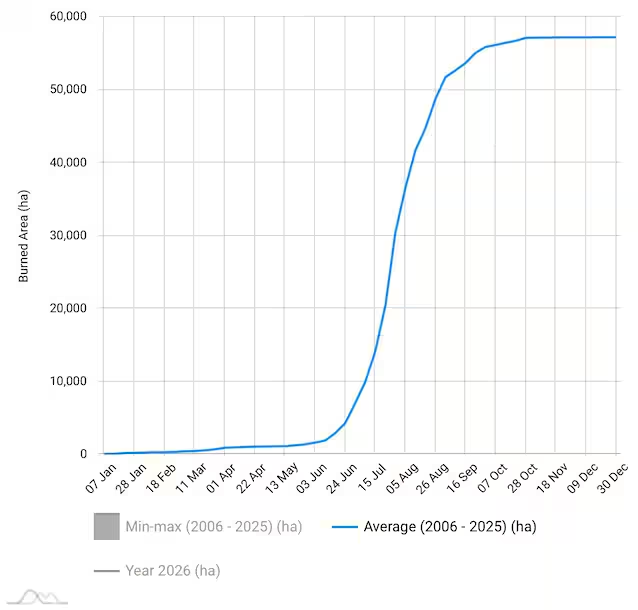
To date, the hectares burned in Italy in 2026 are already 2045 during 20 fires. This is a value that, compared to the average of the last 20 years, we could expect in mid-June (as shown in the graph below, created starting from EFFIS data), and which we instead find ourselves at the beginning of May precisely because of the fire on Mount Faeta.