The adaptation of theOdyssey by director Christopher Nolan, released on July 16, 2026, has everything it takes to be successful. An epic story, an excellent cast – the protagonist, in the role of Ulysses, is the actor Matt Damon, but there are also Anne Hathaway, Robert Pattinson, Tom Holland and Charlize Theron – and a budget worth blockbuster.
However, scholars and ancient history enthusiasts may not like it. Several commentators have in fact criticized the historical inaccuracies already contained in the first trailer and in the second trailer, which has just been released. In particular, there would be inaccuracies regarding the type of helmet worn by the Greeks and the warrior ships, which do not possess the “tagliamare”, the front part of the bow typical of ancient Greek galleys.
THE’Odyssey of Homer
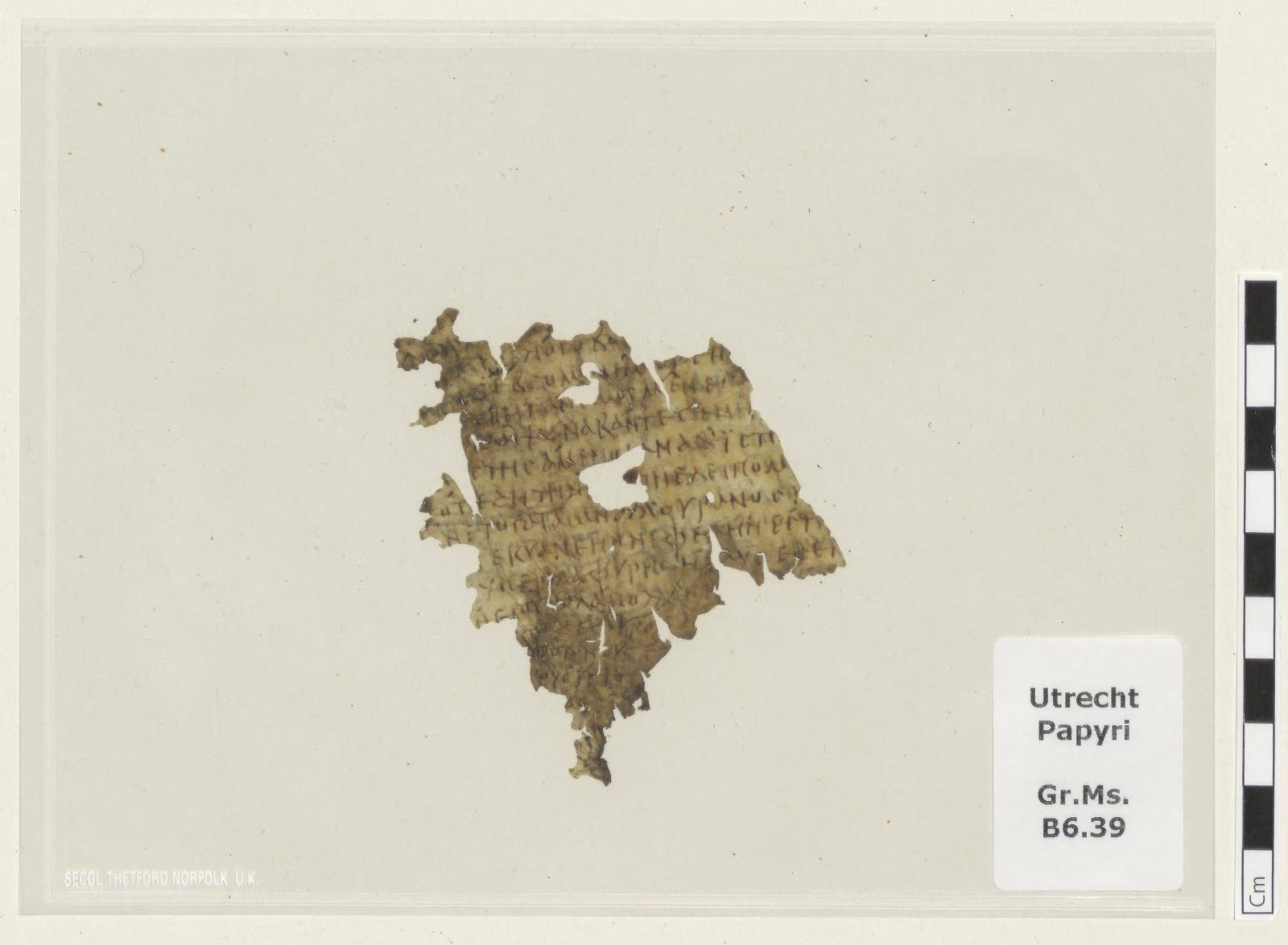
THE’Odyssey it is not a historical document but an epic poem written between the end of the 8th and the beginning of the 7th century BC by Homer, an author whose existence is still debated among scholars today (this is the so-called “Homeric question”). The work recounts the difficult return journey of the Greek hero Ulysses to the island of Ithaca after the Trojan War, a famous conflict that occurred in the late Bronze Age (about five hundred years before the writing of the poem). The hero’s journey, lasting ten years, is described as full of adventures and extraordinary encounters: witches, monsters, demigods and so on.
The work is therefore not historically reliable, also because many scholars believe that it was written and reworked by different authors over time starting from oral stories. This does not mean that the work brings together many historical and mythical elements, enough to create a founding myth and a point of reference for values for the community that produced it, Ancient and Classical Greece, and a key text for Western literature.
The “errors” in the trailer of Odyssey by Christopher Nolan
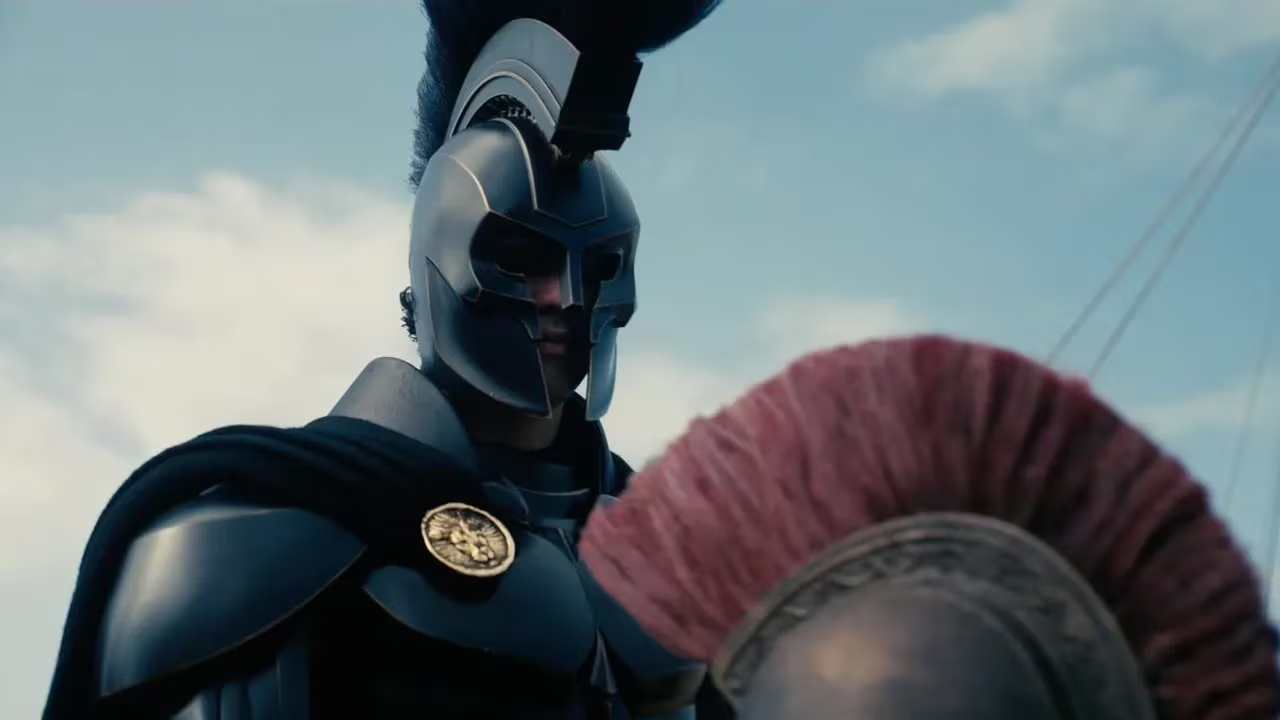
For one thing, commentators note, the Greeks wear the wrong kind of helmet. The mythical blind singer, Homer, described his heroes (called Achaeans, not Greeks) with bronze helmets, which covered the entire head and most of the face, topped with a crest of horsehair. And in fact we see Odysseus, whose name has been Italianised as Ulysses, crossing a forest with a helmet quite faithful to this image: unfortunately, however, the front part is too open. Instead, Agamemnon’s helmet is indeed closed, but too thick, too tight and of a shiny black (a bit “Batman-style” some say, in reference to the most famous saga directed by Nolan) which contradicts the colorful image that Homer provides of it inIliad.
Then there are the ships on which Nolan places his warriors: Odysseus’ galley does not have the front part of the bow (called a sea cutter), which is a distinctive sign of ancient Greek galleys. Like Agamemnon’s helmet, the ship is also painted black and lacks the touches of color described by Homer.
A separate discussion was made for the dialogues of the second trailer: according to some commentators they would be a little too modern and informal to maintain any resemblance to the epic and grandiose tone of the original, changing the meaning (and confidence) of the interactions between the characters.
Finally, it seems that the typical mistake of this type of cinematic transposition was made: that is, having considered the Trojan horse a real wooden horse and not, as is more probable and supported among others by the naval archaeologist Francesco Tiboni, a type of Phoenician ship that was usually called Hipposi.e. horse, due to the figurehead in the shape of a horse’s head.
These will not be tragic errors like those of Gladiator II or Napoleonof course, but until the film’s release, scheduled for July, we can only hope that the inaccuracies end here – or have fun hunting for the others!