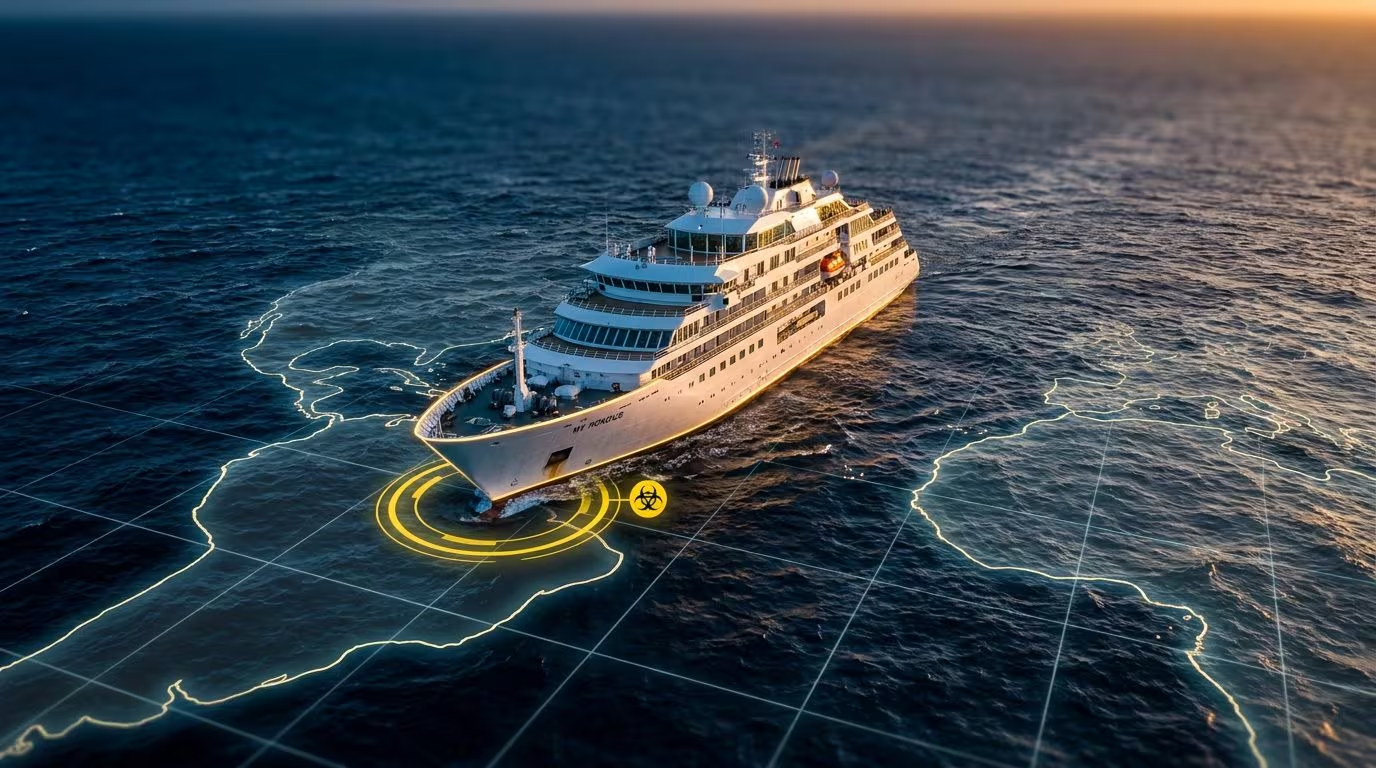
Concern is growing over the Andes virus outbreak that started on the MV Hondius ship cruising in the Atlantic Ocean and which has already seen the death of three passengers (a 70-year-old Dutch man, a 69-year-old Dutch woman and a German woman) and the infection of at least five others. The WHO confirmed that the cause of the epidemic was the Andes virus, the only hantavirus capable of transmitting from one human being to another. The ship, which left on April 1 from Ushuaia, Patagonia, is currently traveling to the Canary Islands where it is expected to arrive on Saturday.
20 MARCH: 149 people, including 88 passengers of 23 nationalities, board the MV Hondius ship. Among them is the deceased Dutch couple, who in the days before boarding had undertaken a journey between Chile and Argentina. One hypothesis is that the husband and wife contracted the virus during this trip before the cruise, it is hypothesized while doing birdwatching.
APRIL 1st: the MV Hondius departs from Argentina.
5-6 APRIL: during the stop in the Sandwich Islands, the Dutch husband shows the first symptoms: fever, headache, abdominal pain and diarrhea. In the following days the man also developed breathing difficulties.
APRIL 11: Dutch passenger dies. At this stage it is not known that the cause of death is Andes virus. In the meantime, the on-board doctor and his assistant, who came into close contact with the deceased, have contracted the virus and are starting to show the first symptoms. The body remains on board, in a cold storage room, for almost two weeks.
22-24 APRIL: after a stop in the Tristan da Cunha archipelago, the ship reaches the island of Saint Helena. Here, together with the body, the Dutchman’s wife disembarks, already with evident symptoms, to return to the Netherlands. At least 29 passengers of at least 12 nationalities also disembarked, who then returned to their respective places of origin.
APRIL 25: the Dutch woman flies to Johannesburg, intending to stop there and return to the Netherlands. However, she was taken off the plane due to her poor health and taken to hospital in Johannesburg.
APRIL 26: the woman dies in hospital.
27 APRIL: during a stop on Ascension Island, another British man, aged 69, who had been showing symptoms for a few days, was transferred to Johannesburg where he was hospitalized in intensive care.
APRIL 28: a German woman, remaining on the ship, begins to develop fever, malaise and pulmonary symptoms.
MAY 2: the woman dies on board the ship. On the same day, the laboratory in South Africa that analyzed the body of the deceased Dutchman confirmed that the death occurred due to hantavirus.
3 MAY: the MV Hondius stops in Cape Verde. Those infected who show symptoms (including the doctor on board the ship) are examined by local doctors.
4 MAY: death from hantavirus is also confirmed for the Dutch woman. The news begins to spread throughout the world and an international alert is triggered. The WHO was notified of the incident and the hypothesis took hold that the virus was brought on board the ship by someone who had contracted it before boarding.
MAY 6: after long negotiations with the WHO, the ECDC and the Spanish government, the ship obtains authorization to reach the Canary Islands. It leaves Cape Verde after having evacuated three cases of Andes virus, two to the Netherlands (including a 56-year-old English man) and one to Germany, so that they receive medical treatment. The ship’s arrival on the island of Tenerife is scheduled for Saturday 9 May. Meanwhile, the WHO confirms that the virus that caused the three deaths is the Andes virus.
MAY 7: a KLM flight attendant who had been in contact with the Dutch woman during her attempted boarding to the Netherlands is hospitalized in Amsterdam. It is currently unknown whether he contracted the Andes virus.
To date, 3 deaths from the Andes virus have been confirmed (the Dutch man and woman and the German woman) and 5 other confirmed cases: the Englishman hospitalized in Johannesburg (now in stable condition), another Englishman hospitalized in the Netherlands who landed in Cape Verde, a man who landed in St. Helena and currently hospitalized in Zurich and the other two people who landed in Cape Verde.