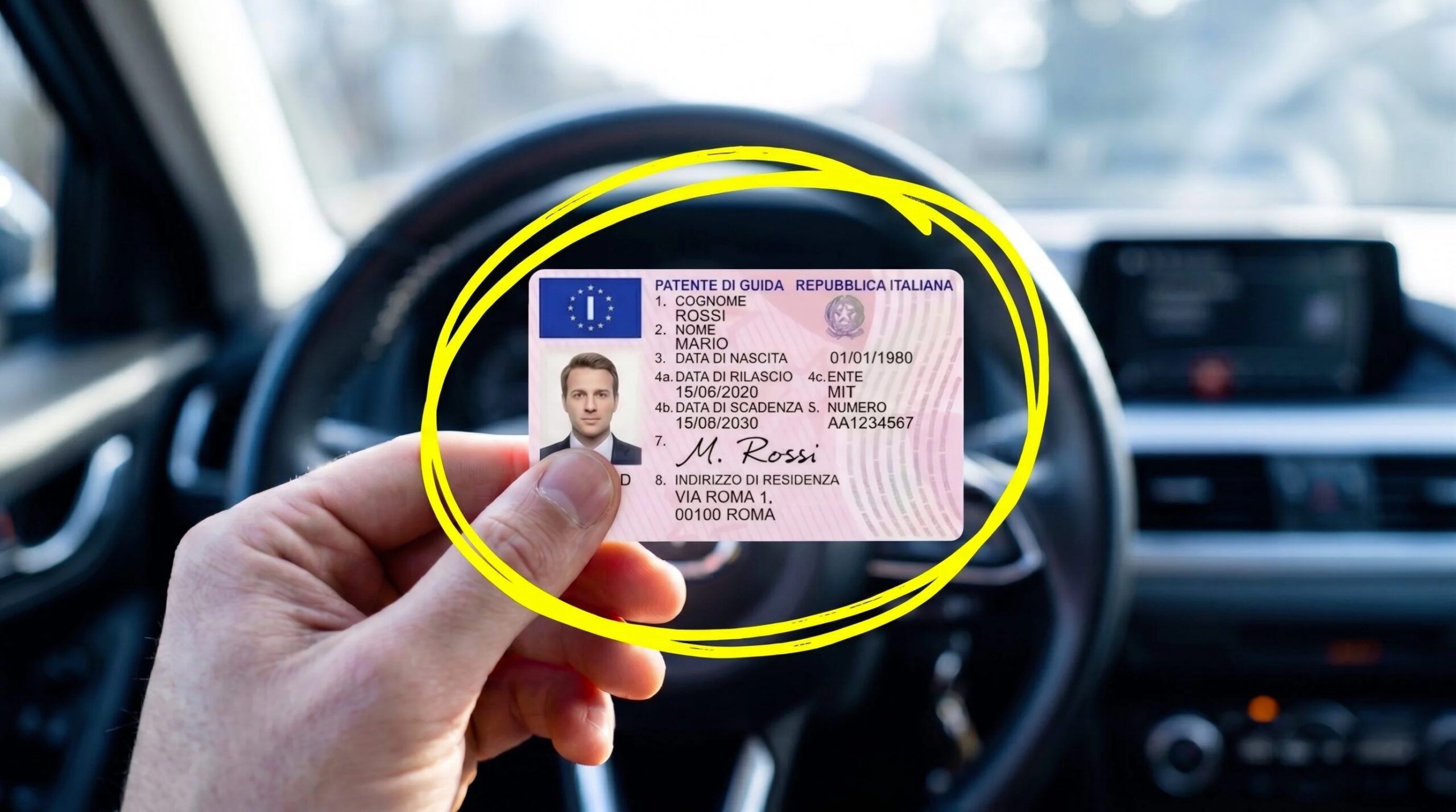
In 2026, the methods for examining the B license will change, with the mandatory driving hours rising from 6 to 8, while the pink sheet can be used to practice with private guides only after completing all the hours with the driving school instructor. This is what is foreseen by the Decree of the Minister of Infrastructure and Transport 294/2025, which came into force in December 2025. However, there is a fundamental aspect to clarify: it is not yet certain when all these innovations will become fully operational.
The decree, in fact, subordinates its effectiveness to the activation of the DMV digital platform, the system through which driving schools will have to record and certify the driving hours carried out. Until that moment, therefore, the current rules will continue to apply. Presumably, within the next few months the executive decree will be published with all the instructions for using the platform: only at that point will the new provisions come into force in all respects.
But the contents of the theoretical test will also change, in this case under the impulse of the European Union: the directive approved by the EU Parliament in October 2025 establishes that candidates will have to answer – in addition to questions relating to intersections, priorities and signs – also questions related to the risks of blind spots, driving assistance systems (ADAS), and the safe opening of doors. For these innovations, however, the times will be longer: Italy has until 2029 to transpose the directive into national law.
The mandatory guides: what changes for the practical exam
The most concrete innovation concerns the preparation for the practical test to obtain the B driving licence. As reported in Ministerial Decree no. 294 of 11/17/2025, the hours of compulsory practice increase from 6 to 8. The number of hours, which must be carried out at a driving school with a qualified and authorized instructor, will be divided into 4 specific modules:
- Module A (2 hours) will be used to prepare the student for the safe use of the vehicle. That’s why this module includes exercises on starting, braking, steering and gear use, but also the activation and configuration of ADAS devices – Advanced Driver Assistance Systemsadvanced driver assistance systems – possibly present on the vehicle and the simulation of emergency situations (management of a fault, positioning of the triangle, use of the reflective jacket, etc.). The activities of this module must be carried out on urban or secondary extra-urban roads within a radius of 10 km from the driving school headquarters.
- Module B (3 hours) is instead dedicated to driving in urban areas and includes, for example, positioning on the roadway, the use of intersections, roundabouts and in general circulation in cities during hours of heavy traffic.
- Module C (2 hours) concerns driving on motorways or main or secondary extra-urban roads.
- Module D (1 hour) is finally dedicated to driving in night vision conditions, on any type of road, i.e. exercises conducted no earlier than 8pm (or half an hour after sunset) and no later than 6.45am (or half an hour before sunrise).
Regarding the sequence of modules, the decree also establishes that Module A is preparatory to all the others. The daily limit is however set at 2 hours of lessons, with the possibility of combining multiple modules on the same day, provided that each session has a minimum duration of 30 minutes.
The lessons will however be individual, with the exception of emergency simulation activities (Module A), which can take place collectively for a maximum of 5 students, with a duration of 30 minutes.
Clearly, the increase in the mandatory hours to access the practical exam will inevitably correspond to an increase in the costs for the B license: considering an average cost of guides between 40 and 60 euros per hour, prices could rise up to 120 euros more than before.
The pink sheet cannot be used immediately for private guides
The second major innovation introduced by the Ministerial Decree concerns the pink slip, i.e. the authorization to practice driving which is issued after passing the theory exam. Until now, the aspiring driver can start driving with a private companion from the first day of issuing the pink slip, completing the mandatory driving lessons at the driving school at any time.
With the new decree, however, before starting private driving it will be mandatory to complete the mandatory 8 hours in driving school: at that point, a final certification will be issued through the CED platform of the Civil Motorization. In case of violation, sanctions range from a minimum of 430 euros to a maximum of 1,731 euros.
In short, it is this final certification that “unlocks” the possibility of practicing outside the driving school, always accompanied by a driver who has had a B license for at least 10 years.
The delay in the entry into force of these changes derives precisely from the activation times of the CED platform: until the latter is fully operational, the B driving license exam will take place according to the current methods.
What’s new for the theoretical driving license exam
But the innovations will not only concern the practical exam: EU Directive 2025/2206 has in fact established that the theoretical exam for aspiring drivers must also include questions on the risks associated with blind spots, on driving assistance systems (ADAS), on the safe opening of doors and on the risks of distraction due to the use of mobile phones.
It is therefore a change from a notional point of view: the theoretical exam is mainly focused on signs and priorities, but the objective is to transform the test into a test more oriented towards the real risks of driving.
The new EU rules, among other things, provide that the digital driving license (accessible from the mobile phone) will progressively become the most used driving license format within the Union, although citizens will still have the right to request a physical driving licence.
Even in this case, however, we do not know exactly when the changes will come into force: the new rules are in fact contained within a directive and Italy will have up to 3 years to implement it into national law and another year to make the new provisions operational. This means that, indicatively, the entry into force of these rules will be close to 2029.