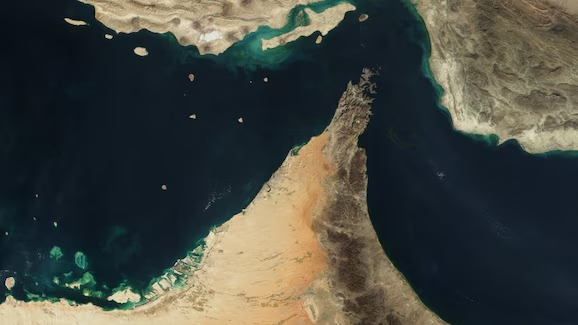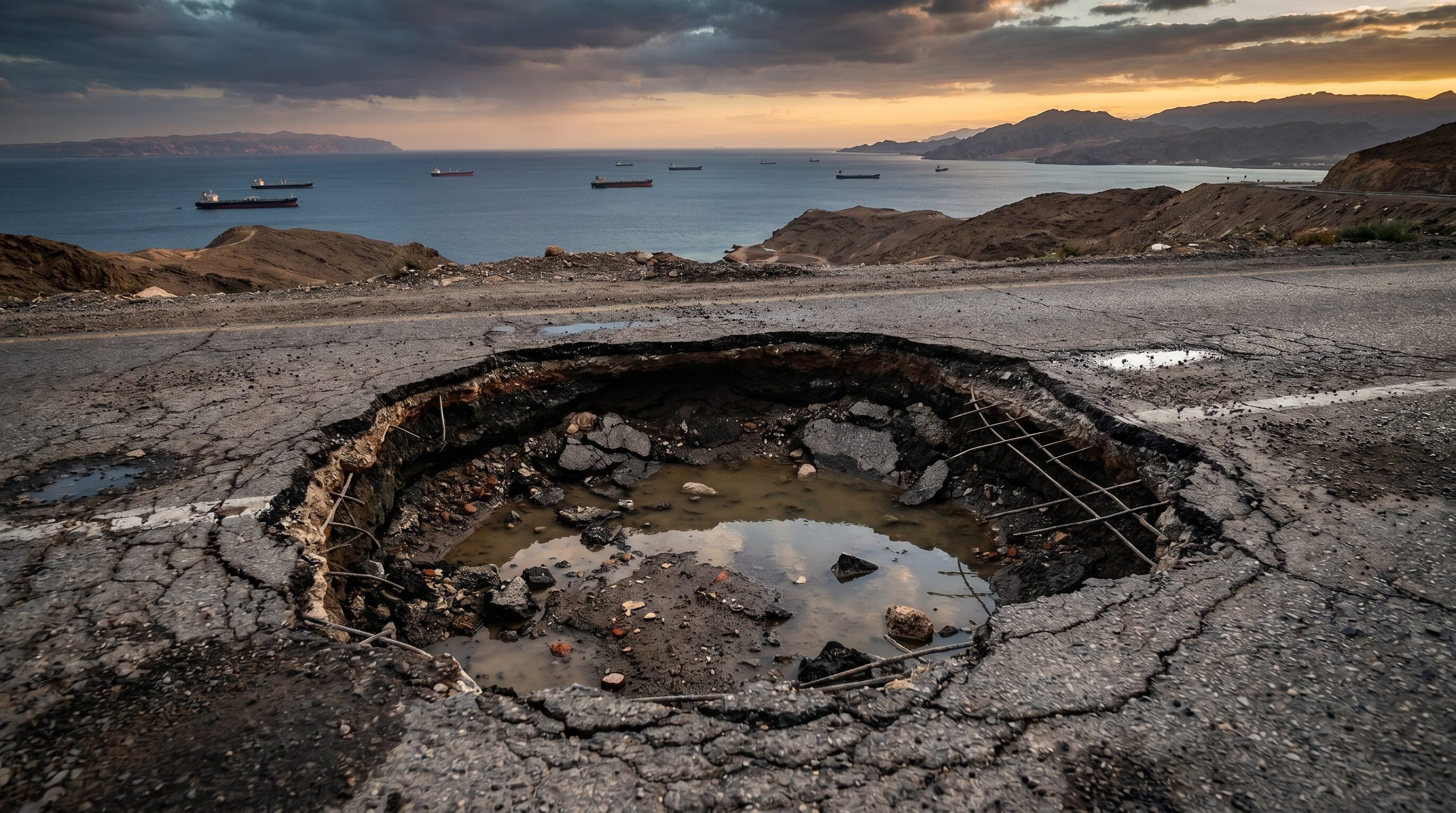
Some Italian municipalities, such as Asti or Rovereto, are reviewing their road maintenance plans due to lack of resources. In Castelfidardo, in the province of Ancona, some roads were closed due to a lack of bitumen to carry out regular maintenance. This is a consequence of the Hormuz crisis in the context of the conflict between Iran and the United States, which is dramatically increasing the price of bitumen, a petroleum derivative necessary for repairing potholes. As calculated by SITEB (Italian Roads and Bitumen Association), the cost of road bitumen has grown by almost 50% since the closure of the Strait, more than it did in 2022 with the outbreak of war in Ukraine, making the possibility of many Italian municipalities to repair potholes on their roads this summer uncertain.
That of bitumen is one of the many increases due to the closure of the Strait of Hormuz, which affect energy above all: oil currently costs $130 per barrel, the price of jet fuel has almost doubled, methane has gone from 32 to 48 €/MWh. Especially if the crisis does not stop, we could potentially see further increases in the coming months, such as food prices due to the lack of fertilizers.
Why and how much the cost of bitumen has risen, SITEB data
In March the average road bitumen price index reached the level of 513.73, almost 50% higher than in February, in which it was lower than in previous months (345.46). If we exclude the peak of 532.35 reached in January 2022, in March this year the highest level since 1999 was reached, the year in which SITEB (Italian Roads and Bitumi association) set the average price index at 100 (in January). The index is calculated by SITEB on the basis of the ex-destination purchase price, reported by a series of sample companies. As stated by SITEB to RaiNews24, the price of road bitumen went from an average of 450-480 euros per ton in 2025 to values between 650 and 800 euros per ton in the first months of 2026, with an immediate impact on production costs.
The demand for asphalt in Italy has also increased following the reform and investment plan financed by European funds (the PNRR). The works, however, have been postponed due to delays accumulated by local authorities, in particular the municipalities, and are taking place all together in recent months, with a further concentration of demand which has already led to an increase before the Hormuz crisis.
As SITEB explained to us, asphalt is made up of 95% inert materials (sand, gravel and crushed stone) and
from 5% bitumen (oil derivative): in normal times, the economic impact of the latter however is
very high and close to 40-45% of the value of the material in place. «The Hormuz crisis and the current one
oil prices cause this economic impact to skyrocket. Add to all this
also the increase in energy costs (methane gas, LPG, BTZ) essential for production
asphalt which is a hot material that is produced and spread when hot and the painting becomes
unsustainable for the companies that have to carry out the contract”.
Why it’s a problem: the consequences
Potholes represent one of the main risk factors on our roads, causing numerous accidents every year, especially for two-wheeled vehicles. Usually asphalt is paved in the summer, for several reasons: it is more convenient because the roads are less busy, there is less rainfall and therefore less humidity, and furthermore the higher temperatures make the bitumen more easily workable and spreadable. The coming summer, therefore, should have been the ideal time for these works. However, these price increases now weigh especially on those companies that should carry out the work today, but which won the contracts months ago, with offers that are now no longer updated compared to the increased prices.
In 2022, following the increases related to the war between Russia and Ukraine, the government had introduced extraordinary compensation mechanisms for businesses: SITEB is today asking to allocate new measures and contributions to accommodate businesses, readjusting regional price lists and updating tariffs. The risk, in fact, is that the municipalities are unable to resurface in all cases where it is necessary: this is what is happening for example in the municipality of.
What asphalt really is: the importance of bitumen
Bitumen is a petroleum derivative, which is obtained from the refining of crude oil such as petrol, diesel and jet fuel and composed of a complex mixture of hydrocarbons. How is it obtained? Through distillation of the oil: this passes into a distillation column and is heated: as temperatures rise, the lighter and more refined products, which rise upwards, separate from the heavier ones (petrol, diesel and jet fuel), which remain in the lower layers. The bitumen remains on the bottom, a dark and viscous compound which is then combined with rocky material (crushed stone, gravel and sand) to form asphalt, by virtue of its adhesive properties.
Asphalt is the first layer of the five that every road should be made of, and constitutes the so-called “wear surface”, 4 to 6 cm thick. The subsequent layers are the binder (7 cm thick and in turn obtained from bitumen), the base (15-20 cm), the foundation (30-35 cm) and the subfloor. Among the main causes of the formation of potholes are the traffic of heavy vehicles such as buses and trucks, which break the bitumen, creating cracks, and the rain, which infiltrates into these cracks. When a heavy vehicle passes again, the incompressible water widens the cracks and, passage after passage, potholes form.
To patch them, you usually only “repair” the first layer, adding new compound made up of bitumen, gravel and sand, but this is usually not a lasting result: to really fix a road you would have to completely redo it.