Among the victims of the eruption of Vesuvius in 79 AD there may also have been a doctor. The hypothesis comes from a new investigation conducted by the Archaeological Park of Pompeii on the famous casts of the Garden of the Fugitives, one of the most dramatic places of the ancient city, where in 1961 Amedeo Maiuri brought to light 14 people surprised by the burning cloud while they were trying to escape. The news was published in the official online newspaper of the Archaeological Park.
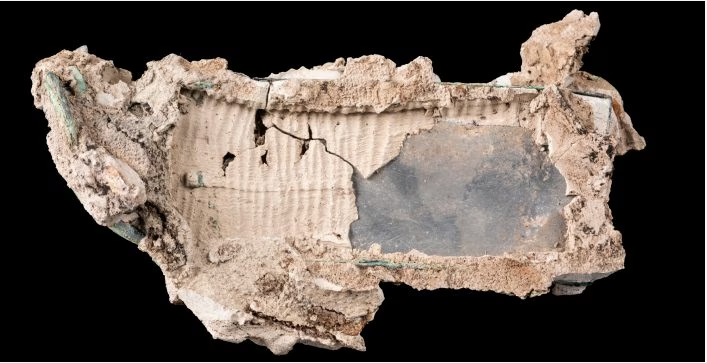
The hypothesis does not originate from a new excavation, but from the re-examination of the materials kept in the Park’s deposits. During the restoration of cast number 46, archaeologists identified a small case trapped in the plaster together with the bone remains of the victim, an adult male. Next to the case there was also a fabric bag with some silver and bronze coins, probably the little money the man had taken with him in his escape. The find, just twelve centimeters long, was a container made of organic material, perhaps wood, leather or cork, and reinforced by thin bronze sheets.
What struck the scholars above all was the presence, inside, of a “coticula“: a small basalt tablet used in Roman times to mix medical or cosmetic substances. This type of object often appears in the kits of ancient doctors, together with scalpels, probes and surgical tweezers.
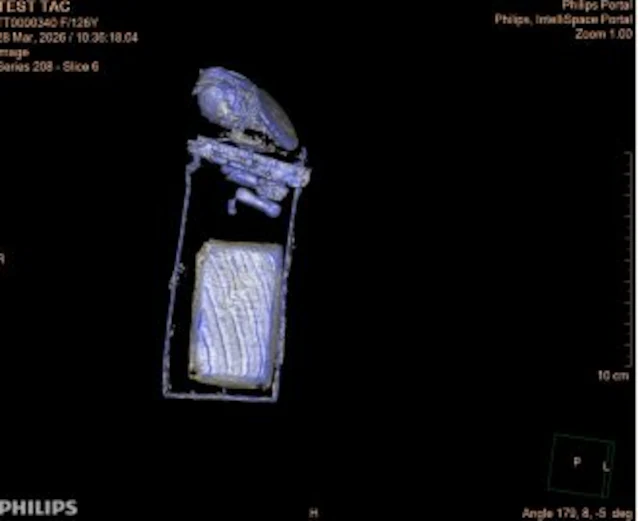
To better understand what the case contained, which was isolated from the rest of the plaster through a micro-excavation, the Archaeological Park subjected the find to CT scans and radiographic analyzes carried out at the Maria Rosaria Nursing Home in Pompeii. The images revealed at least six small metal instruments embedded in the plaster, some compatible with surgical blades. The scans also showed a sophisticated cogwheel locking mechanism, similar to that documented in other containers of this kind found in Herculaneum.
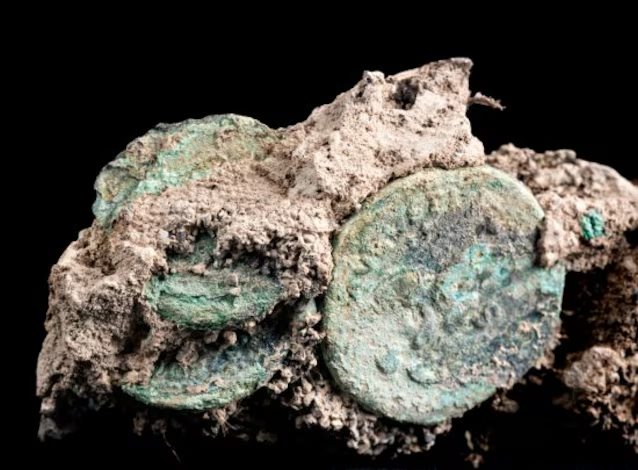
According to archaeologists, all the elements strengthen the hypothesis that the victim was a medicusa professional related to medical practice. This is not yet an absolute certainty, but comparisons with other surgical kits discovered in the Vesuvian area are particularly convincing. A similar case was already known in Pompeii from the 1936 excavations at the Amphitheatre, where a box containing surgical instruments and a coticula similar to that belonging to the individual in cast 46.
The research, certainly worthy of further study, also offers a deeply human insight into the last moments experienced by the inhabitants of Pompeii. Personal objects, coins, necklaces, lamps and small containers tell of the choices made in the chaos of the escape: what to take with you, what to save, what to consider indispensable. In this case, perhaps, a doctor tried to save himself by bringing his own work tools, a sign of a professional identity maintained until the last moments.