U-turn on defense spending: the Government intends to review the objective of 5% of GDP by 2035. This is confirmed by a motion signed by the majority group leaders in the Senate Lucio Malan, Stefania Craxi, Massimiliano Romeo, Michaela Biancofiore, which states that the commitment of 5% of GDP (equal to around 70 billion more per year) must be reviewed.
In June 2025, at the NATO summit in The Hague, Italy agreed to the new target of 5% of GDP for defence, a much more ambitious threshold than the previous target of 2%. Yet, in the motion filed by the majority in the Senate, the government proposes a substantial revision of the commitment
How military spending changes
The document contains the formulation according to which the government undertakes to maintain a realistic and credible commitment within NATO, confirming the achievement of 2% of GDP. But at the same time it asks to promote “a review of the most ambitious objectives such as 5%”, also including investments in energy security and critical infrastructures in the calculation.
The Government’s objective is to link military spending to investments in energy security and infrastructure. According to the motion, in fact, national defense is not limited to the military component, but also includes economic resilience and the protection of critical infrastructures.
In this logic, the government aims to include in the calculation of defense expenditure:
- investments in energy networks and diversification of supplies;
- development of critical infrastructure;
- dual use technologies, i.e. with both civil and military applications;
- cybersecurity and resilience measures.
Government plans
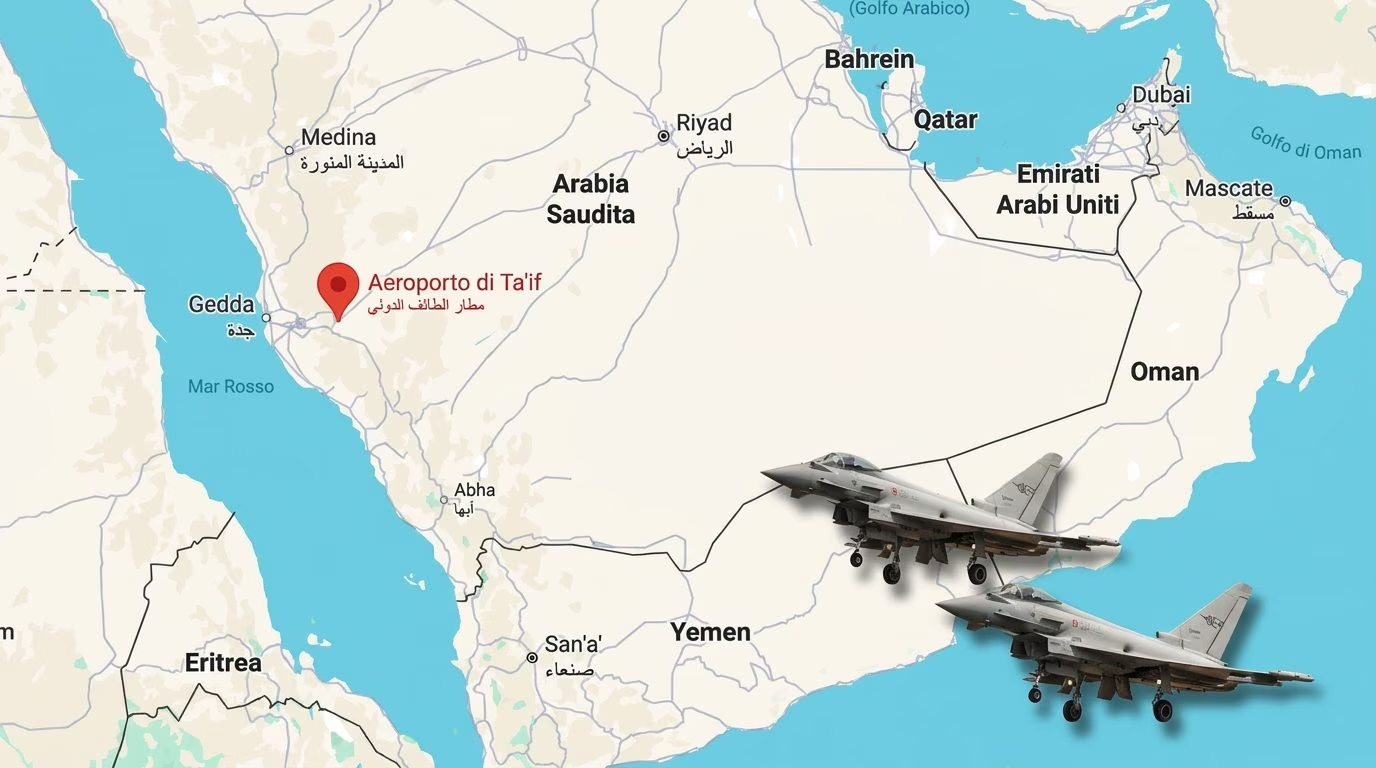
The energy crisis produced by the blockade of the Strait of Hormuz has made it a priority for the executive to reduce the impact on the bills of families and businesses.
Added to this is the prospect of the 2027 elections; an increase in military spending may not be well received by voters. The Government is trying to contain the increase in bills for families and businesses and strengthen renewable energy and Italy’s role as an energy hub in the Mediterranean. In this scenario, allocating tens of additional billions to defense would risk compressing other spending items considered politically and economically more urgent.
The Italian choice to renegotiate spending commitments downwards goes against the trend of the agreements made with Donald Trump. The American president has long been pressuring NATO countries to increase their military spending.
Meloni asks the EU to change the Stability Pact
The Italian government is not only aiming to review the issue of defense, but also that of bills. Giorgia Meloni wrote a letter to Ursula von der Leyen to ask to be able to extend the flexibility measures recognized by the Stability Pact for defense to energy expenditure as well. For now, Brussels is not going out of its way, suggesting to Meloni to use the existing funds currently available to the States.
Meloni’s request concerns the activation of the national safeguard clause provided for in the Stability Pact, a device that allows exemptions from European constraints on deficit and debt and which is currently recognized for defense expenditure. The prime minister, struggling with high bills, would like to extend the exemption to include energy costs.