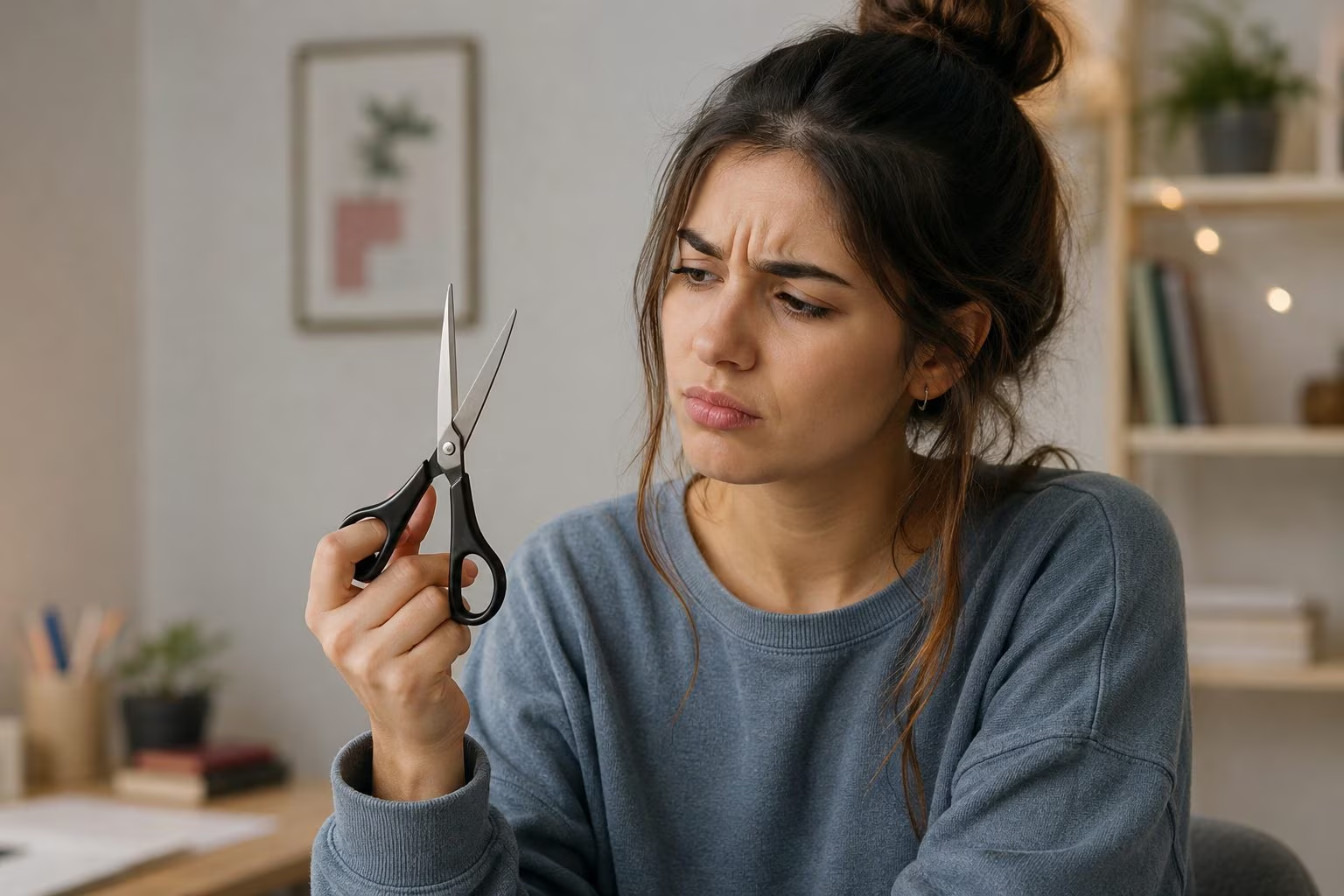
Do you say scissors or scissors? The doubt arises because both forms really exist in Italian, but they are not used in the same way. The simplest solution, in everyday language, is this: when we talk about the tool we use to cut, the most natural form is scissors. The singular scissors, however, survives in some particular, technical or regional uses.
In common speech almost no one says “hand me the scissors”. It is natural to use the plural, even if there is only one object. The reason is linked to the shape of the tool itself: scissors are composed of two mirror-image blades joined in the center, and this structure influenced the way in which the word became fixed in the language. It is no coincidence that modern dictionaries also record the main meaning especially in the plural. The Accademia della Crusca explains in fact that, referring to the cutting tool, the term appears in the form scissors.
However, this does not make the singular wrong. Scissors continues to be used in various specialized and figurative contexts. In economics, for example, we talk about the gap between costs and revenues or the salary gap. In other cases the term appears in technical, sporting or military language. Furthermore, in some areas of Italy, the singular remains quite common due to the influence of the local dialect. When you want to indicate a single tool, the most natural expression is still a pair of scissors. It’s the same mechanism we use with words like glasses, pliers, tongs or trousers: formally plural nouns that identify a single object.
Then there is a case that has become very famous thanks to cinema: Edward Scissorhandstranslated into Italian as Edward Scissorhands. Here the singular was chosen for expressive and sonic reasons. “Scissorhands” would have had a much less evocative effect. In everyday language the recommended form is scissors, but using scissors is not an error: it is simply a less frequent variant, which has remained alive in some specific contexts of the Italian language.