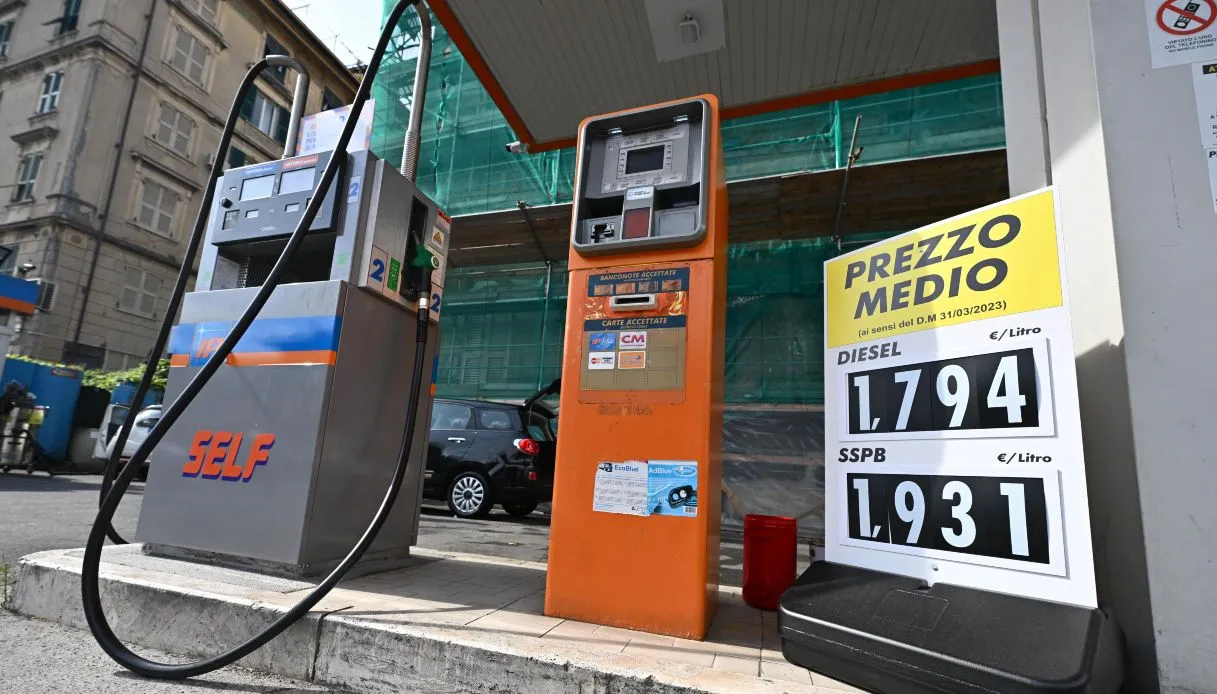
Tomorrow, Friday 22 May, the cut in excise duties on fuel expires. The measure was introduced by the government to contain the price crisis caused by the conflict in Iran and the closure of the Strait of Hormuz. This is why a Council of Ministers is scheduled for tomorrow to extend the cut.
If the executive does not intervene promptly, Italian motorists risk finding themselves faced with a new increase in prices at the petrol pump.
Government confirmation
Despite the urgency, the political will of the executive led by Giorgia Meloni seems to be to prolong the measure. This was confirmed by the Minister of Economy, Giancarlo Giorgetti, who announced that in the Council of Ministers on Friday evening:
there is also the issue of renewing the discount on excise duties and I believe we will go in this direction.
On the same wavelength is the Minister of Transport, Matteo Salvini, who said he was convinced of the extension of the cut, defining the protest of the hauliers who have already proclaimed a national strike for next week as “sacrosanct”.
The issue of funds
The problem, as often happens in these phases, is not so much political will but the availability of numbers and resources. As Codacons highlights in its analysis, the excise duty cut and subsequent renewals have so far cost state coffers 1.3 billion euros. The impact was approximately 20 million euros per day, considering the entire period of validity of the measure. In the note the association states:
to extend the discount currently in force on petrol and diesel until next June 12, the government must find resources of around 340 million euros. A path that seems inevitable considering that, if the tax cut is not extended, Italians would suffer double damage through an increase in supply costs.
Another issue concerns the Stability Pact. The absence of European exemptions on energy expenditure further complicates the search for fresh funds, as Giorgetti himself candidly admitted, recalling that “it is never easy to find coverage for measures of this type in the absence of exceptions to the Pact”.
Precisely for this reason, the Prime Minister, Giorgia Meloni, has asked Brussels in recent days for an exception to the national safeguard clause which, in addition to defense expenditure, also covers energy expenditure.
The cost of petrol without the extension
According to the latest data, the current average cost of fuel is:
- 1,955 for petrol;
- 1,983 for diesel;
- 0.825 for LPG;
- 1,581 for methane.
According to Codacons, without the renewal of the measure, petrol would increase by 6.1 euro cents per litre, exceeding 2 euros per liter with an increase of around +3 euros per full tank. Diesel, which today still enjoys the 24.4 cent discount, would rise to 2.22 euros per litre, with a spike of +12.2 euros per full tank.