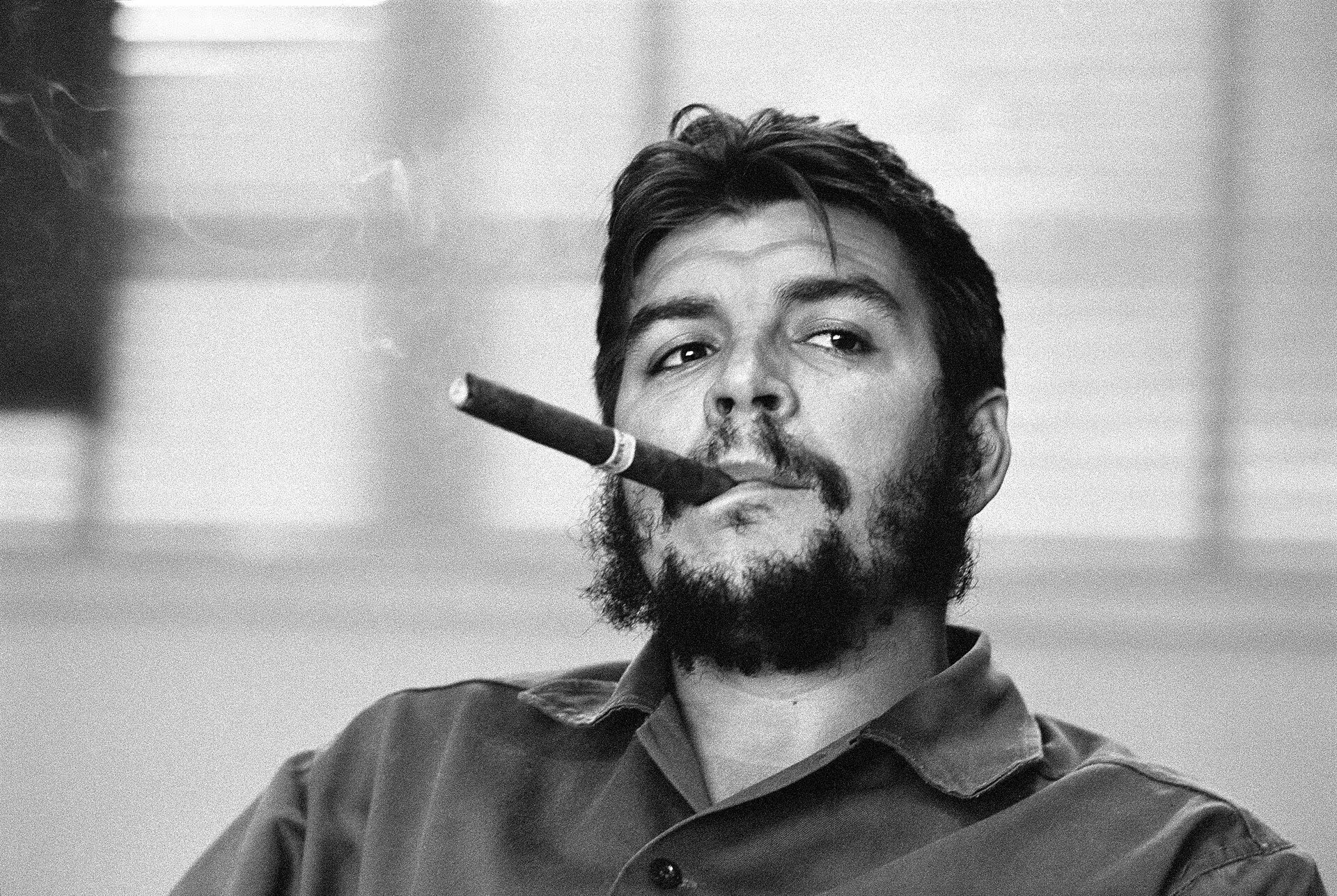
Ernesto “Che” Guevara was a famous revolutionary, politician and intellectual. Born on 14 June 1928 in Rosario, Argentina, as a young man he studied medicine and had the opportunity to make numerous trips, developing anti-imperialist political beliefs and support for the poorest sections of the population. In 1955 he met Fidel Castro and in the following years he took part in the Cuban Revolution (1953-1959) of which he became one of the leaders, standing out for his skills as a commander. After the Revolution he held important political positions, but in 1965 he decided to leave Cuba to take part in revolutionary movements and guerrilla operations in other countries. In 1967, while leading the guerrilla war against the government of Bolivia, he was captured and killed. After his death he became a myth throughout the world.
Ernesto before “Che”: youth, asthma and travel
Ernesto Guevara de la Serna was born in Rosario, Argentina, on June 14, 1928 to a middle-class family. When he was three years old he was diagnosed with asthma, which would plague him throughout his life. From a young age he dedicated a lot of time to study and in 1948 he enrolled in the medical faculty of the University of Buenos Aires, however alternating education with his great passion: motorcycle travel. In 1950 he traveled the roads of northern Argentina and two years later he undertook his most famous journey: he left with his friend Alberto Granado aboard an old motorcycle, nicknamed the Poderosa II, and visited several Latin American countries: Chile, Peru, Colombia, Panama, Ecuador, Venezuela.
During the trip he learned about the terrible social and economic conditions of the poorest sections of the population, developing Marxist and anti-imperialist political beliefs. In 1953, upon returning to Argentina, he graduated in medicine.
The meeting with Fidel Castro in Mexico
After receiving his degree, Guevara once again set out on the road, reaching several countries in South and Central America: Bolivia, El Salvador, Haiti, Panama, Nicaragua. In 1953 he arrived in Guatemala, where he met the socialist militant Hilda Gadea, who would become his first wife. In June 1954 he witnessed the coup against the government of Jacobo Arbenz. The president had promoted agrarian reform, damaging the interests of the very powerful United Fruit Company, a US company that owned enormous tracts of land in Guatemala; the United States administration had therefore organized the coup, replacing Arbenz with a man submissive to its wishes. The coup consolidated Guevara’s anti-imperialist beliefs, and he left Guatemala and moved to Mexico.
In the Mexican capital he came into contact with Cuban exiles, led by Fidel Castro, who were organizing a revolution in their country. Guevara immediately joined them. In 1956 he was imprisoned for almost two months, but was later released and resumed his place in the movement. The Cuban rebels, with whom he immediately got on well, nicknamed him “That”because of the intercalation he used to draw attention.
Che Guevara during the Cuban Revolution: guerrilla and minister
In November 1956 the revolutionaries, including Guevara, left Mexico aboard the steamship Granma. Having landed in Cuba, they established headquarters in the Sierra Maestra, a mountain range in the eastern part of the island, conducting attacks against the government’s armed forces. Guevara, despite having joined the group as a doctor, soon assumed the role of commander of a column. In 1958 he led his men to conquer Santa Clara, a city located in the central part of Cuba. The conquest of Santa Clara was the final act of the revolution: the president, Fulgencio Batista, fled abroad and Fidel Castro took power.
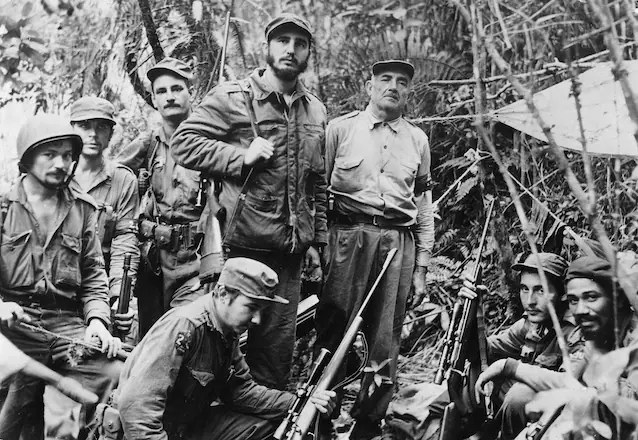
Che Guevara took a leading role in the new Cuban ruling class. For a few months he dealt with the trials against members of the Batista regime, also ordering death sentences. His role as “judge” sparked some controversy, although, according to biographers, Guevara did not convict any innocent people. In the same period he divorced Hilda Gadea and married Aleida March, with whom he had four children. In 1960 he attended the funeral of the victims of the explosion of the ship La Coubre – caused, according to Castro, by an attack organized by the CIA – and on that occasion the photographer Albert Korda took his best-known photograph of him, Guerrillero Heroico.
In the following years, Guevara made several trips abroad representing the Cuban government and was at Castro’s side in the fight to consolidate the revolution. In 1962 he also played an important role in the deployment of Soviet missiles in Cuba, which caused a dangerous international crisis.
In the same period he took on important economic roles: he was president of the national bank between 1959 and 1961 and minister of industry from 1961 to 1965. In this capacity he promoted a program for the industrialization of Cuba, which however proved to be a failure.
From an ideological point of view, Che Guevara was a communist: he followed a Marxist-Leninist ideology, which he however interpreted in light of the political situation of the second half of the twentieth century and the Cold War. Communism, for Guevara, primarily meant the struggle against US imperialism.
Subsequent experiences: Congo and death in Bolivia
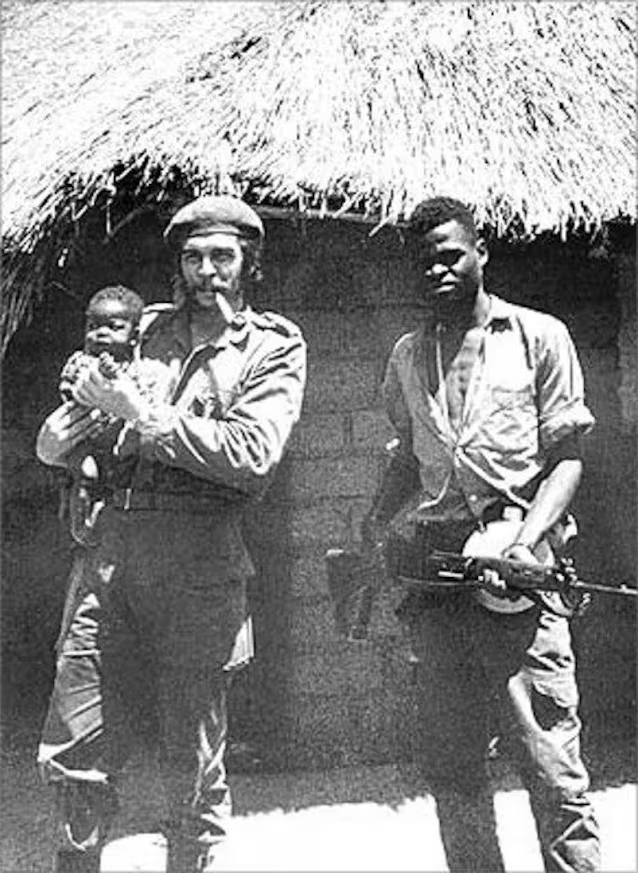
Guevara was not made to be a minister: in 1965 he took leave of Castro with a famous letter, in which he declared that he was leaving Cuba to go fight in other countries. In fact, he believed that it was necessary to create many revolutionary hotbeds to defeat imperialism and free people from the yoke of oppression. He thus disappeared from the public scene and moved to Africa, to the Congo, taking part in the failed revolution against the regime. He later lived clandestinely in Tanzania, Czechoslovakia and East Germany.
In 1967 he joined the revolutionary movement that had taken up arms in Bolivia against the government of René Barrientos. It was his last revolution: on 8 October of that year, betrayed by the peasants he wanted to liberate, he was captured together with other rebels by the Bolivian government army, supported by the CIA, and the following day he was executed in La Higuera. The body was buried in a mass grave.
The myth of Che Guevara
Che Guevara’s death was publicly announced by Fidel Castro on October 15, 1967. Since then, the guerrilla has become a myth not only in Cuba, but throughout the world. His revolutionary spirit and his ability to give up the comfortable life of a minister to go and fight in support of people’s freedom have aroused great enthusiasm in progressive movements around the world. In some cases, even far-right groups showed their appreciation for his figure.
Che Guevara’s writings, including diaries kept during guerrilla operations and travels, are translated into numerous languages. The effigy of the warrior and the slogan Hasta la victoria always!with which he sometimes closed letters and speeches, are reproduced throughout the world and the photo Heroic Warrior it is, almost certainly, the most reproduced image in history. Marketing that exploits the image of Che Guevara is in some ways paradoxical: an enemy of capitalism has become the object of a large-scale commercial operation.
The fact is that since 1997, Guevara has also had a tomb: the body was found in Bolivia and moved to Cuba together with that of some companions, to be buried in Santa Clara in the memorial erected in his honor in the 1980s.