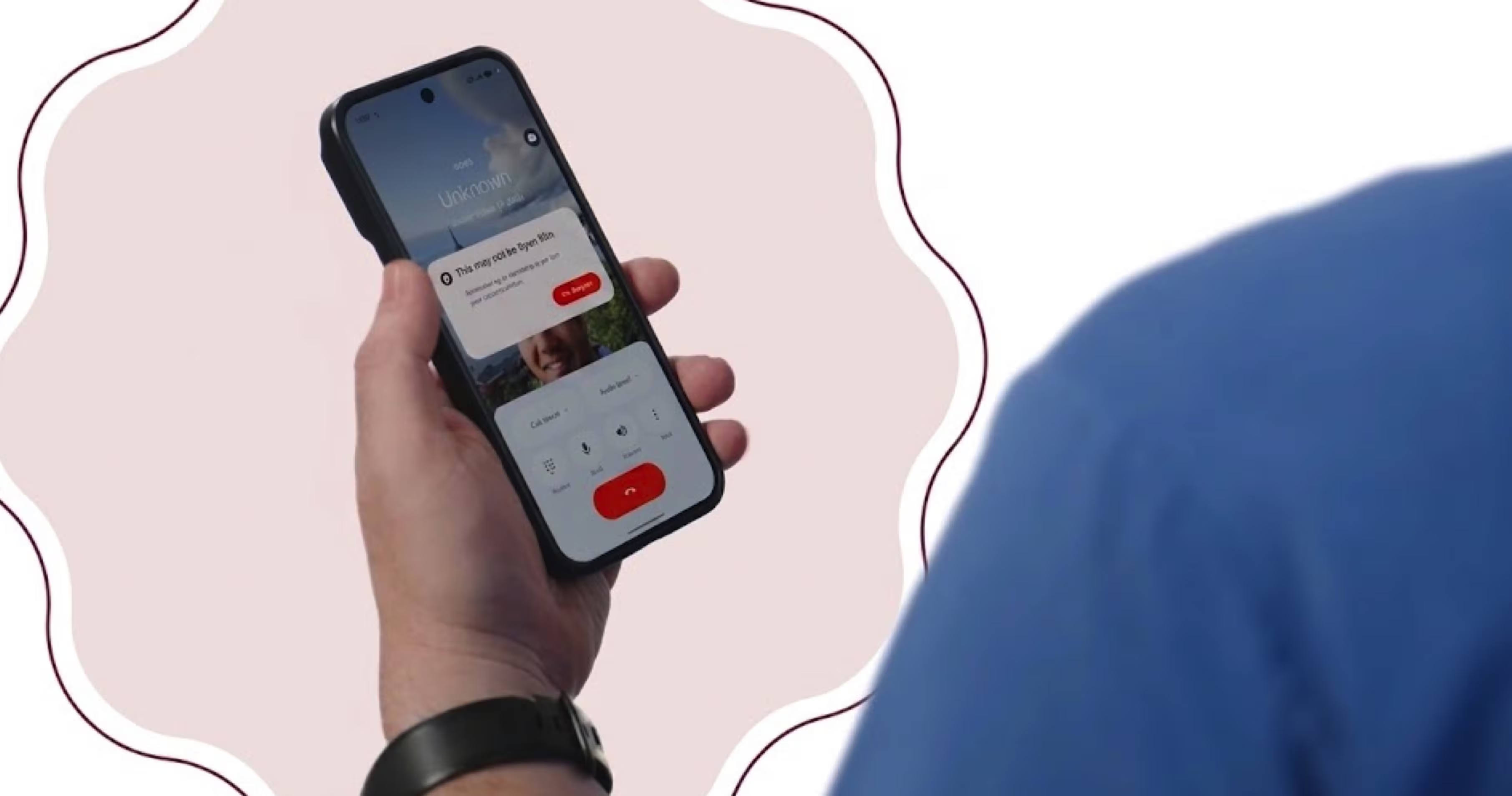
Telephone scams are increasingly sophisticated and insidious. Today they combine spoofing – a technique that allows the sender’s number to be falsified using Internet-based software – with sophisticated, highly convincing AI-generated voice cloning, so-called audio deepfakes. And, looking at the numbers, the situation is alarming. According to INTERPOL estimates, fraud related to voice impersonation caused global losses in excess of $400 billion in the first quarter of 2026 alone. To respond to this threat and provide its users with tools with which to concretely defend themselves, Google has developed a new security technology – Fake Call Detection – integrated directly into the Android Phone app: the detection of fake calls. Let’s see what it is and how it works.
How Google’s scam call detection works: RCS
The system works silently, using the RCS standard (Rich Communication Services), the modern protocol that replaced the old SMS. When we receive a call from a contact who uses the same app, i.e. Google Phone, the two devices automatically perform instant encrypted authentication, technically called handshake.
If this digital signature is absent, because the call actually comes from a scammer, the potential victim’s smartphone sends a verification signal to the contact’s real phone. If the genuine device confirms that it is offline, Android immediately displays a warning on the screen advising you to hang up.
In the following animation you can appreciate the system created by Google coming into action.
Because today we can no longer trust our ears: voices cloned with AI
Until recently, seeing the name “Mom” or “Granddaughter” on the screen was enough to feel safe. Today this is no longer the case. Cyber criminals spoof the incoming number and, once contact has been established, exploit the voice deepfake technique which replicates with good precision the timbre, pauses and inflections of the real voice they have cloned. Sector studies confirm that the human ear is no longer able to distinguish these artificial voices with certainty from real ones.
Google’s solution shifts the verification from the sensorial to the IT level: it no longer asks the user to feel if something is wrong, but lets the devices communicate with each other and detect the anomaly in fractions of a second.
Compatibility and availability on Android from Fake Call Detection
The function is active by default and does not compromise privacy: the data exchanged between devices is protected by end-to-end encryption, readable only by the phones involved in the communication. The release is underway globally for all devices running Android 12 or later, starting with the Pixel lineup. Being based on the RCS standard – which is an open standard – the long-term goal is to ensure that other manufacturers and developers also adopt it, strengthening the security of the entire mobile ecosystem.
The function complements the verified financial calls system, recently introduced by Google to combat fake banking operators, and can be deactivated at any time from the settings of the Google Phone app, which can be downloaded for free from the Play Store.