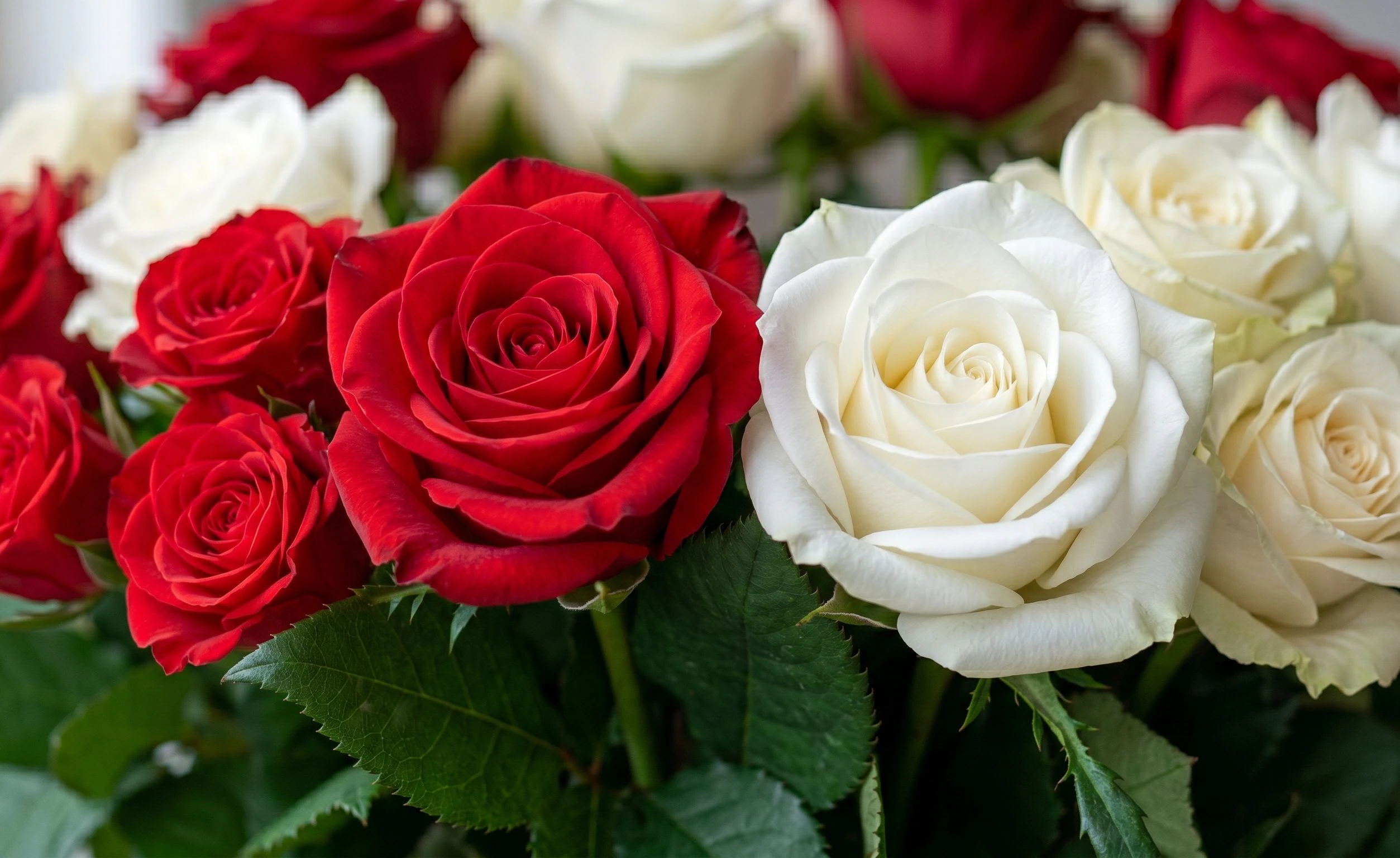
Roses, spring flowers par excellence that bloom from May, have always been a symbol of love, rebirth and fertility. Myths and legends, since ancient times, have associated roses with the goddesses of love and life – such as Isis and Aphrodite – and in subsequent times with the figure of the Madonna. Roses and rose gardens are a recurring symbolism from Egypt, to Persia, up to Ancient Rome: what millenary myths and legends have in common is precisely the concept of life and rebirth, so much so that they were also used in funeral rites to create a connection between life and the “new life” after death. In fact, when the roses bloom, winter is over and with spring – in turn associated in various cultures with the New Year, which falls near the equinox – nature blooms again.
Roses and the cult of Isis in Ancient Egypt
In ancient Egypt, roses were associated with the goddess Isis, also known as “the Great Mother”, goddess of motherhood and fertility, who was said to have recomposed the body of her husband Osiris, conceived by her brother Seth, and to have conceived her son Horus with him. Osiris will then become the lord of the Underworld, while Isis will remain on Earth to take care of her son and human beings. Isis, in fact, represents faithful love, the power of regeneration and the will to give life, all elements expressed through the presence of roses.
Isis linked to roses also appears in the narrative of the Roman writer Apuleius who, in the famous text The Metamorphoses (composed in the second half of the 2nd century AD) tells how the young Lucius is transformed into a donkey by mistake and, to regain his human form, must be able to eat roses, considered a symbol of returning to life. Lucius has to face many vicissitudes and, every time he gets close to the roses, something prevents him from eating them: it will only be thanks to the intervention of the goddess Isis, a pagan divinity at the time whose cult was spreading in Italy and to whom Apuleius was devoted, that the young man will be able to obtain them and regain his appearance.
Why are roses red? The legend of Aphrodite in ancient Greece
Even in ancient Greece, roses were associated with the goddess of love and fertility, Aphrodite: the myth tells that the goddess, running to the rescue of her beloved Adonis, wounded by a wild boar and dying, in turn injured her feet, running through the brambles. Aphrodite’s blood fell on the white petals, dyeing them bright red and giving rise to the first red rose. Legend has it that in the beginning the roses were all white.
This narrative was also “adopted” by Roman mythology, associating the story with the goddess Venus: then, in ancient Rome, roses were also the protagonists of the celebrations of Rosalieprivate funerary rites during which the tombs of the deceased were decorated with roses, precisely to celebrate the transition from earthly life to life in the afterlife.
The Romans also associated roses with the cult of the god Bacchus, divinity of wine, intoxication and the liberation of the senses who was said to have created the rose to hide secrets during moments of drunkenness, and therefore protect his followers. This is how the Latin expression “sub pink“, that is to say “under the rose”: when a rose was hung in a room, it meant that what was revealed must remain secret.
In Persia and Islam: roses as a symbol of love and spiritual evolution
Even moving to the East we find narratives and myths linked to roses similar to those of Egypt and Ancient Greece and Rome: a Persian Sufi legend, in fact, tells that a nightingale fell in love with a white rose. He flew towards her, and tried to hold her, but he stung himself and died, leaving her free, and thus the red roses were born.
In this short story, also taken up by Oscar Wilde (The Nightingale and the Rosepublished in 1888) the rose becomes a symbol of love that sacrifices itself, so much so that it loses its own life.
In Islam, it is said that roses were born from Muhammad’s own sweat during the “night journey” with which – it is said – the prophet traveled from Mecca to Jerusalem, crossing the seven heavens and arriving in the presence of God. Precisely for this reason, the rose is considered a sacred flower in Islam, which symbolizes the purity and spiritual evolution of the prophet, and which must therefore be venerated. It is no coincidence that in the Arab world, rose water is used to wash and perfume the Kaaba in Mecca, the holiest place in Islam, as well as in rites of passage, and for example when welcoming a guest into the house.
Roses in the Middle Ages, a symbol of fertility, also associated with Mary
The attribution of roses to the great female divinities of antiquity – Isis, Aphrodite, Venus – further developed in the Middle Ages, with the spread of Christianity. Since the first centuries of the Middle Ages, the figure of the Madonna, in fact, “absorbs” many of the characteristics and symbols of previous divinities, including the association with roses, a symbol of fertility, purity and rebirth. Over the centuries, Mary has often been depicted among roses: the painting is particularly famous Madonna of the Rose Garden by Sandro Botticelli, created between 1469 and 1470, now preserved in the Uffizi Gallery. It is no coincidence, in fact, that the month of May in which roses bloom is dedicated, in the Christian Catholic tradition, to the Madonna.
But not only that: the symbolism of roses, in medieval times, as well as fertility was also associated with eroticism, as evidenced by the famous poem Roman de la Rose (composed in French, begun by Guillaume de Lorris in 1237 and finished by Jean de Meung around 1280) allegorical narrative of love life where the medieval courtly erotic concept is developed. The Lover, in fact, must conquer the Rose, the sexual symbol of the beloved woman: he will manage to do so through deeds that symbolize the discovery of love.